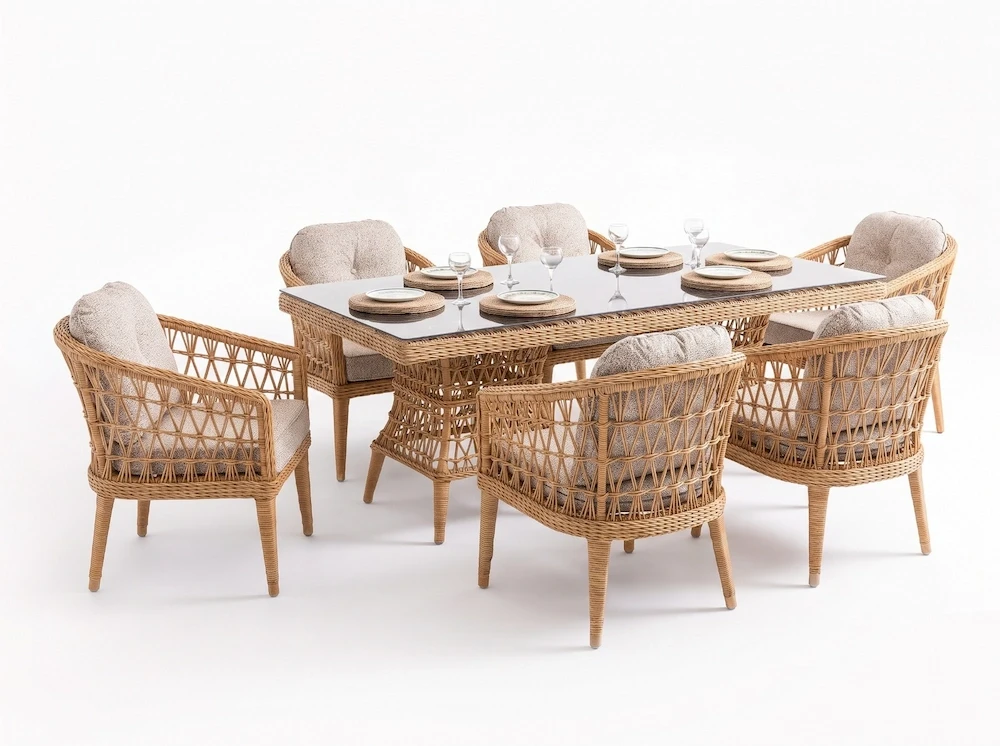
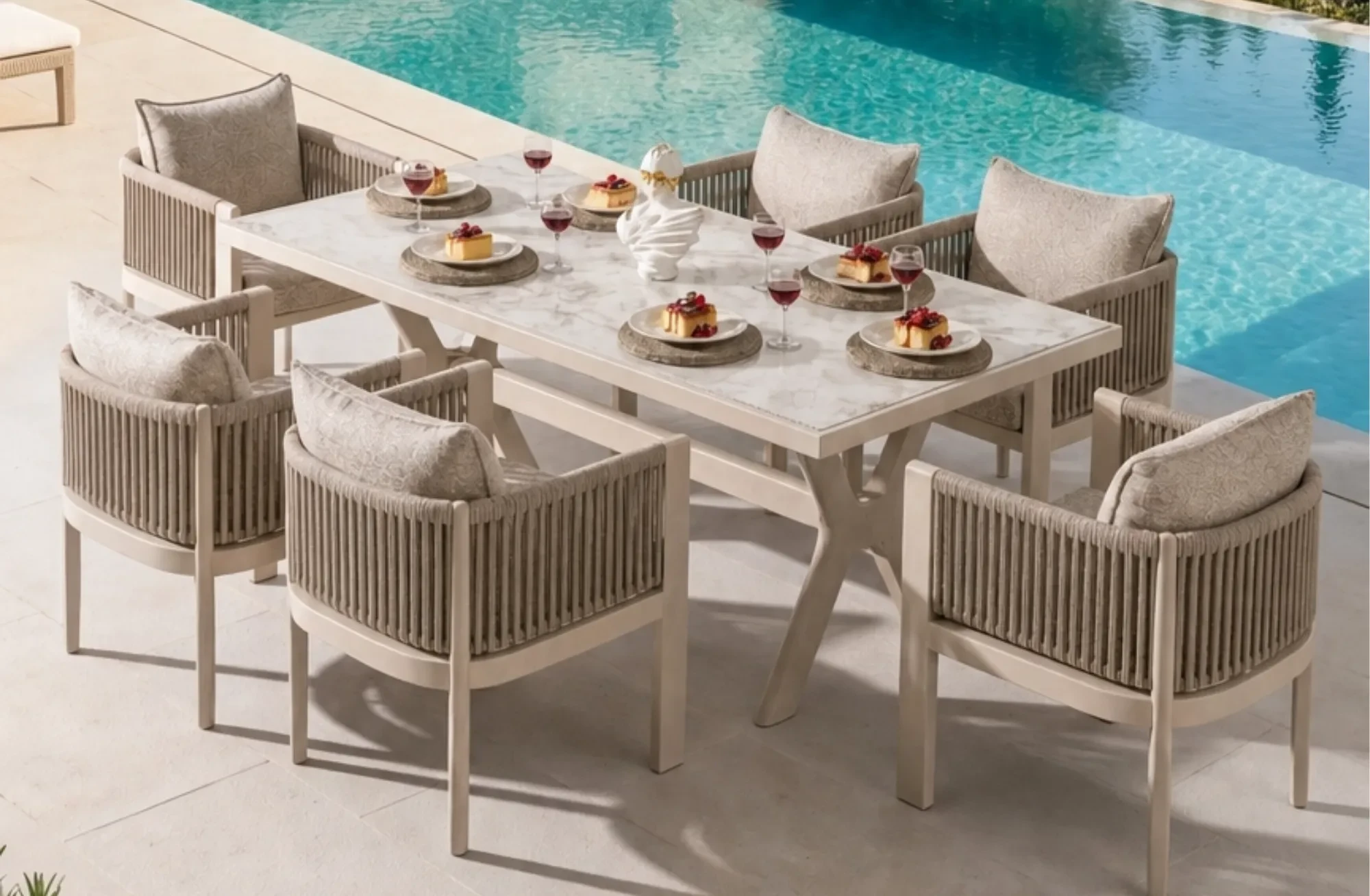
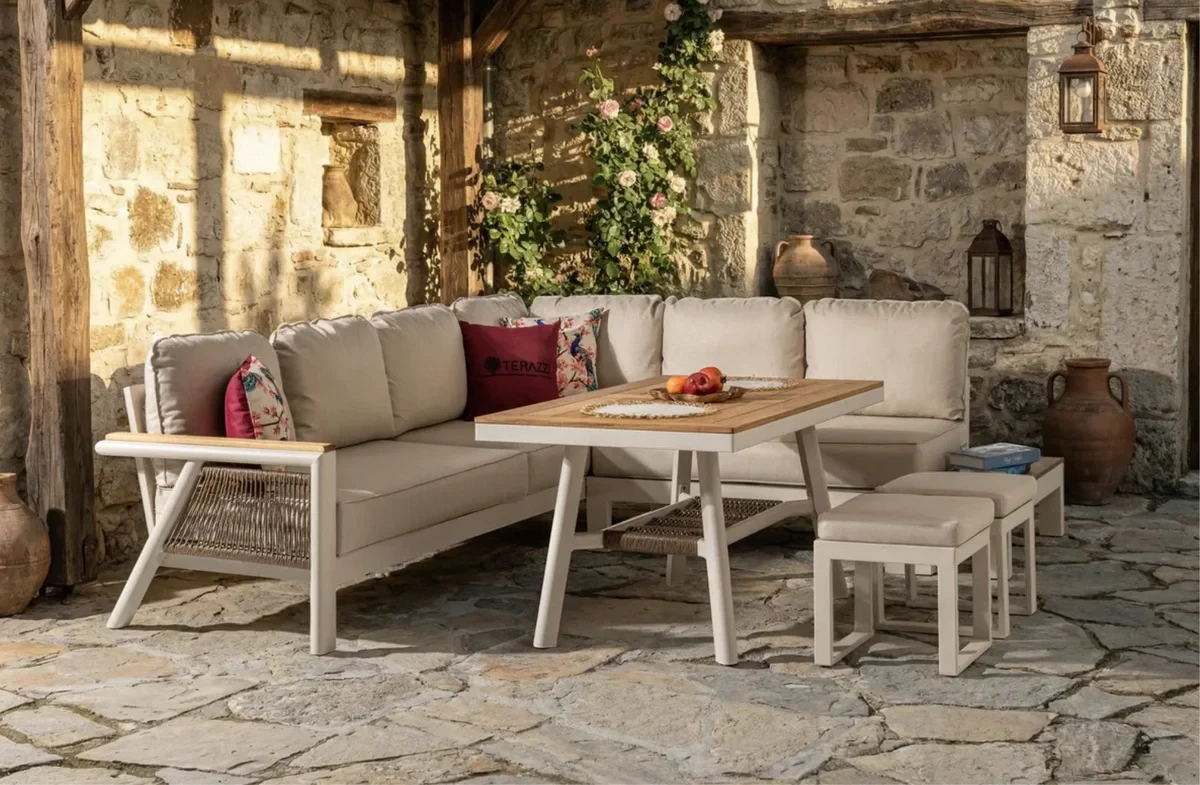
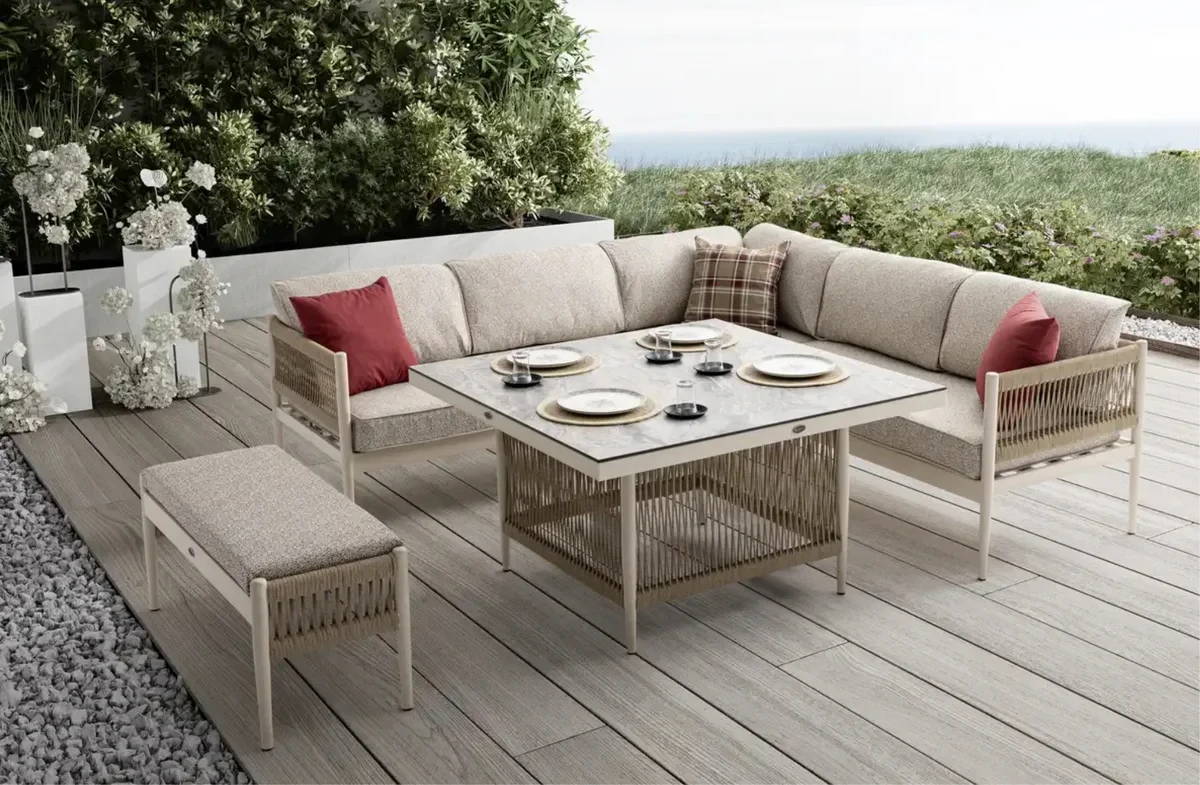
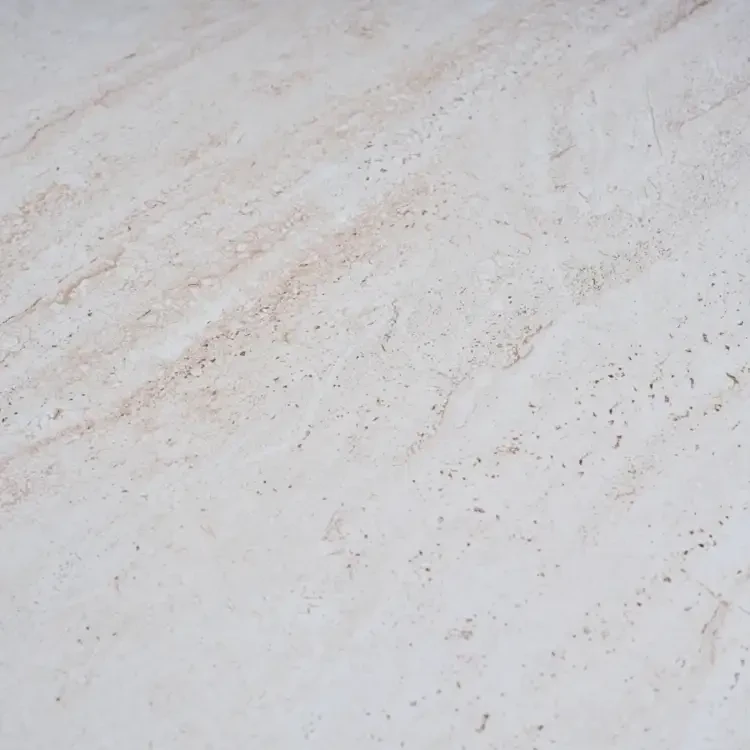
Travertine ceramic combines the color and texture variations of natural travertine with the practical properties of a ceramic surface. Its resistance to water, sunlight, and temperature changes makes it suitable for outdoor use, while its stain-resistant surface makes everyday cleaning easier. By preserving the appearance of natural stone, this material provides both a visually appealing and functional option for flat surfaces used in gardens and terraces.
The Natural Stone Appearance of Travertine Ceramic
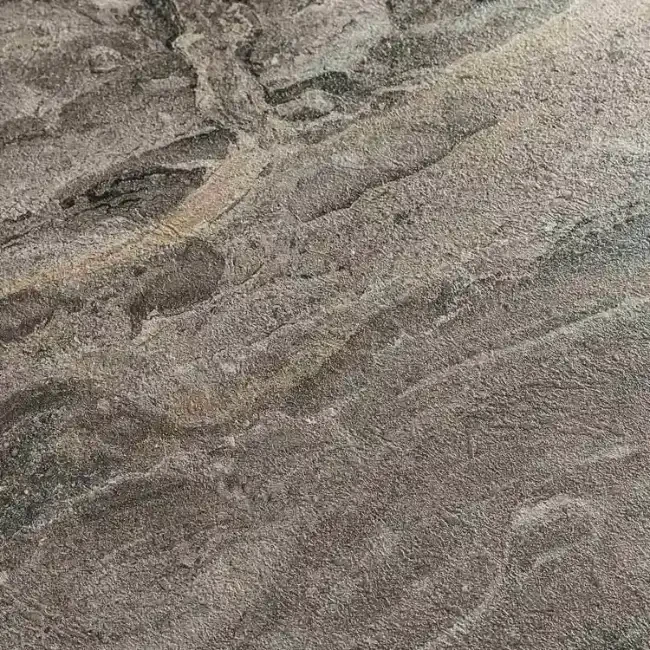
Travertine surfaces do not feature a single, uniform color. Variations between lighter and darker tones create an appearance reminiscent of the natural veining and tonal differences found in real stone. This gives the ceramic surface a more distinctive character compared with plain, single-color tabletops.
One of the key advantages of ceramic is that it combines this natural stone appearance with surface properties suitable for outdoor use. In areas exposed to water, sunlight, and everyday stains, the natural stone effect can be maintained while the surface remains relatively easy to clean.
How Does It Differ from Natural Travertine?
Natural travertine is a genuine stone that naturally contains pores, small cavities, and variations in veining from one piece to another. Travertine ceramic, on the other hand, reproduces this appearance on a ceramic surface.
The difference between the two materials becomes particularly noticeable when it comes to maintenance. Ceramic surfaces are resistant to stains, and everyday dirt can be removed with a damp cloth. For users who prefer the appearance of natural travertine but want a surface that is easier to maintain outdoors, this can be an important factor when making a choice.
Resistance to Sunlight, Water, and Temperature Changes
Garden and terrace surfaces are exposed to sunlight, rain, moisture, and changing temperatures throughout the day. The main characteristics of travertine ceramic under these conditions include:
Feature
Description
Surface structure
Features a Seranit ceramic surface
UV resistance
Resistant to sunlight and UV exposure
Water resistance
Suitable for outdoor areas exposed to rain and moisture
Temperature changes
Resistant to temperature variations encountered outdoors
Scratch resistance
Resistant to scratches that may occur during everyday use
Stain resistance
Makes food and beverage residue easier to remove
Appearance
Features tonal and pattern variations inspired by natural travertine
How to Clean Travertine Ceramic Surfaces
For everyday cleaning, a soft, slightly damp cloth can be used. When food or drinks are spilled, wiping the surface promptly helps prevent residue from drying and becoming more difficult to remove.
Although the surface is scratch-resistant, hard and abrasive cleaning equipment should not be used regularly. Soft cleaning tools are preferable to steel wool, hard brushes, or rough sponges that may damage the surface.
The travertine-inspired pattern does not require a different cleaning method. Regularly removing everyday dirt and wiping up spilled liquids without leaving them on the surface for extended periods is sufficient for most routine maintenance.
Where Is Travertine Ceramic Used in Outdoor Furniture?
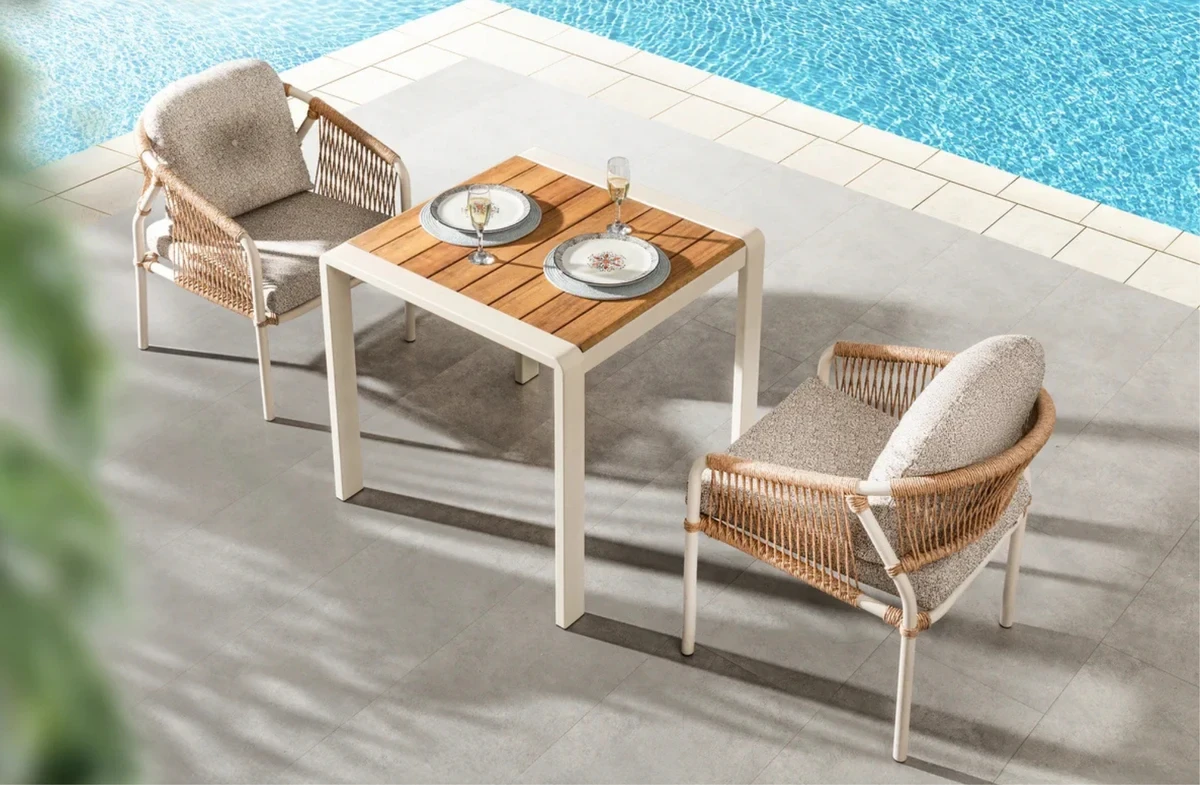
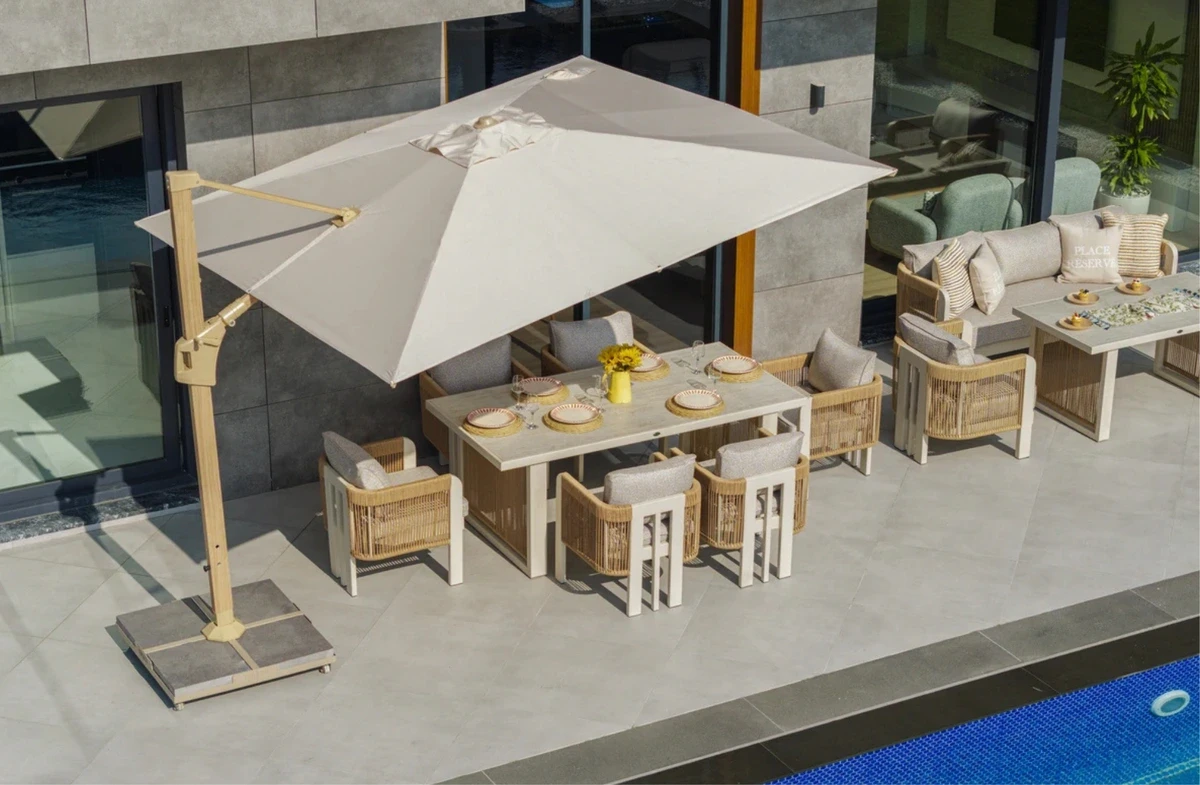
Hard ceramic surfaces are particularly practical for tables and similar flat furniture components. The travertine appearance gives these surfaces a natural stone effect, while resistance to UV rays, water, and stains provides practical advantages for outdoor use.
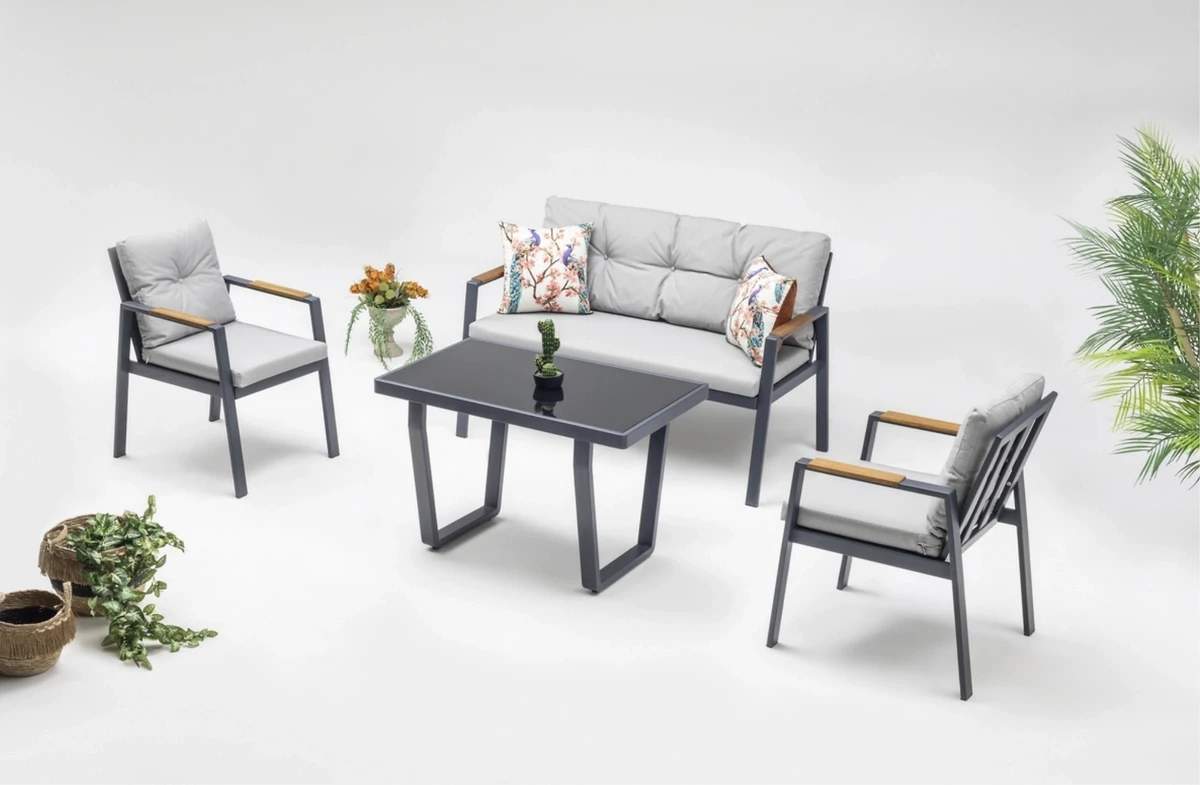
Terazzi offers Garden Dining Sets with different tabletop and frame structures. In addition to the specific model featuring travertine ceramic, the frame material beneath the tabletop and the overall dimensions of the table also influence how the furniture performs in an outdoor setting.
On terraces exposed to direct sunlight throughout the day, resistance to UV rays and temperature changes becomes particularly important. For garden tables frequently used for dining, a stain-resistant and easy-to-clean surface can make a more noticeable difference in everyday maintenance.
Frequently Asked Questions About Travertine Ceramic
Is travertine ceramic real travertine?
No. Travertine ceramic reproduces the colors and textures of natural travertine on a ceramic surface. Instead of natural stone, a ceramic structure suitable for outdoor use is used.
Does rain affect a travertine ceramic surface?
Its resistance to water and moisture makes it suitable for outdoor use. However, the properties of the furniture frame, connection points, and other materials should also be considered separately.
Does the color change under sunlight?
UV resistance helps limit the effects of sunlight on the surface. This provides an advantage for gardens and terraces exposed to direct sunlight.
Does travertine ceramic scratch easily?
The surface is resistant to scratching. However, repeatedly dragging hard or abrasive objects across the surface may still leave marks.
Is travertine ceramic stain-resistant?
Travertine ceramic has a stain-resistant and easy-to-clean surface. Wiping away food and beverage residue before it dries is generally sufficient to remove most everyday stains easily.