













Garden Furniture Trends: Sustainable Materials and Recyclable Designs
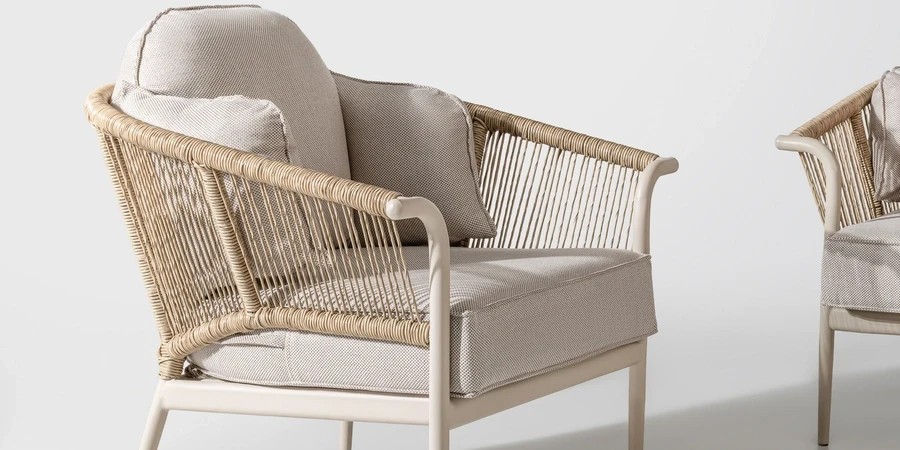
In new outdoor collections, heavy structures with permanently joined components are being replaced by lighter frames, removable parts, and designs in which different surfaces can be handled separately. This shift is not limited to the use of recycled raw materials. How furniture will be transported, reassembled, and refurbished when a specific component wears out is also being incorporated into the product development process.
The environmental performance of a garden armchair cannot be measured by how it looks on its first day. The condition of its metal frame, wooden surfaces, woven backrest, and cushions years later provides a much more meaningful indication.
How Is the Approach to Sustainability in Garden Furniture Changing?
The simplistic distinction that considers wood environmentally friendly because it is natural and plastic problematic because it is synthetic is inadequate for outdoor furniture. Wood that is not properly maintained may suffer premature surface deterioration. A polymer with low UV stability may harden and crack within a few seasons. An aluminum frame made with the appropriate alloy and surface treatment, however, can be used for many years and reprocessed at the end of its service life.
The following characteristics are now considered together:
The suitability of the supporting frame for outdoor conditions
The ability to refurbish wooden, woven, and textile surfaces
The ability to disassemble and separate different raw materials
The adaptability of the product to new spaces and uses
The disclosure of product-specific material and maintenance information
The term “recycled” indicates that raw materials previously used in production have been utilized. “Recyclable,” meanwhile, means that the material can be reprocessed under suitable collection and separation conditions. The presence of aluminum or synthetic polymers in a product does not, by itself, indicate that recycled raw materials were used in its production.
Fewer Mixed Materials, Easier Separation
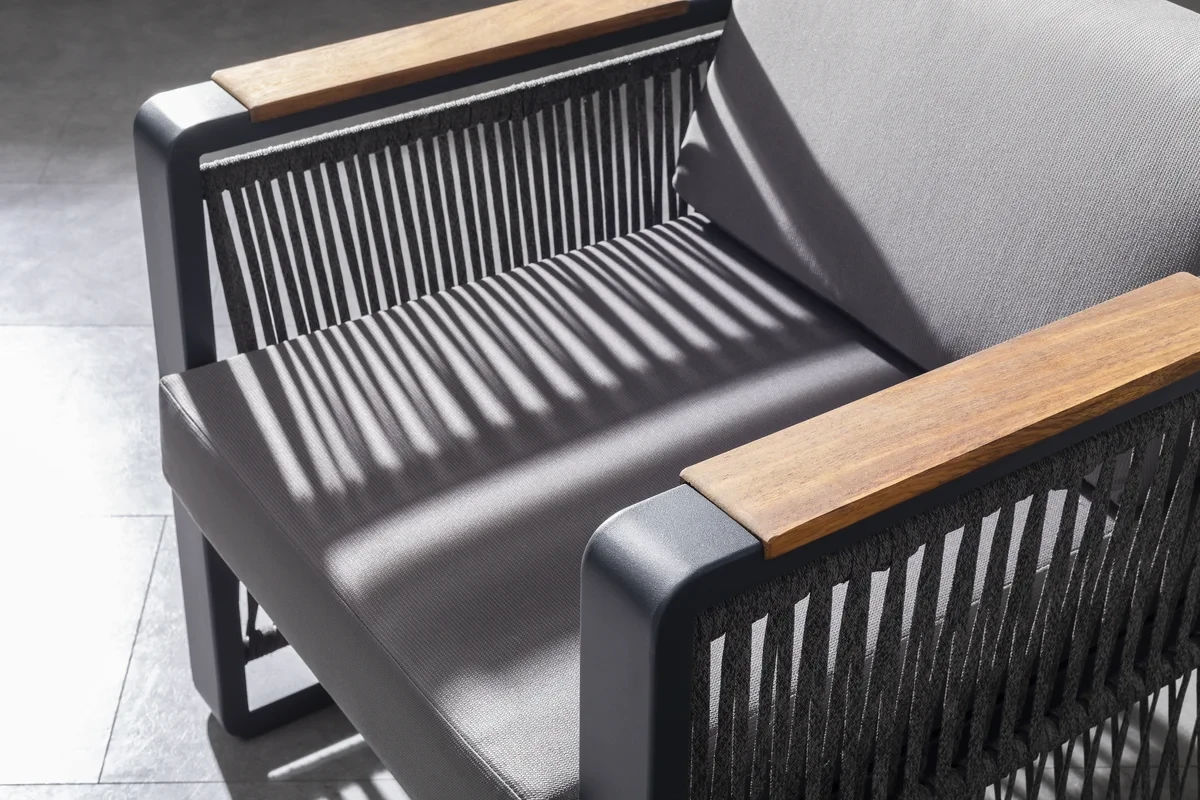
Using different materials in a single piece of furniture is not technically problematic. An aluminum frame, wooden armrests, a woven backrest, and textile cushions can each perform a different function within the same product. The real problem arises when these components cannot be separated because of permanent adhesives or concealed connections.
A plastic coating bonded to a metal profile makes it more difficult to sort the aluminum at the end of the product’s life. Similarly, when fabric is permanently attached to foam, even a small tear may require the entire cushion to be replaced. Mechanical solutions such as screws, bolts, interlocking joints, and removable covers make it possible to access a damaged component without harming the other parts.
When examining furniture, be sure to look at the underside as well. Weld seams, screw points, drainage openings, and the way the upholstery is attached to the frame reveal more about how the product was manufactured than its front-facing appearance does.
Reducing the number of components is not necessarily the right objective. A chair molded as a single piece may contain fewer components, but its damaged section may be impossible to replace. A modular design consisting of more parts, by contrast, may allow localized damage to be repaired.
How Are Aluminum, Iroko, and Technical Weaves Used in the Same Design?
Producing the entire structure of an outdoor furniture item from a single material does not always deliver the most efficient result. Supporting sections, contact surfaces, and soft upholstery are exposed to different physical conditions. Using the right material in the right place directly affects weight, maintenance requirements, and service life.
Aluminum in Lightweight Supporting Structures
The low weight of aluminum makes it easier to reposition large furniture items around a garden or terrace. While the oxide layer that forms on its surface provides natural protection, electrostatic powder coating creates an additional layer against outdoor conditions.
A thicker profile does not always mean greater durability. The profile section, wall thickness, connection geometry, and the way loads are distributed throughout the frame must be evaluated together. Proper engineering aims to provide the necessary mechanical strength without adding unnecessary weight.
Iroko on Refinishable Surfaces
Iroko is one of the wood species used in outdoor furniture because of its dense grain structure and natural oil content. The performance of wood depends not only on its species but also on the drying, processing, and maintenance methods applied to it. Components that have not been sufficiently dried may warp or shift at their joints in response to changes in temperature and humidity.
Using wood as a separate component, such as an armrest or tabletop, also helps preserve the supporting metal frame. When damage is limited to a single surface, the likelihood of the entire product becoming unusable is reduced.
Rattan and Outdoor Ropes on Woven Surfaces
Synthetic rattan and technical outdoor ropes offer lighter, more breathable seating surfaces than solid materials. Their durability varies according to their polymer composition, UV additives, tension level, and attachment points on the frame.
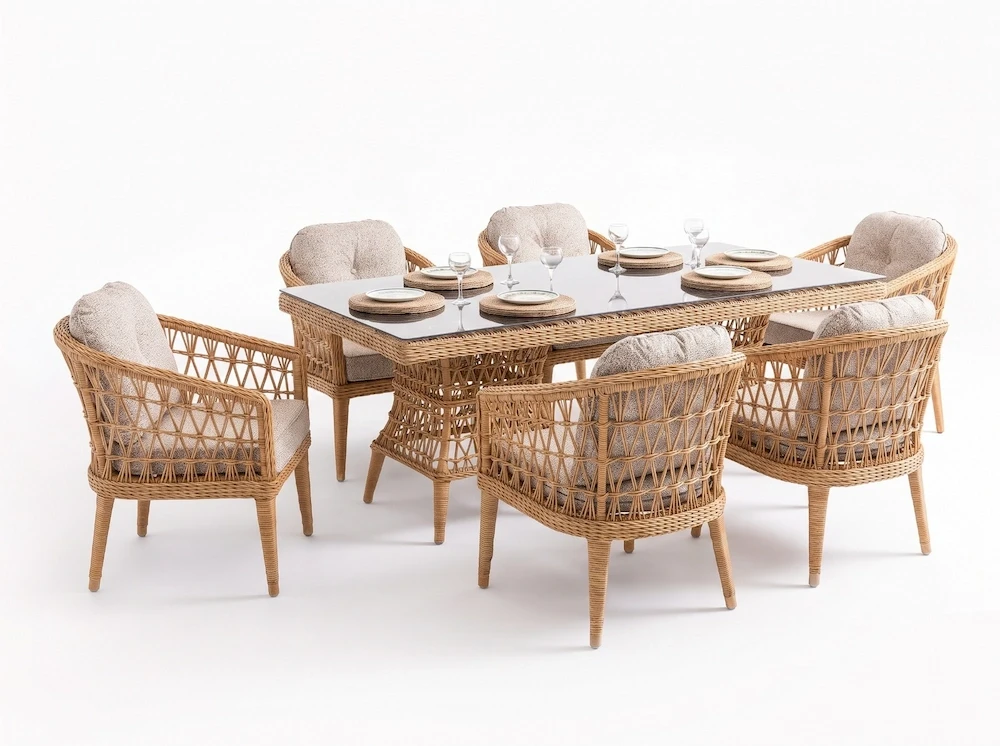
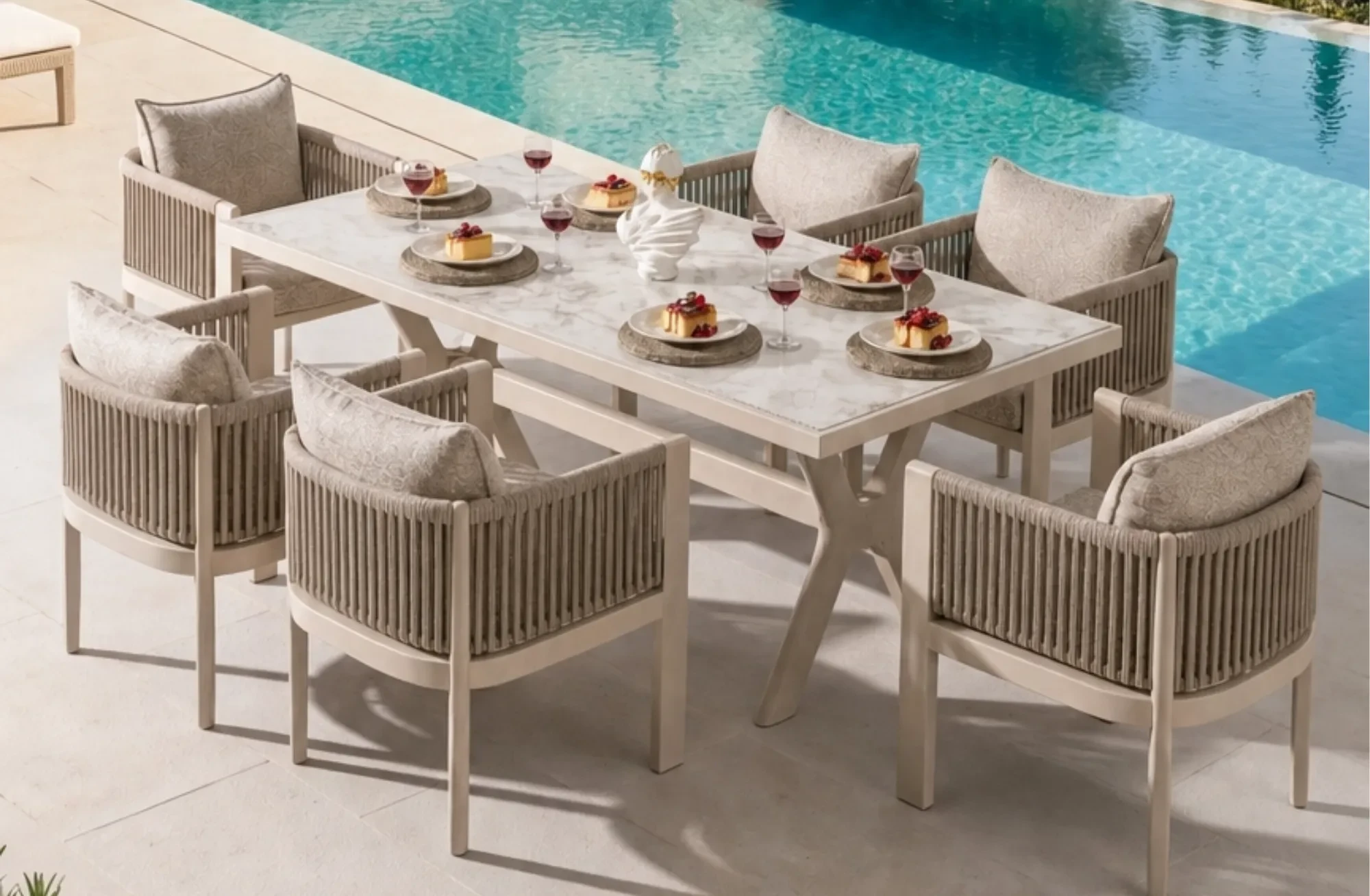
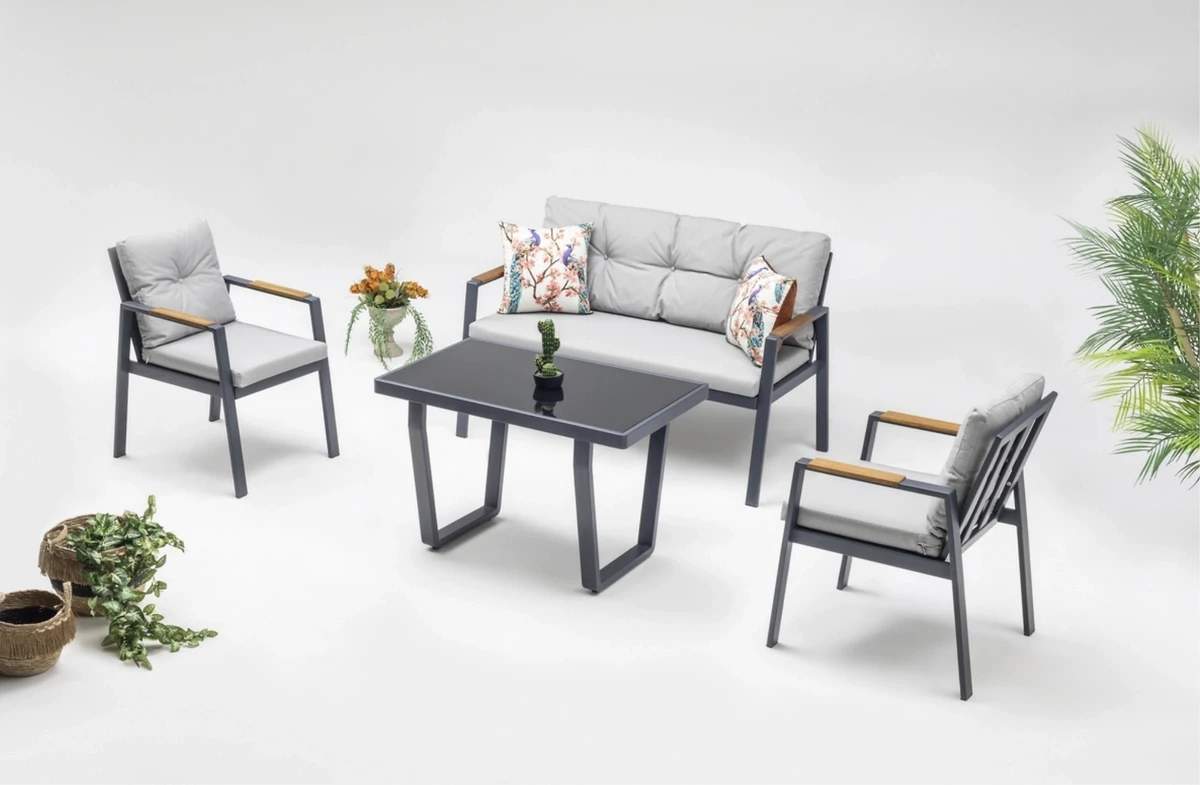
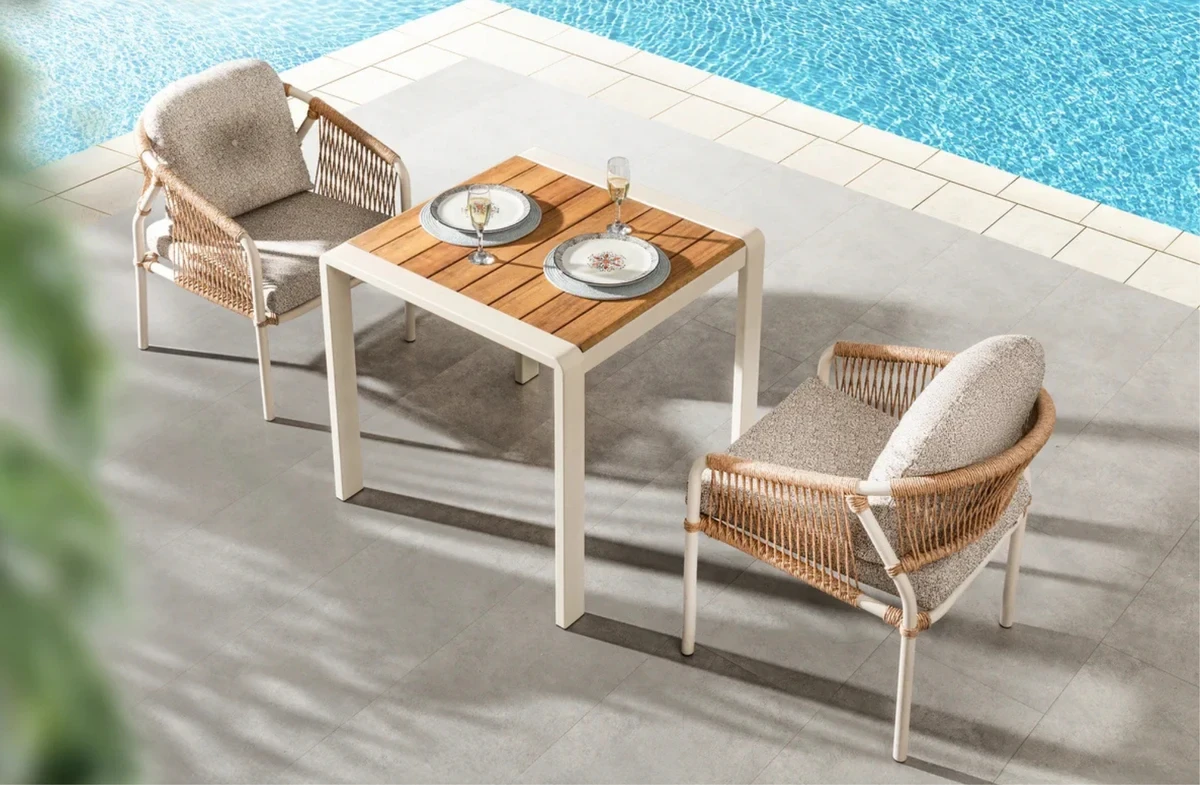
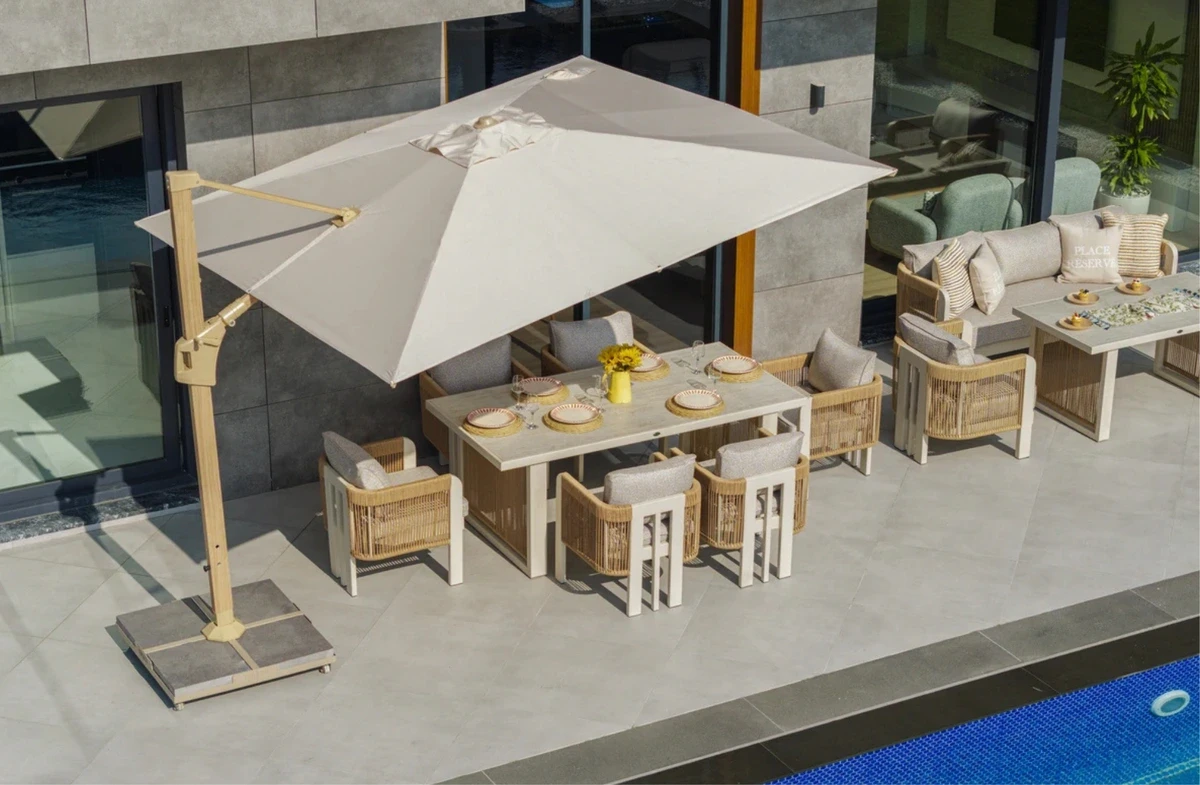
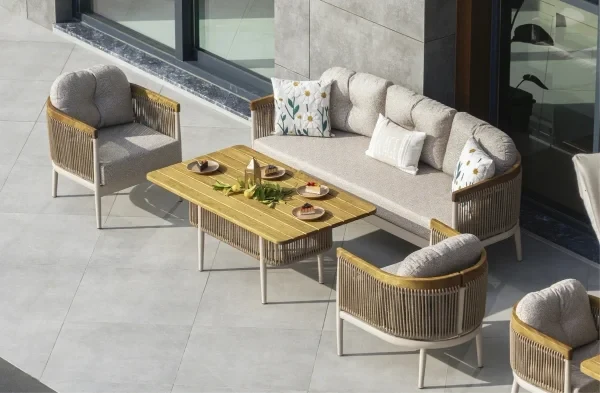
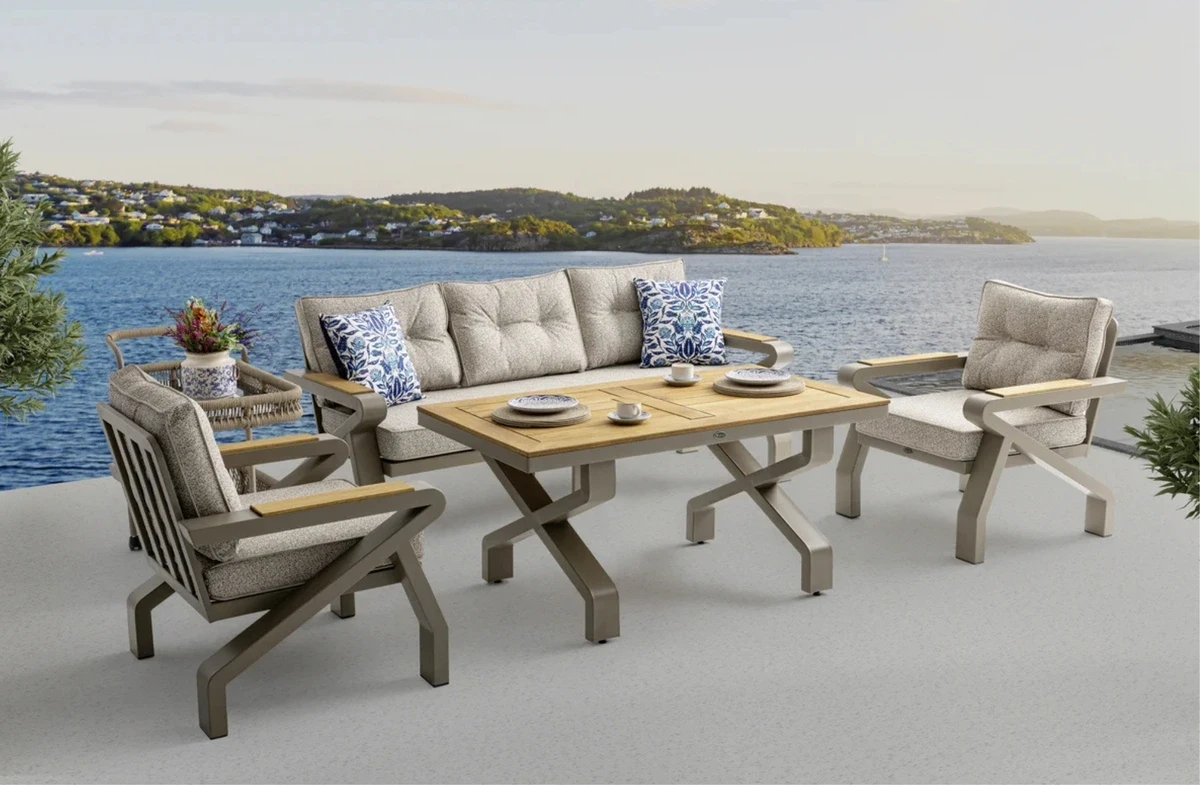
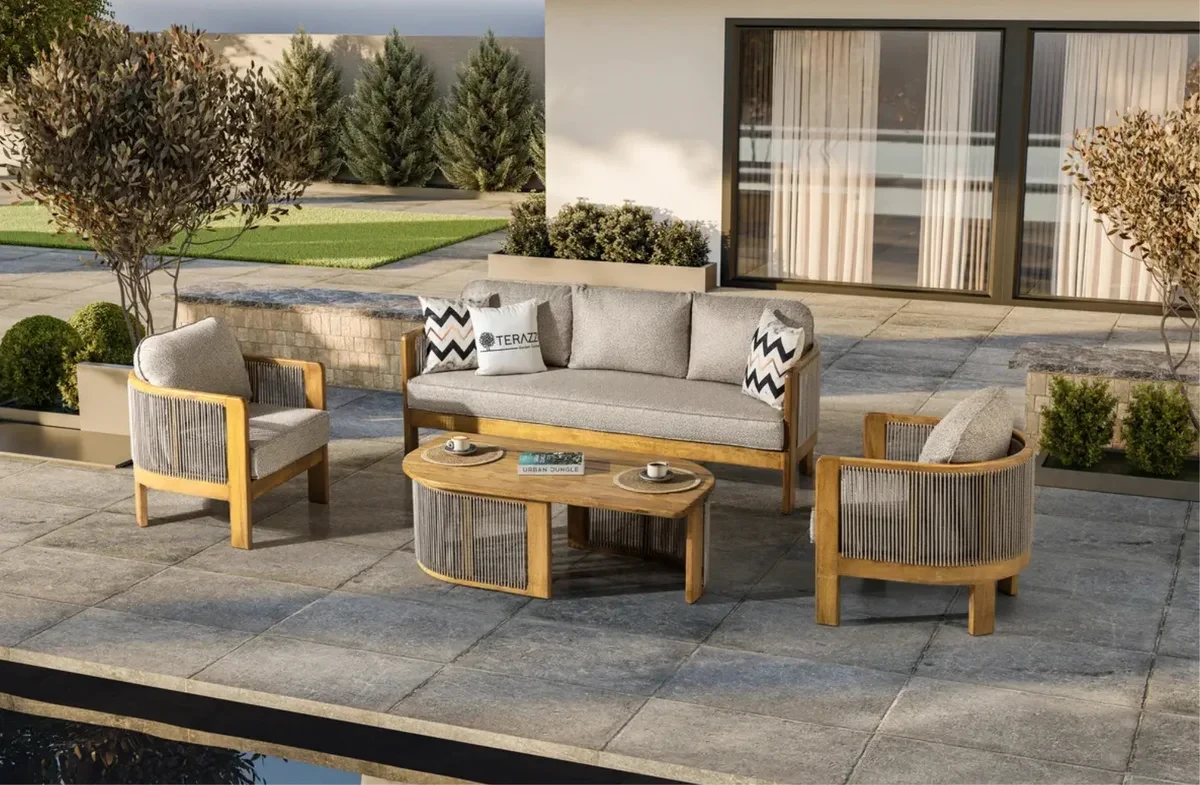
In addition to outdoor ropes such as Luxio Cord, which shape backrest and armrest surfaces without adding significant weight to the aluminum frame, Terazzi products such as the Minerva Garden Seating Set and Argos Garden Dining Set combine aluminum, iroko, woven materials, and cushions, with each component performing a different function.
Why Do Modular Designs Remain in Use for Longer?
Fixed furniture sets designed for the dimensions of a particular terrace may become impractical after a move or a change of space. Modular sofas and components available in different sizes make it easier to reuse the same furniture in a new layout.
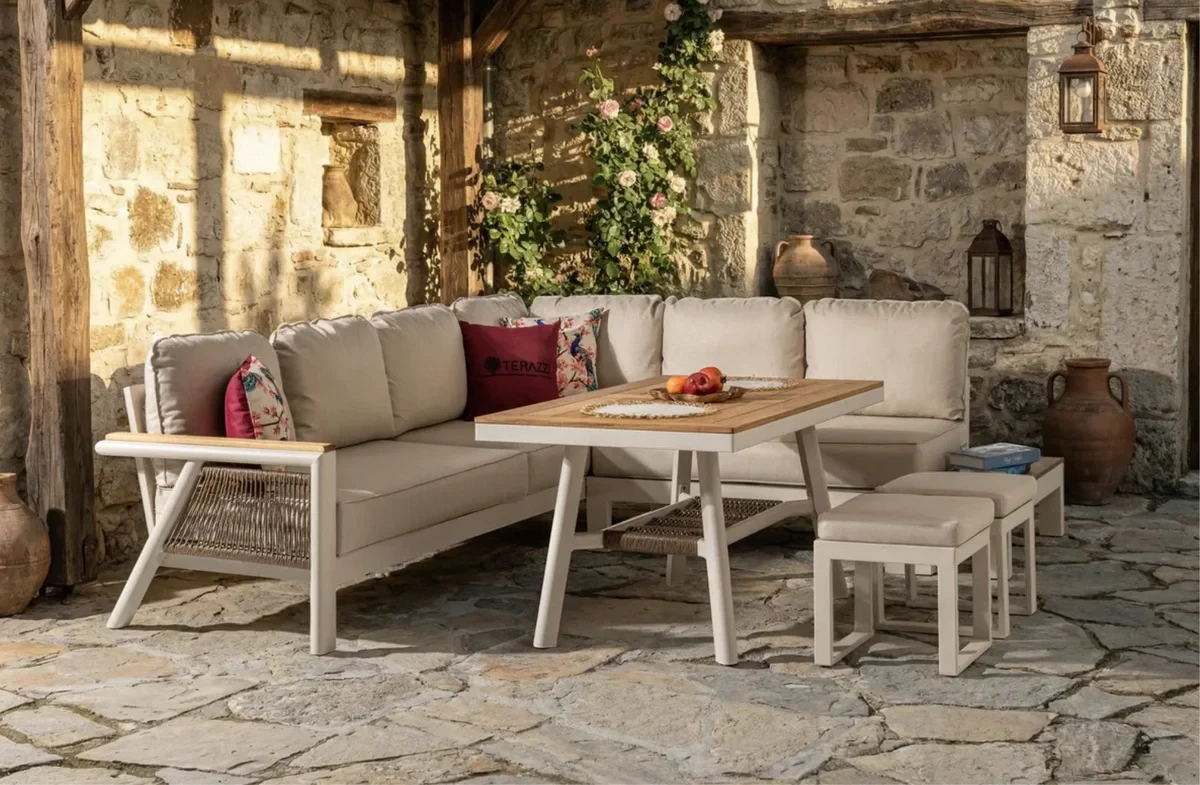
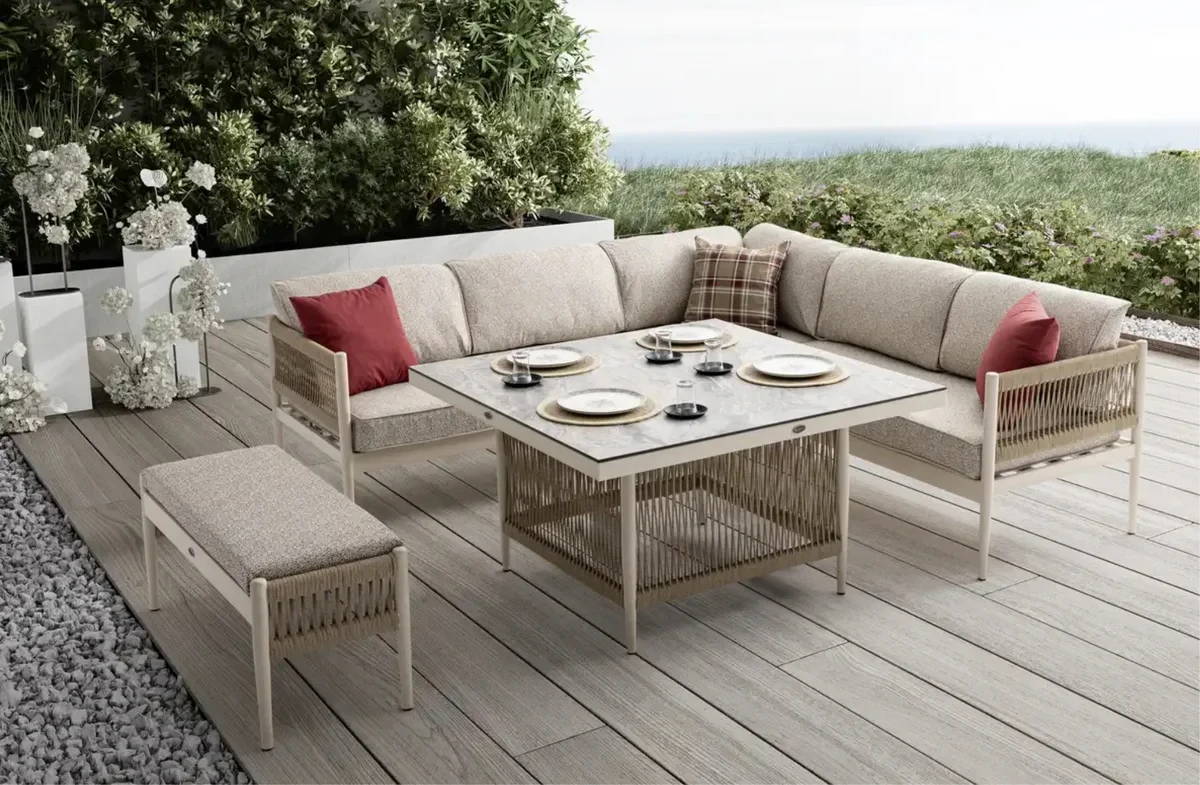
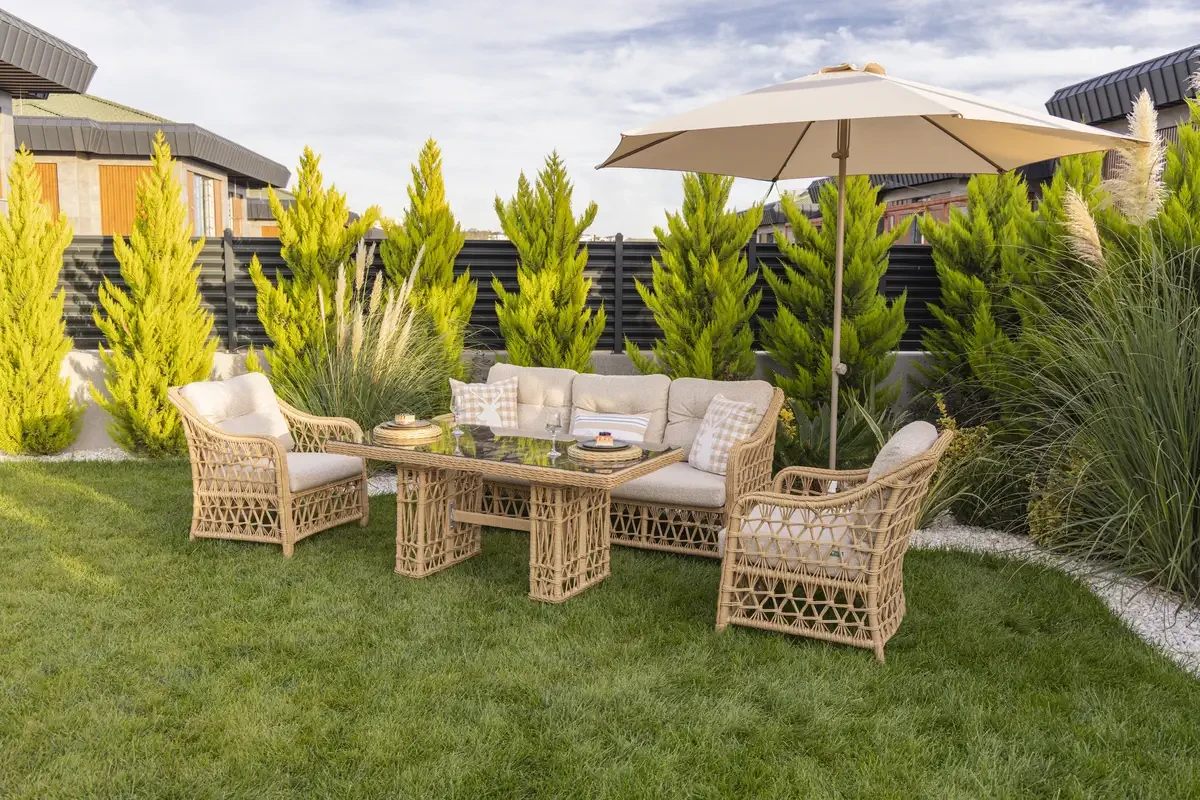
Terazzi’s garden seating options include alternatives designed for different dimensions and arrangements. Corner sets create spacious seating areas, while compact sets can be used in more limited spaces. Since a product being modular does not necessarily mean that every component will be sold separately at a later date, the contents of the set should be checked before purchase.
A similar assessment should be made for balcony dining sets. A table that is much larger than the number of people who use it daily can make a space less efficient, despite requiring more surface and supporting materials. Choosing table capacity based on actual usage patterns helps ensure that the product continues to meet users’ needs for longer.
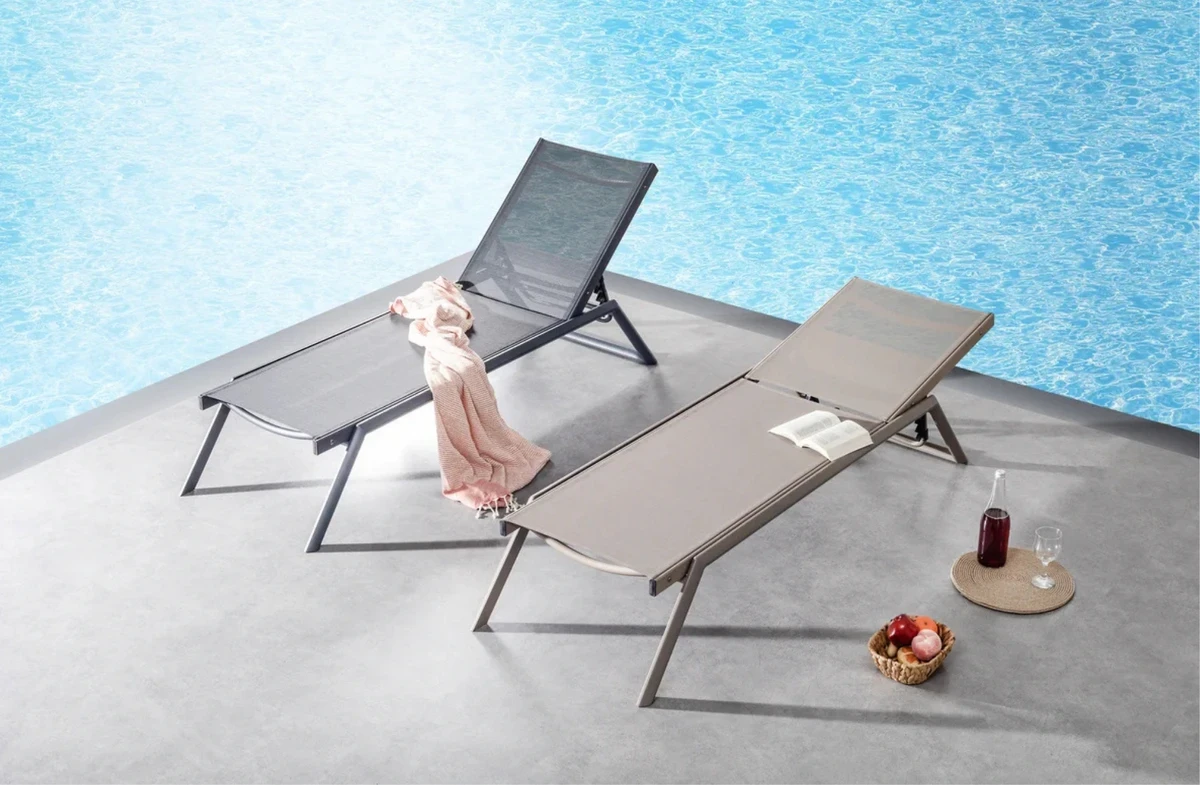
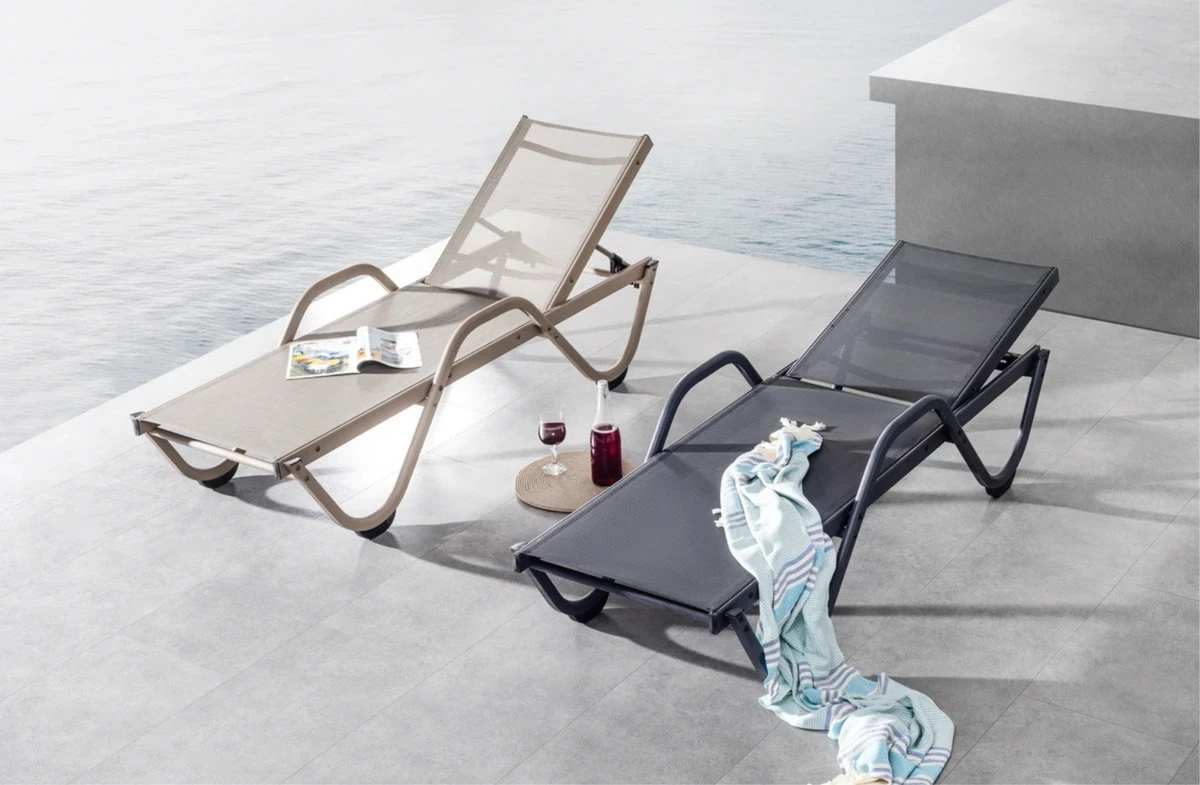
Adjustable sun loungers can be used at different backrest angles for sunbathing, relaxing, and reading. A single product that adapts to multiple uses reduces the need for different types of lounge furniture in the same space. When choosing a model, its backrest mechanism, mesh or cushioned surface, and moving connections should be examined individually.
What Information Should Be Checked When Assessing Sustainability Claims?
Natural colors, wood patterns, and product images styled in green tones do not provide technical information about environmental performance. When evaluating outdoor furniture, the frame, surfaces, and connection details should be examined before marketing claims.
Before making a purchase, consider the following questions:
Are the frame, wood, woven, and upholstery materials described separately?
If recycled content is claimed, are its percentage and scope specified?
Is information provided about the drying and maintenance of wooden components?
Is the UV resistance of polymer or woven surfaces explained?
Are the cushion covers and moving mechanisms accessible?
Is the warranty coverage clearly defined for the frame, textiles, and mechanisms?
Are the product’s dimensions suitable for possible future changes in layout?
When comparing Terazzi’s outdoor furniture collections, the material pages and product details should be reviewed together. The same aluminum frame system may be complemented by iroko, woven, mesh, or cushioned surfaces in different models. As the material composition changes, so do the user experience, weight, and maintenance requirements.
Frequently Asked Questions About Garden Furniture Trends
How Can You Identify Sustainable Garden Furniture?
The name of the material alone is not enough. The outdoor durability of the frame, the ability to separate components, the renewability of textile surfaces, and the transparent disclosure of product information should all be evaluated together.
Is Aluminum Garden Furniture Recyclable?
Aluminum is a metal that can be reprocessed. For efficient recycling, wooden, plastic, and textile components must be separable from the metal frame.
Is Wooden Garden Furniture Sustainable?
The answer depends on the wood species, sourcing, drying process, maintenance frequency, and service life. A product that deforms quickly does not reduce resource consumption, even if it is made from a natural raw material.
Is Synthetic Rattan Garden Furniture Recyclable?
Its recyclability depends on the type of polymer used and whether the woven material can be separated from the supporting frame. UV resistance and weaving connections also affect how many seasons the product can withstand outdoor conditions.
What Are the Advantages of Modular Garden Furniture?
Modular products can be adapted to spaces of different sizes and various seating arrangements. Being able to reuse the same components after moving or changing the layout reduces the need to replace the entire set.


-
 Turn Your Balcony into a Winter Garden with Garden Furniture: Step by Step Guide
11 September 2026 -
 Features of Iroko Groups in Wooden Garden and Balcony Furniture
11 September 2026 -
 What is Aluminum Garden and Balcony Furniture?
11 September 2026 -
 What is Rope Knitted Garden Furniture?
11 September 2026 -
 Outdoor Lighting and Furniture: How to Create the Right Balance
11 September 2026 -
 Outdoor Furniture Cleaning Guide: How to Keep It Looking Like New
11 September 2026 -
 Outdoor Seating Layout Guide for Large Terraces
11 September 2026 -
 Why Is Aluminum Preferred for Outdoor Furniture?
11 September 2026 -
 Villa Garden Decoration Ideas and 2026 Design Trends
11 September 2026 -
 Choosing Outdoor Furniture for Hotels and Restaurants
11 September 2026 -
 Decorating Ideas for Small Balconies: A Guide to Measurements, Materials, and Placementi
11 September 2026 -
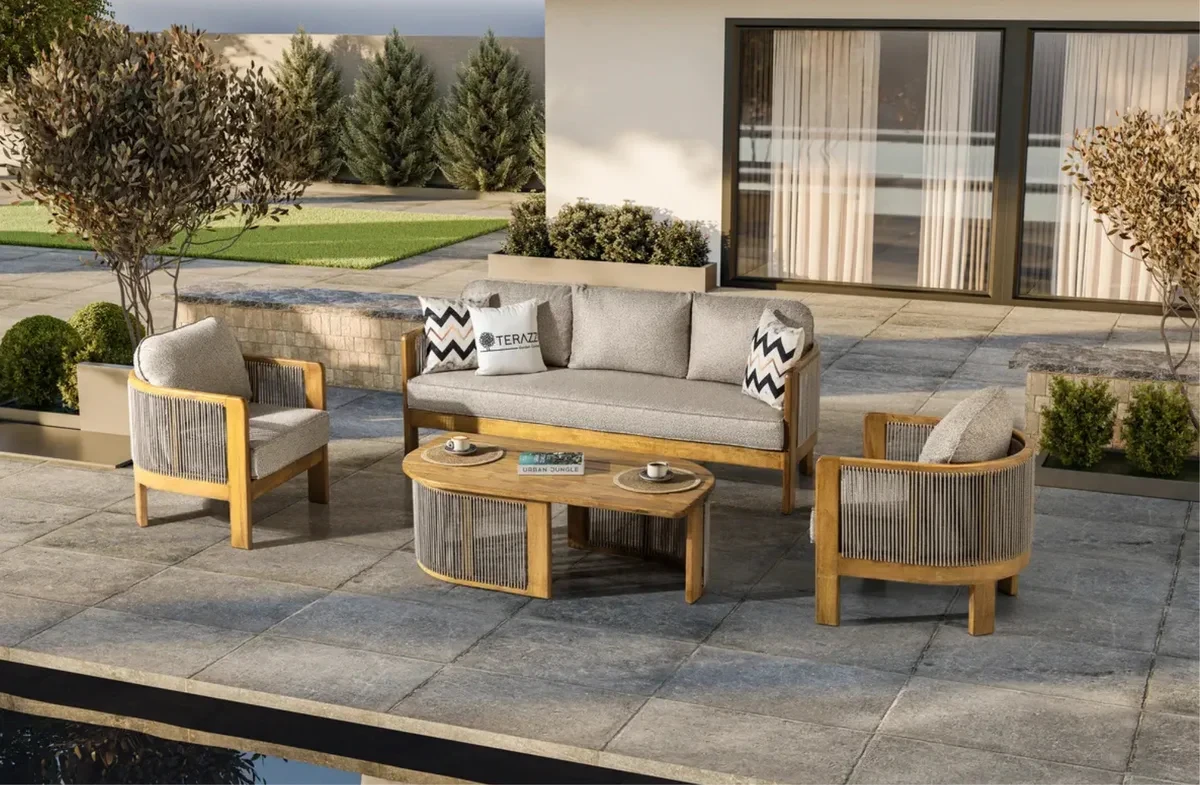 Differences Between Iroko and Teak Wood: Which is More Sensible for Garden Furniture?
11 September 2026 -
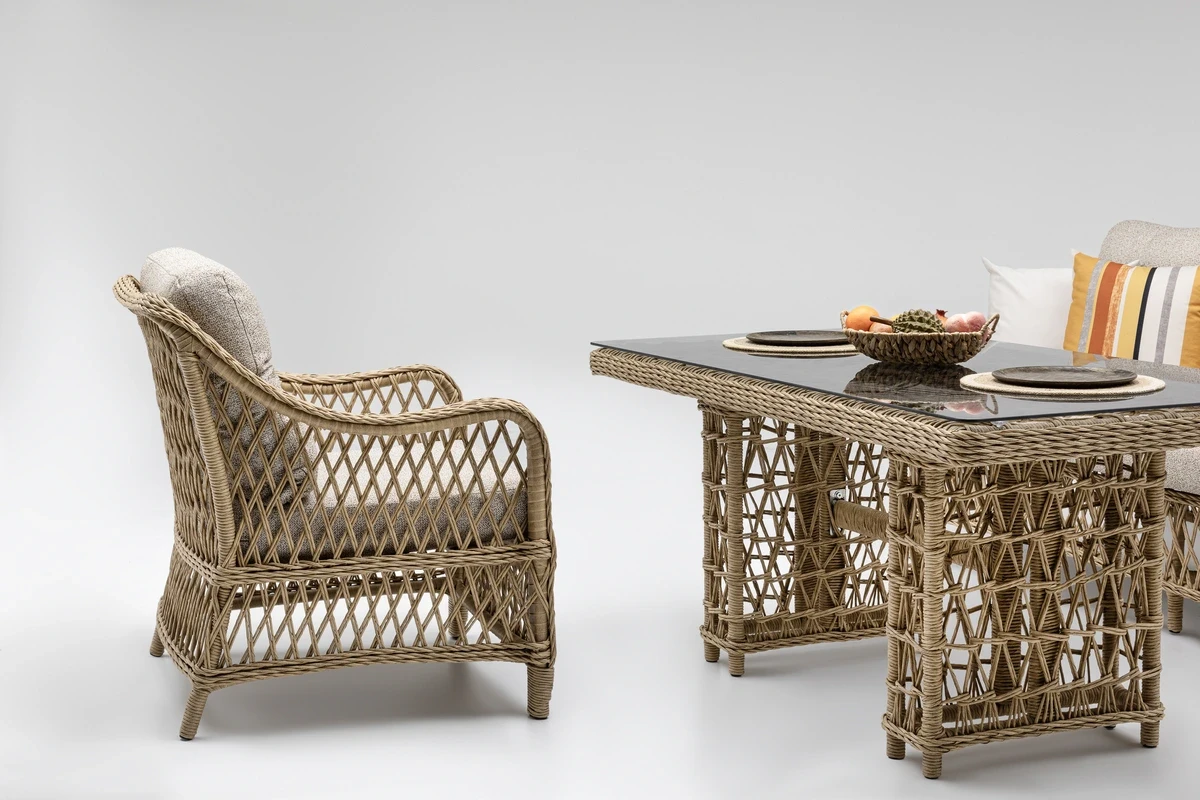 What is the difference between rattan and bamboo furniture?
11 September 2026 -
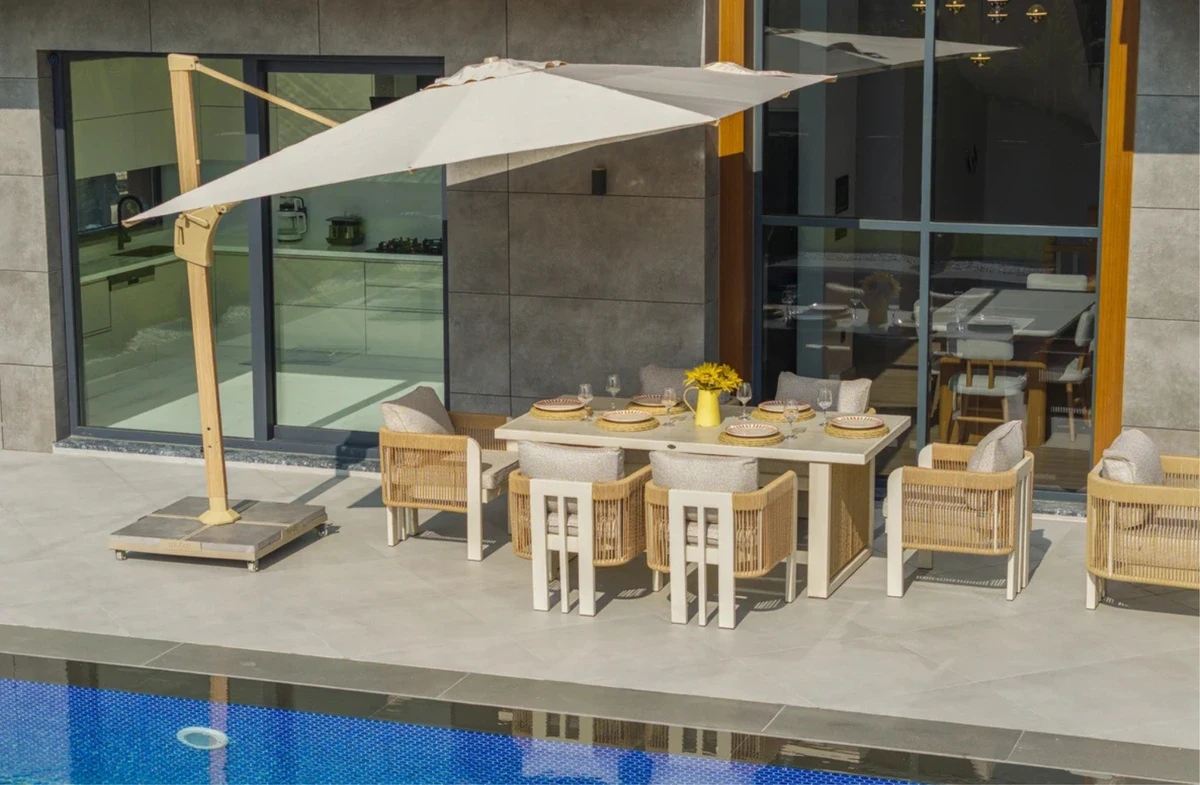 What should you pay attention to when choosing a garden or balcony umbrella?
11 September 2026 -
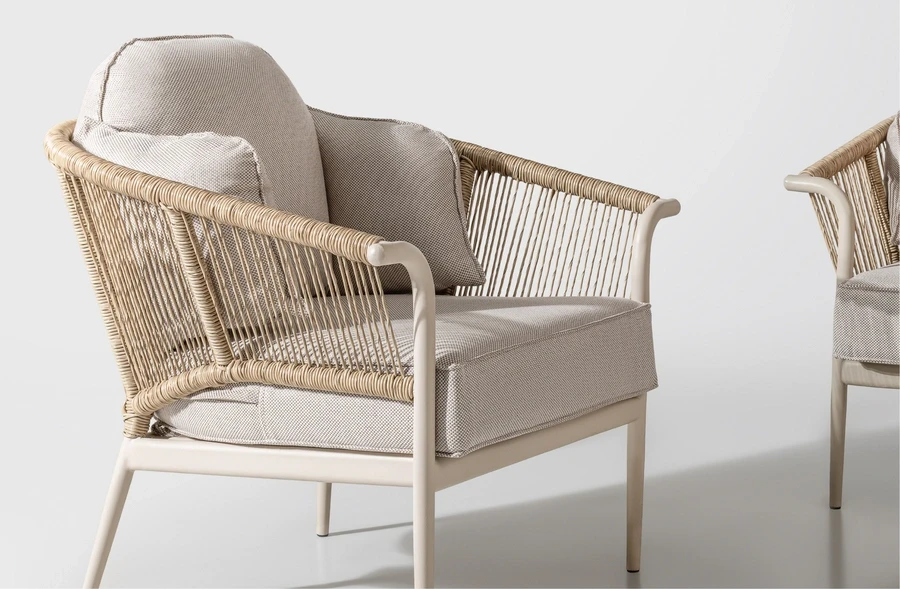 Cushion and Fabric Choices for Outdoor Furniture: Waterproof, Durable, and Comfortable Options!
11 September 2026 -
 Sun Loungers and Sunbeds: A Comfortable Guide for Poolside Use
11 September 2026 -
 Outdoor Dining Table Dimensions: How Much Space Do You Need?
11 September 2026 -
 2026's Popular Garden Furniture Collections
11 September 2026 -
 Which Garden Furniture Can Stay Outside All Year Round?
11 September 2026 -
 Garden Furniture Color Selection: How to Create an Outdoor Palette?
11 September 2026 -
 Terazzi Garden Furniture in the TV Series “Muhtemel Aşk”
11 September 2026 -
 Ways to Use Your Garden and Terrace for Longer in Autumn
11 September 2026