











Which Garden Furniture Can Stay Outside All Year Round?
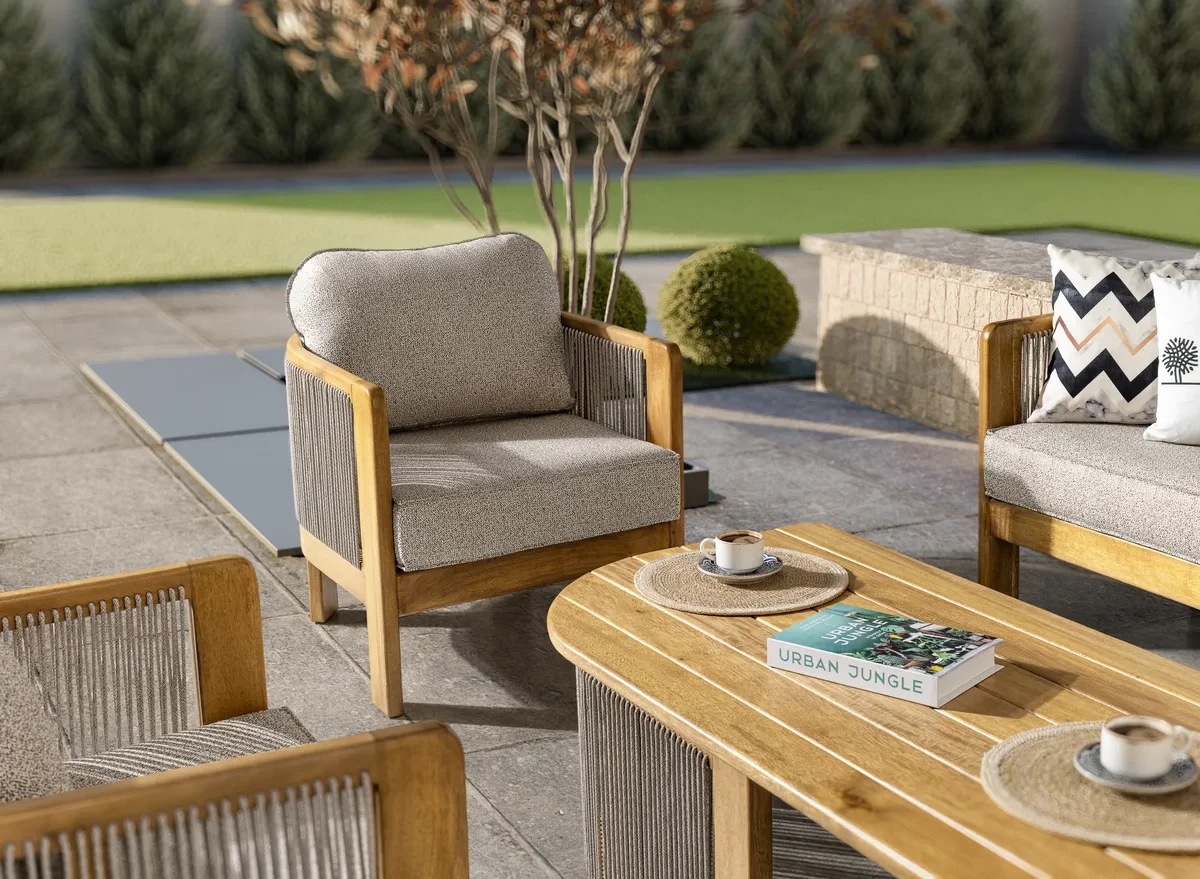
Electrostatically powder-coated aluminum, UV-resistant Wintech rattan, Luxio Cord outdoor rope, and properly treated iroko wood can all be used outdoors throughout the year. However, the durability of the frame is only one part of the equation. The quality of the coating, the connection components, and how effectively rainwater drains from the surfaces are equally important.
The furniture frame may remain outdoors, but cushions should be moved to a covered area before prolonged rain. Wooden legs standing in water, trapped moisture inside frame profiles, or salt accumulating around metal connections can cause surfaces to deteriorate earlier than expected.
What Does Year-Round Outdoor Furniture Use Mean?
Furniture suitable for year-round outdoor use should maintain its structural form despite exposure to rain, sunlight, humidity, and temperature changes. Some color variation may still occur over time, and cushions or textile components should not be expected to withstand the same conditions as the structural frame.
A furniture set used in a fully open garden will generally require more frequent cleaning than one placed under a covered veranda. Direct rain exposure, standing water on the floor, and all-day sunlight can significantly affect maintenance intervals.
When evaluating a product, consider the following questions: Is the coating continuous? Does the weave maintain its color under sunlight? Does the tabletop retain water? Do the feet prevent moisture from rising from the floor? Can the cushions be removed easily?
How Do Different Outdoor Furniture Materials Perform?
A furniture set may have a metal frame that handles rain well while its woven surfaces age faster under sunlight. Wooden parts may require oil maintenance, while HPL or ceramic tabletops need a different cleaning routine. For this reason, each surface should be evaluated according to its own material characteristics.
How Are Aluminum Frames Protected Outdoors?
Aluminum is lightweight and does not develop rust in the same way as iron. This is one of the main reasons it is widely used in open gardens, humid terraces, and poolside areas.
Electrostatic powder coating creates a protective surface layer over the aluminum and helps protect it from rain and everyday surface wear. For the coating to remain effective, exposed metal should not be visible around welds and deep scratches should be avoided.
Water trapped inside hollow profiles can become a problem, especially in regions where freezing temperatures occur. As water freezes and expands, it can place pressure on plugs, screws, and connection points. When inspecting a product, check whether drainage openings are present underneath the profiles.
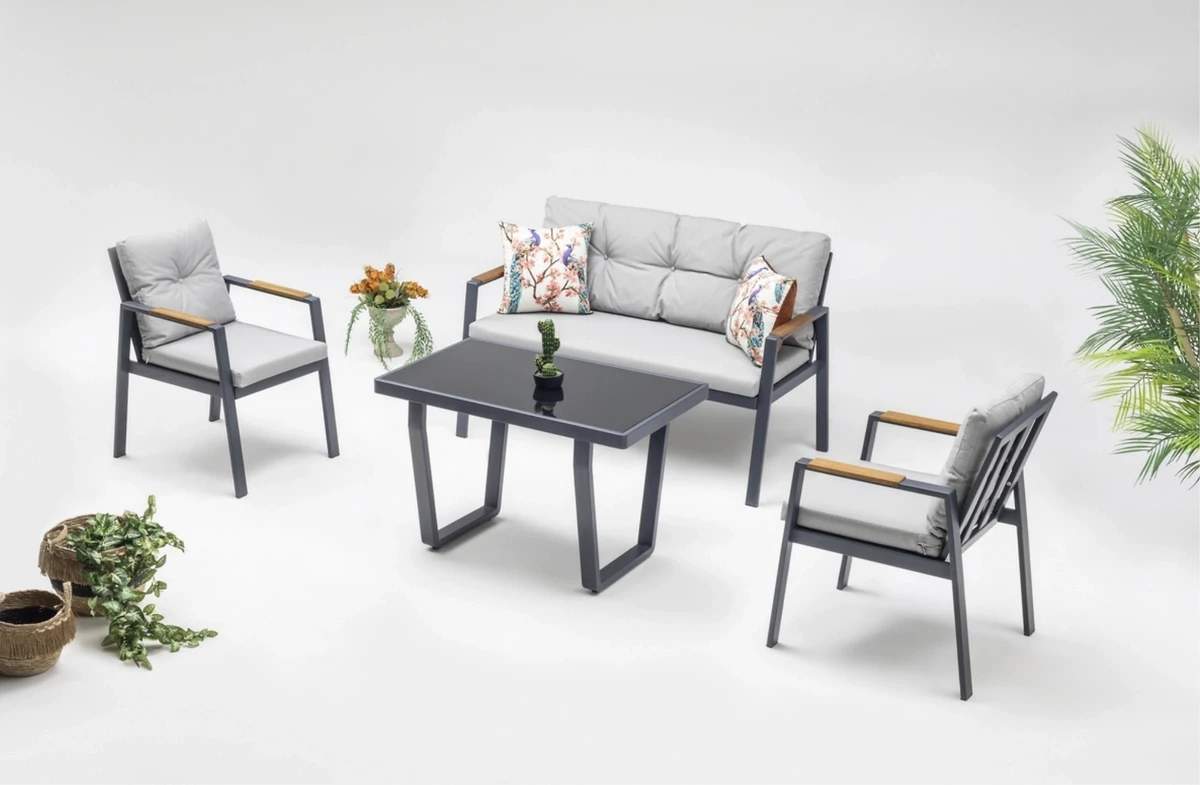
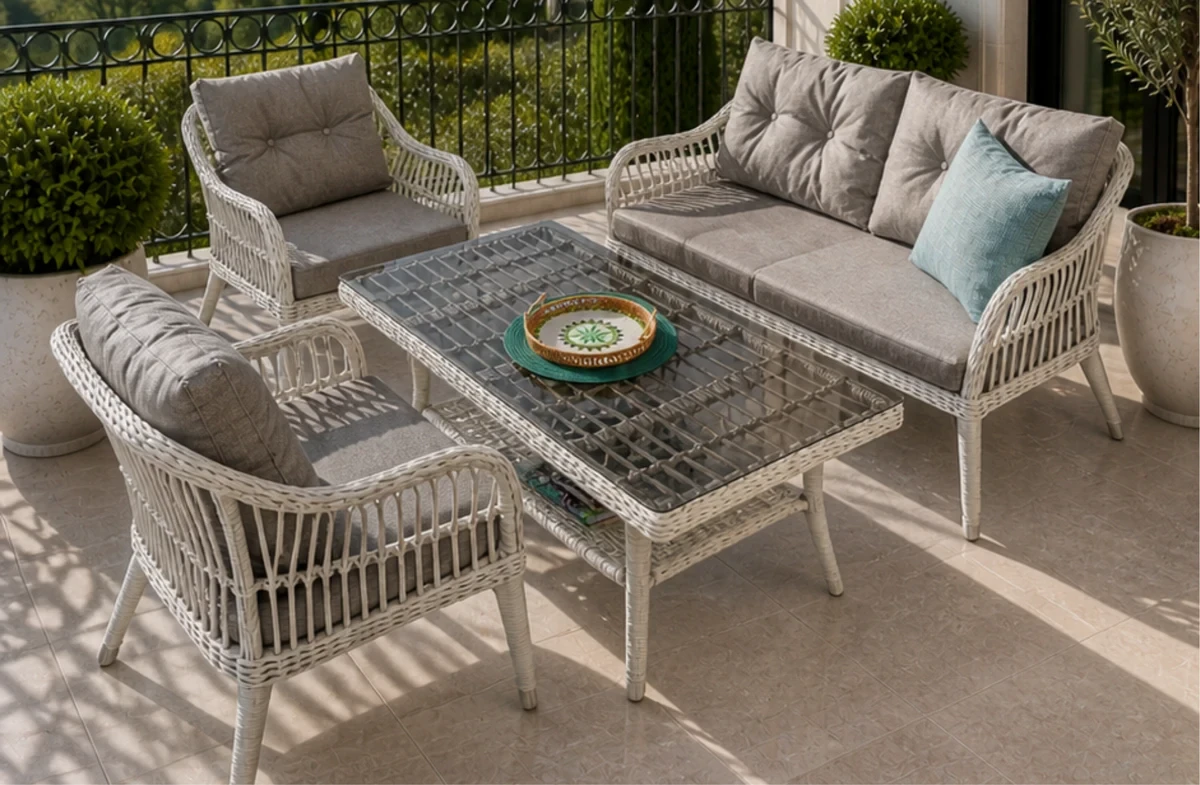
Aluminum-frame outdoor seating group used in open gardens or around pools generally require less surface maintenance than wooden-frame alternatives. Their lightweight structure also makes repositioning easier during cleaning.
In coastal environments, salt can accumulate around screws and welds. Wiping the frame periodically with fresh water helps remove these deposits. It is also important to confirm whether the connection hardware is suitable for coastal conditions.
Can Synthetic Rattan Withstand Rain and Sunlight?
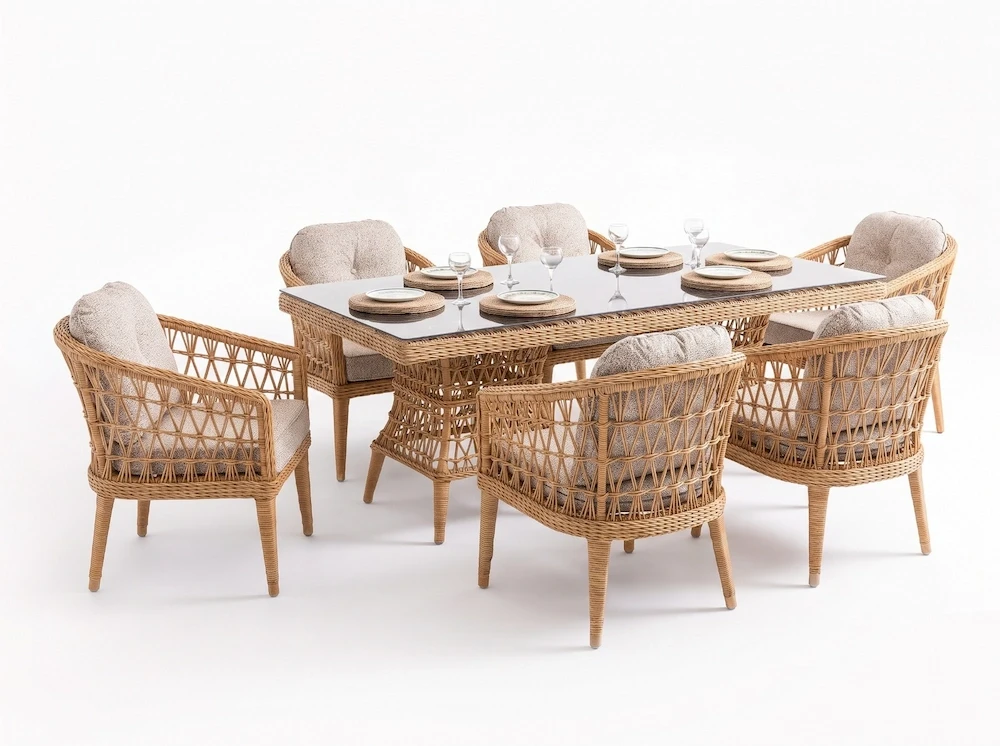
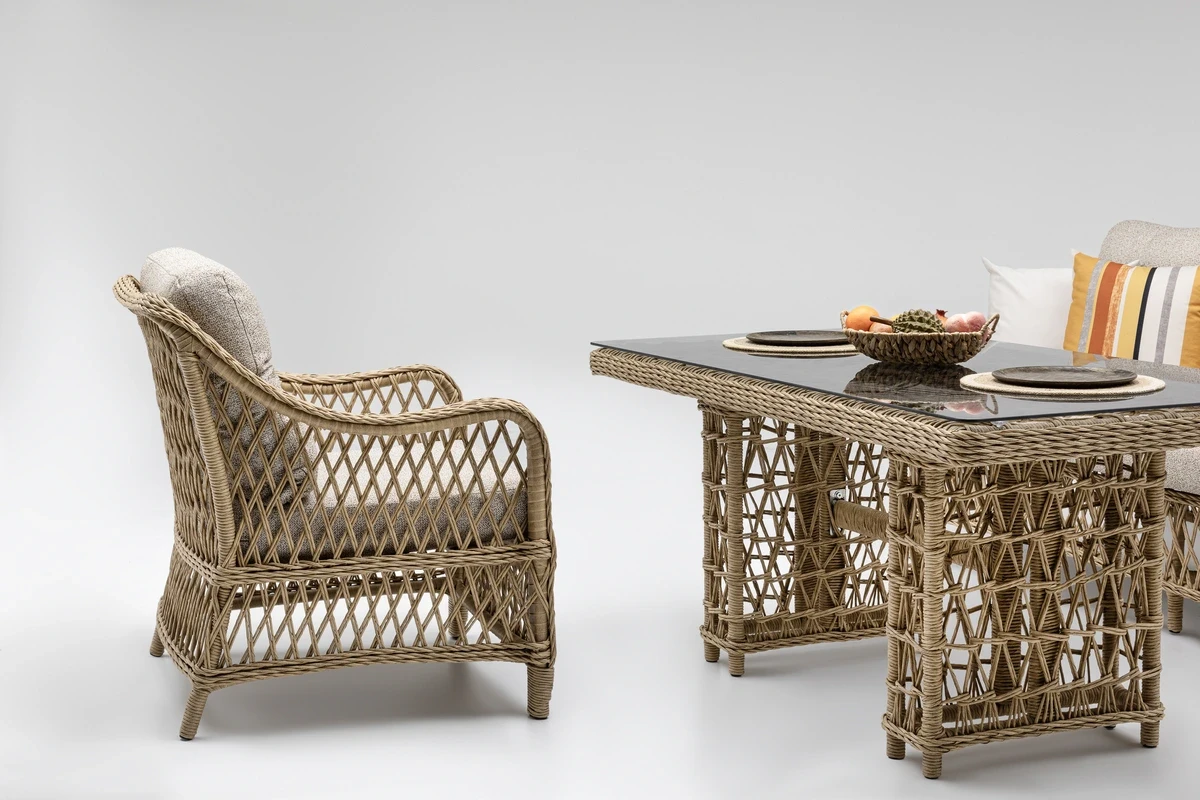
Natural rattan consists of plant fibers. If it remains damp for extended periods, the fibers may loosen, darken, or deform. This is why synthetic weaving is generally preferred for furniture intended to remain outdoors year-round.
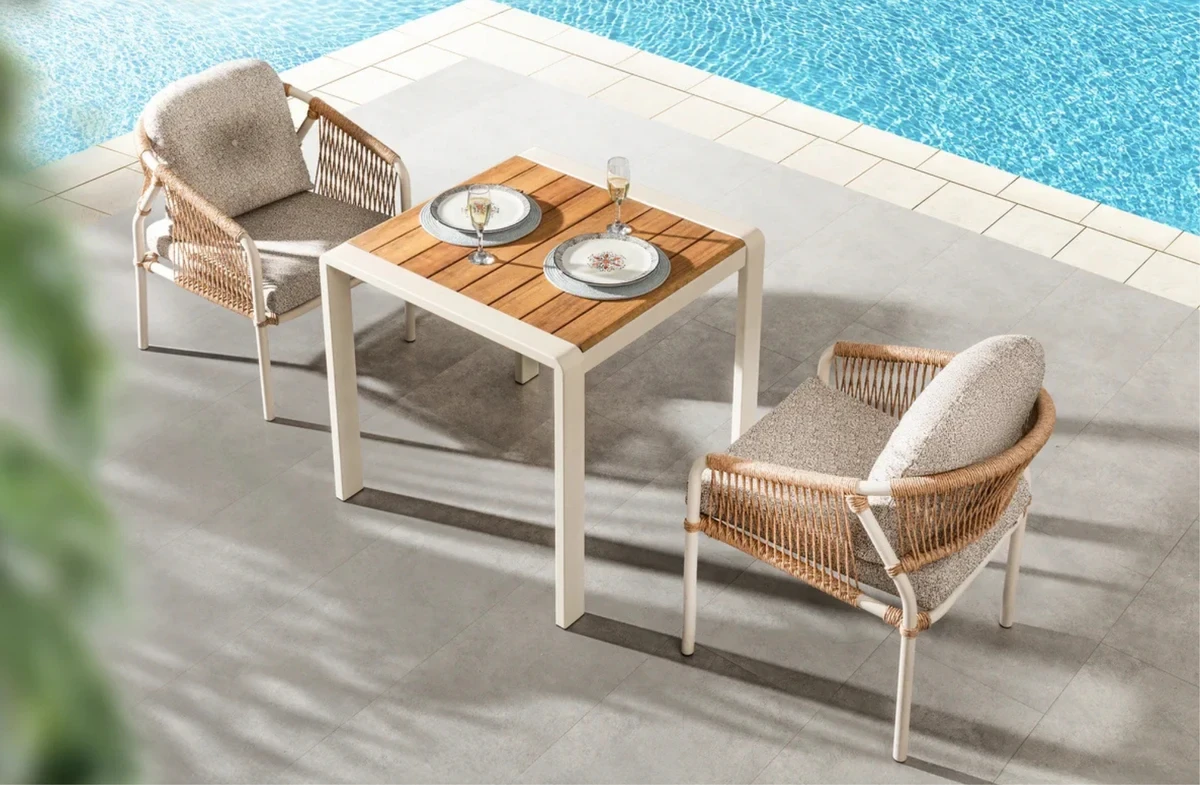
When choosing synthetic rattan, UV resistance is just as important as appearance. Weaves without suitable UV stabilization may eventually harden, lose color, and develop cracks. For this reason, Terazzi uses high-quality outdoor weaving designed to maintain its flexibility and appearance even under strong sunlight.
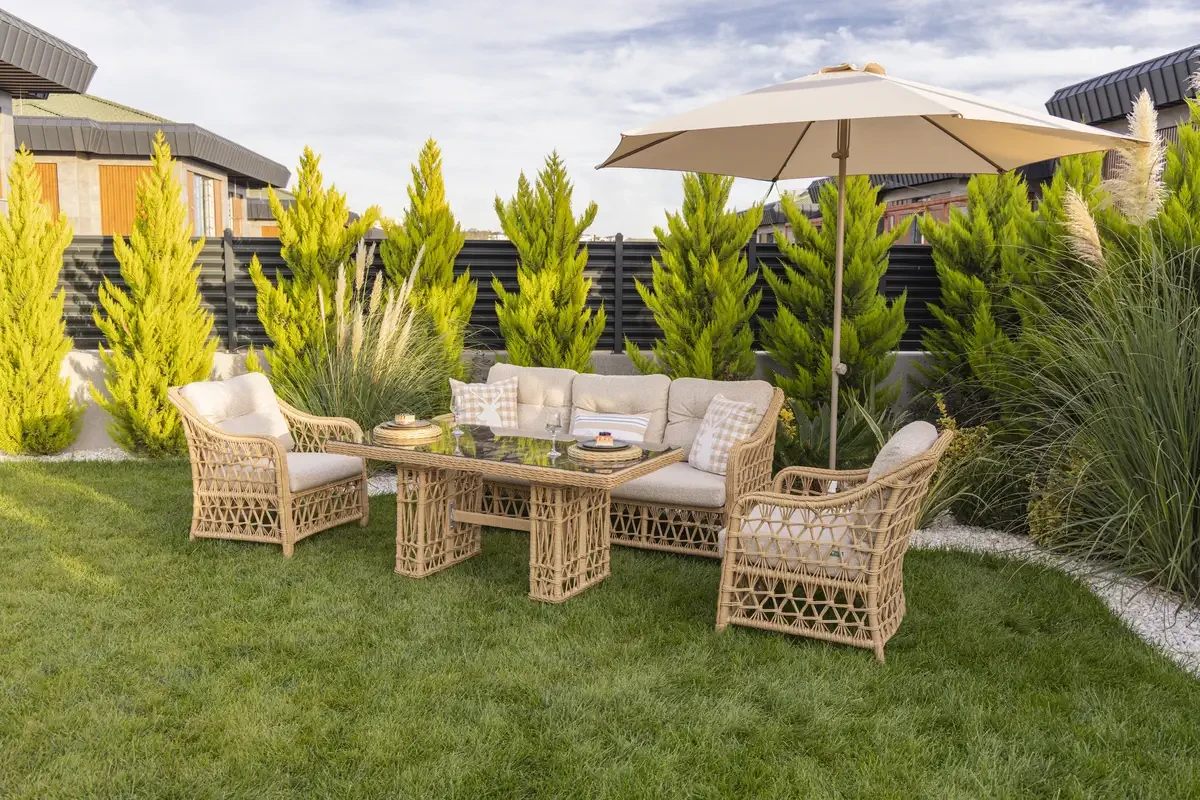
By combining the lightweight structure of aluminum with the comfort of synthetic rattan, our furniture provides both practical use and visual appeal. Because user experience is central to our design approach, damaged sections can often be repaired individually rather than requiring replacement of the entire furniture set, helping extend the overall service life of the product.
After rain, do not allow leaves, soil, or pollen to remain trapped between the woven sections. These materials retain moisture and slow down drying. A soft brush, water, and neutral soap are usually sufficient for cleaning. Wire brushes and high-pressure water can damage the woven connections.
Can Rope Furniture Be Used Outdoors?
Not every rope that appears thick or durable is suitable for outdoor use. It should maintain its color under sunlight, resist loosening after repeated exposure to water, and retain sufficient tension under seating loads.
Product specifications should ideally include information about UV resistance, tensile strength, washability, and stain resistance. The knots and connection points where the rope meets the frame are just as important as the rope itself.
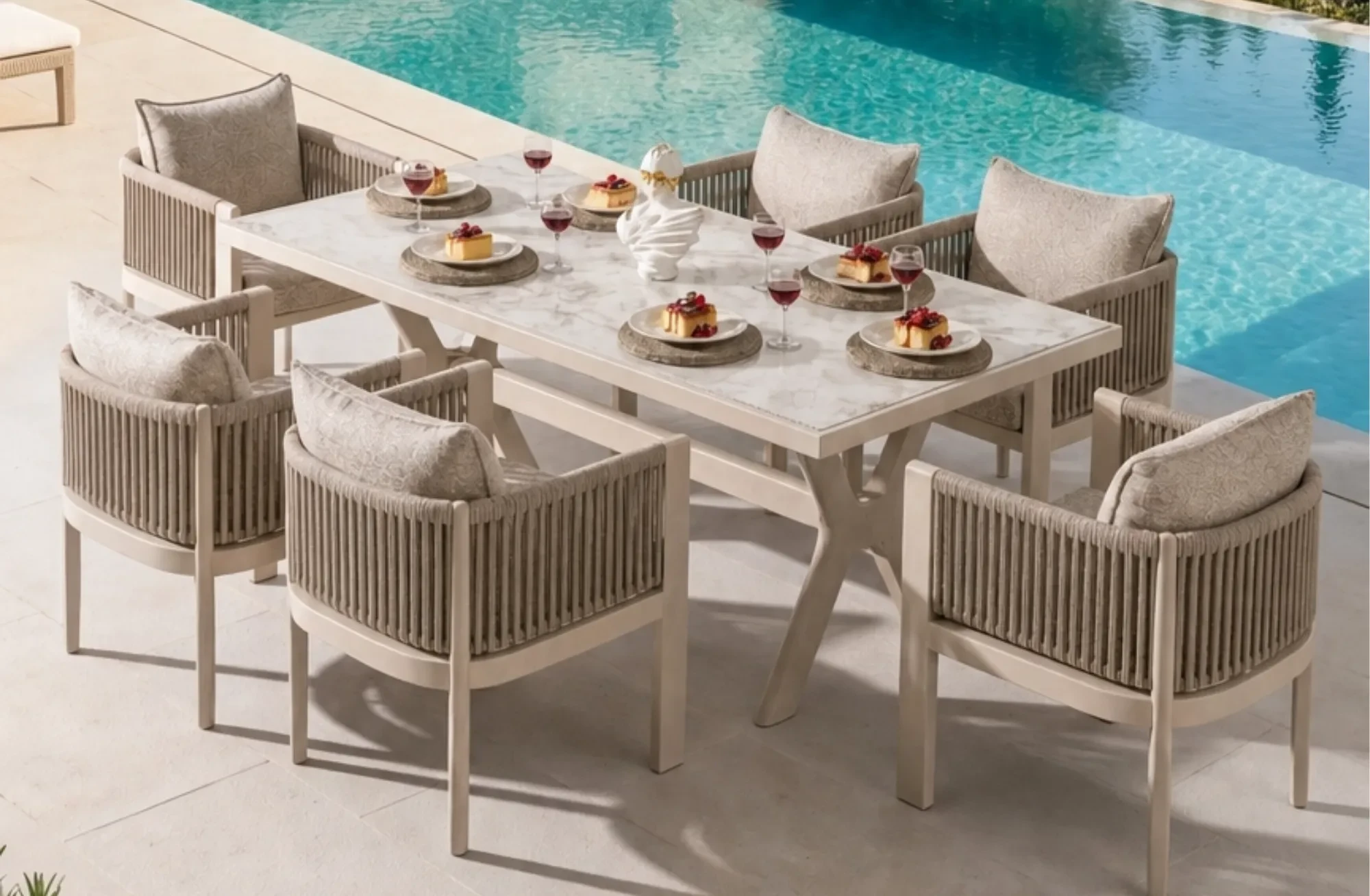
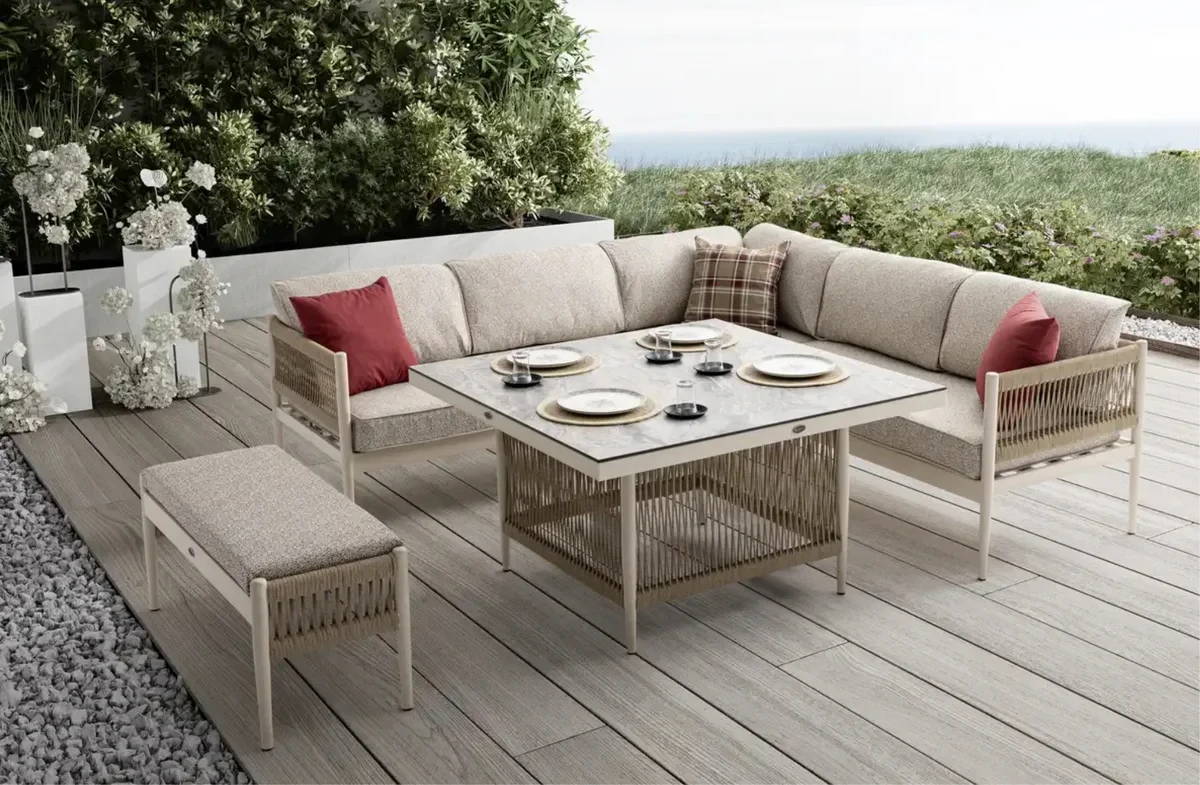
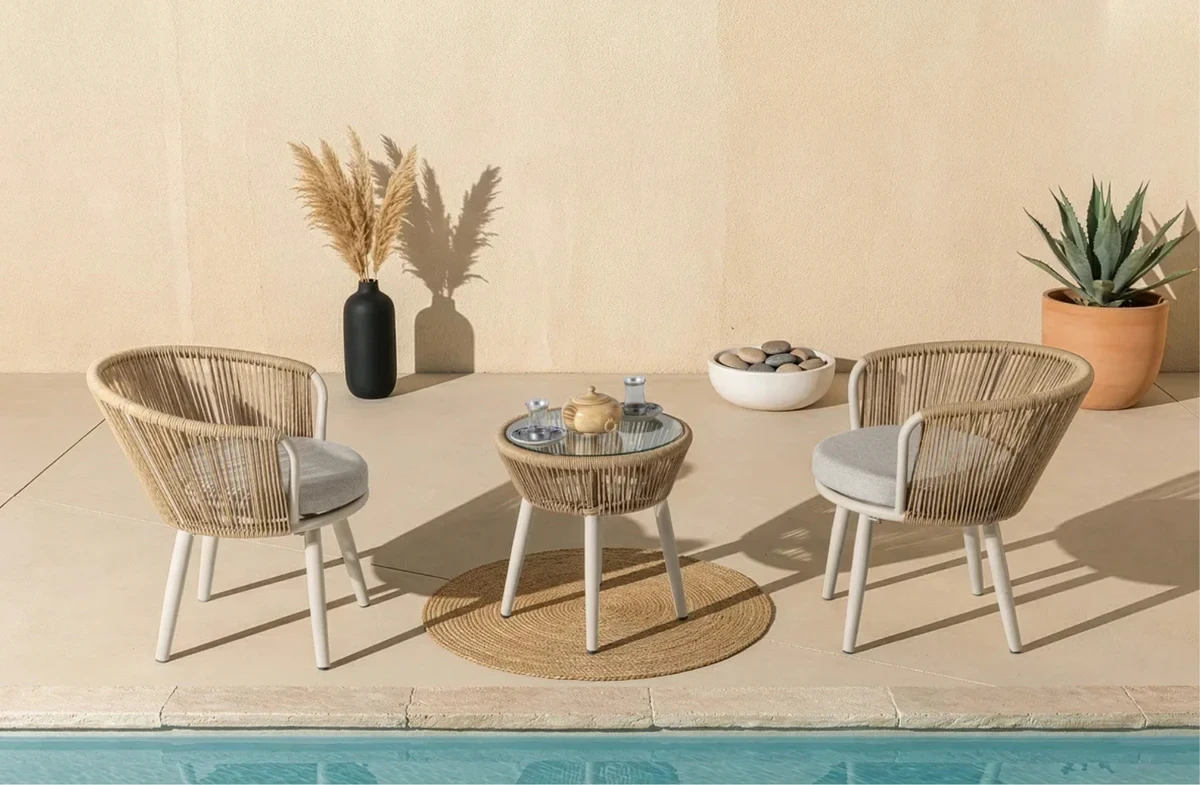
Open-weave rope surfaces retain less rainwater than solid textile surfaces and generally dry faster. Around pools, this type of construction can offer a simpler maintenance routine than thick cushioned seating.
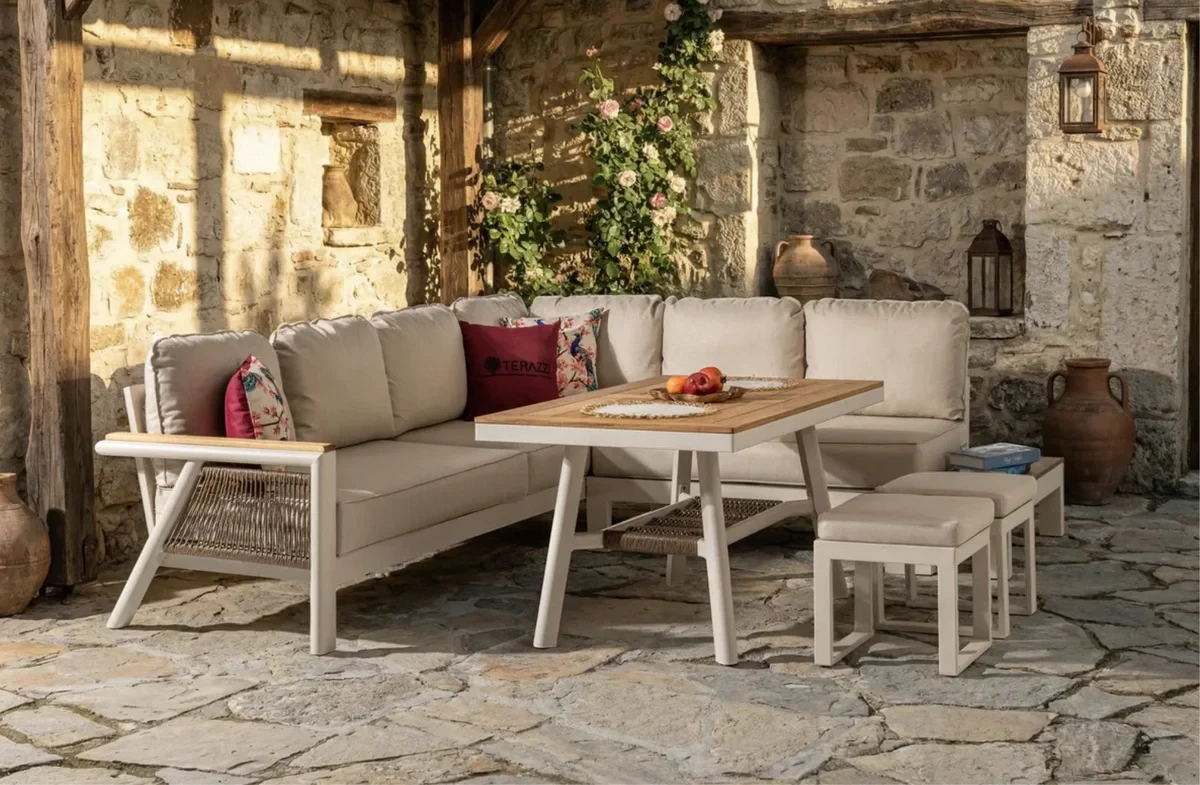
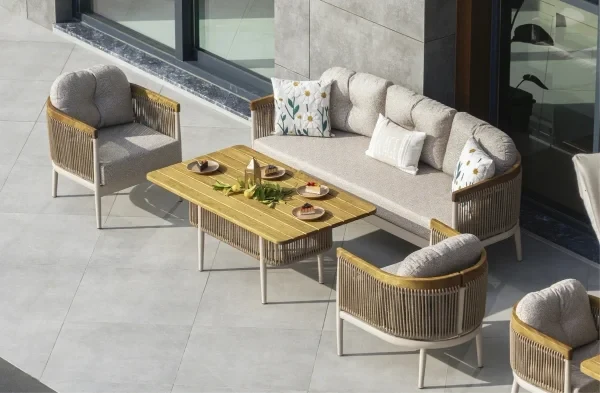
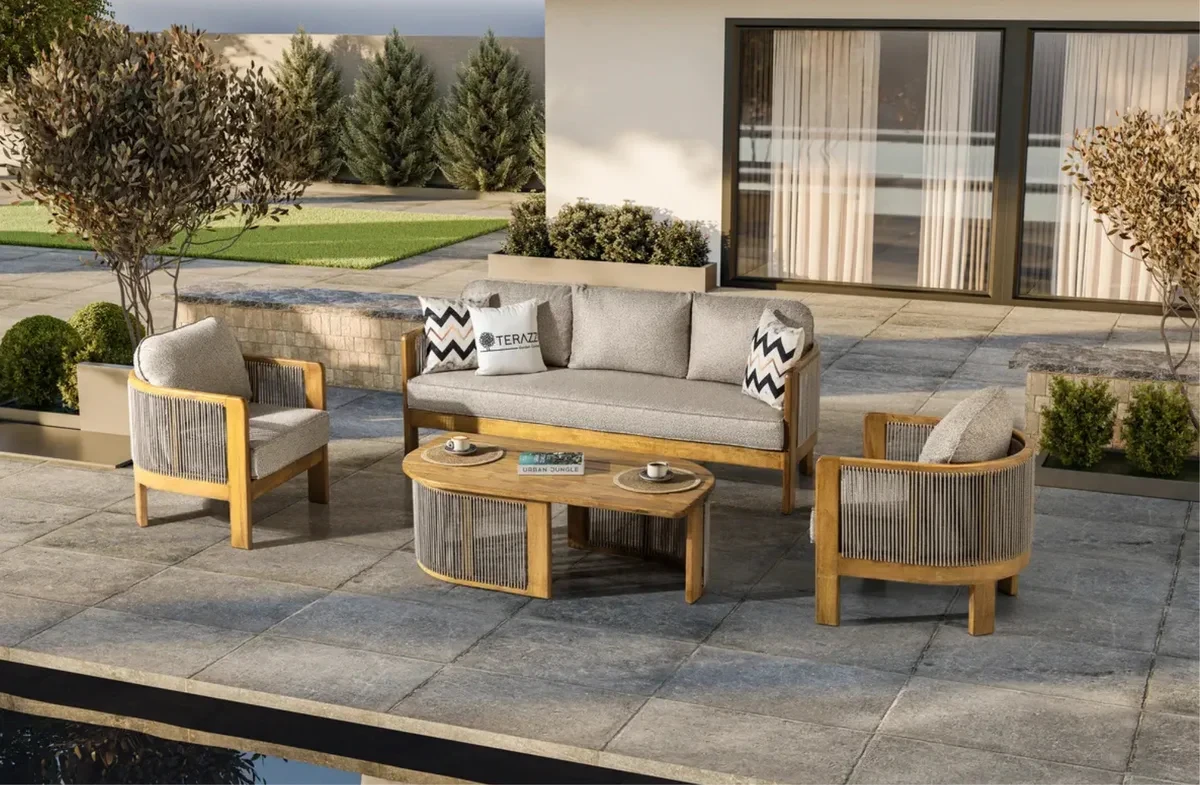
In products combining aluminum, iroko wood, and outdoor rope, each material should be maintained differently. Rope surfaces can be cleaned with water and mild soap, while wooden sections require periodic oil treatment.
Can Iroko Wood Stay Outside During Winter?
Thanks to its dense fibers and natural oil content, iroko is more resistant to outdoor conditions than many softer wood species. Properly dried and treated iroko furniture can remain outdoors throughout the year.
Water drainage is just as important as oil maintenance. If rainwater remains on the tabletop or the legs stand continuously on wet flooring, the wood experiences greater movement. Repeated wetting and drying cycles can eventually cause joints to open, surfaces to crack, or structural sections to warp.
Iroko exposed to sunlight gradually becomes dull and may develop a gray tone. If the wood does not show signs of softness, deep cracking, or joint failure, this change is usually superficial. If the original tone is preferred, the surface should be cleaned, dried completely, and treated with suitable outdoor wood oil.
Instead of applying oil according to a fixed calendar, inspect the surface itself. If the wood absorbs water immediately, looks excessively dry, or develops uneven color, it may be time to reapply the oil.
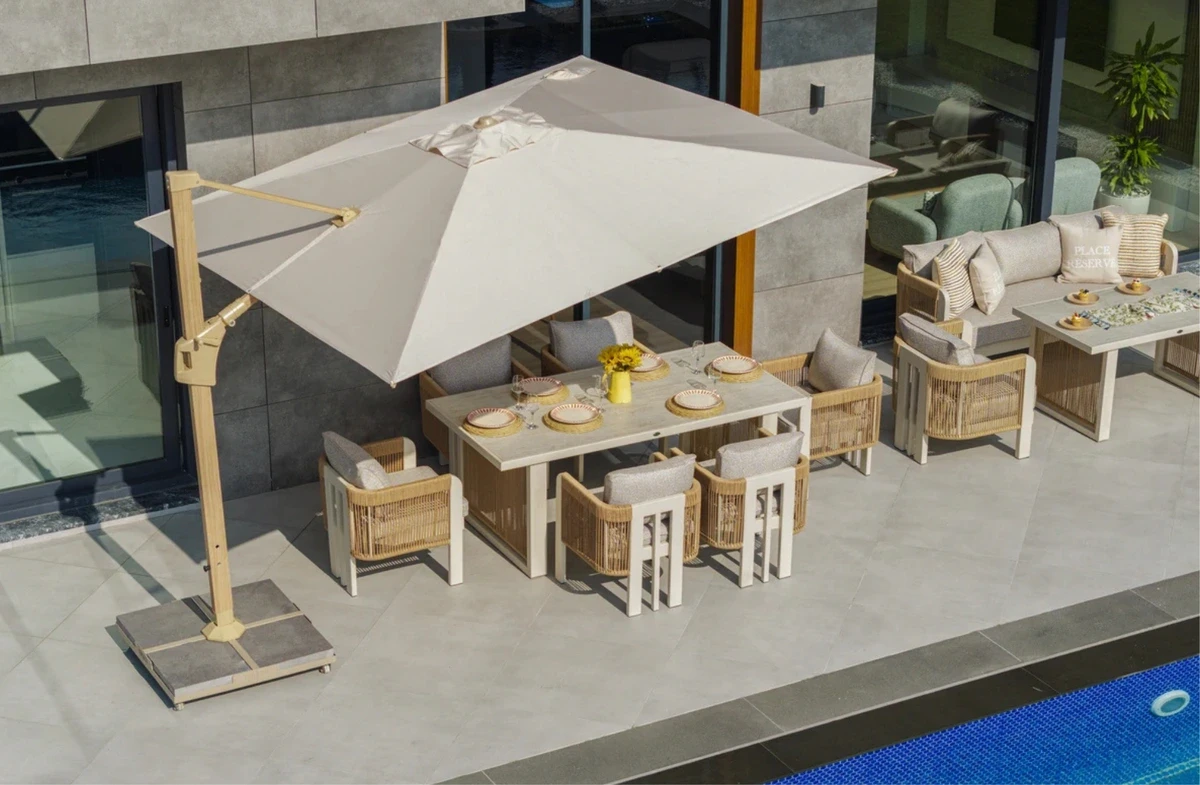
Iroko-top outdoor dining sets generally retain their form for longer when the legs remain on dry flooring and rainwater does not collect on the tabletop.
Are HPL and Ceramic Tabletops Affected by Rain?
HPL tabletops intended for outdoor use should be compact-grade and suitable for exterior conditions. Standard indoor laminates may swell or delaminate from the edges when exposed to moisture.
Edge finishing, mounting holes, and the supporting frame beneath the tabletop are critical. Even if the surface appears intact, water entering through screw openings can cause problems around the connection points.
Ceramic tabletops have very low water absorption. However, the supporting structure underneath must also be suitable for outdoor use. When evaluating a table, the metal frame and mounting method should be considered alongside the tabletop surface itself.
How Does Furniture Placement Affect Its Lifespan?
Furniture dries more slowly when standing water collects underneath or around it. Sofas positioned directly against a wall receive less airflow at the back, allowing dust and moisture to accumulate. On windy terraces, lightweight tables and chairs may need to be moved to a safer position.
On large terraces, placing dining and seating areas away from gutter outlets helps prevent repeated water exposure from the same direction. Floor slope also determines where rainwater naturally collects.
Large tables can wobble if their legs do not sit evenly on the floor, and this movement may loosen connections over time. The slope and level of the surface should therefore be checked before installing an outdoor dining set.
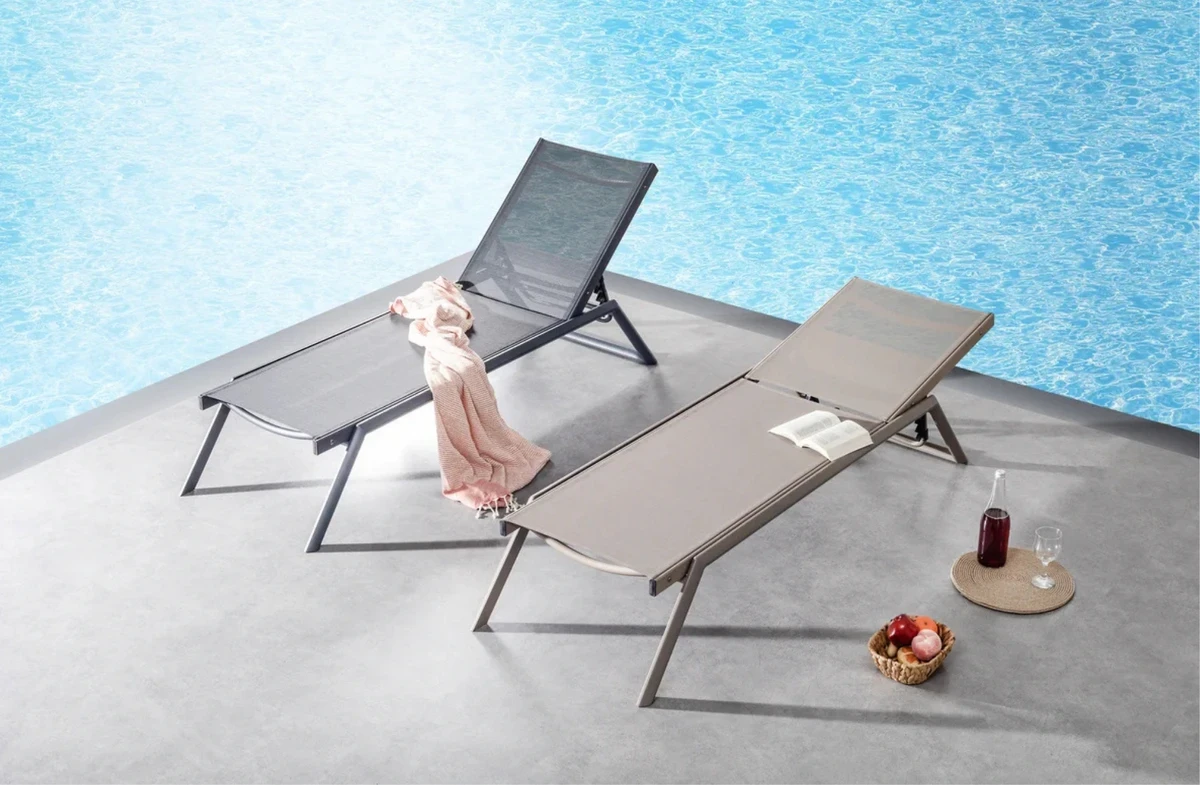
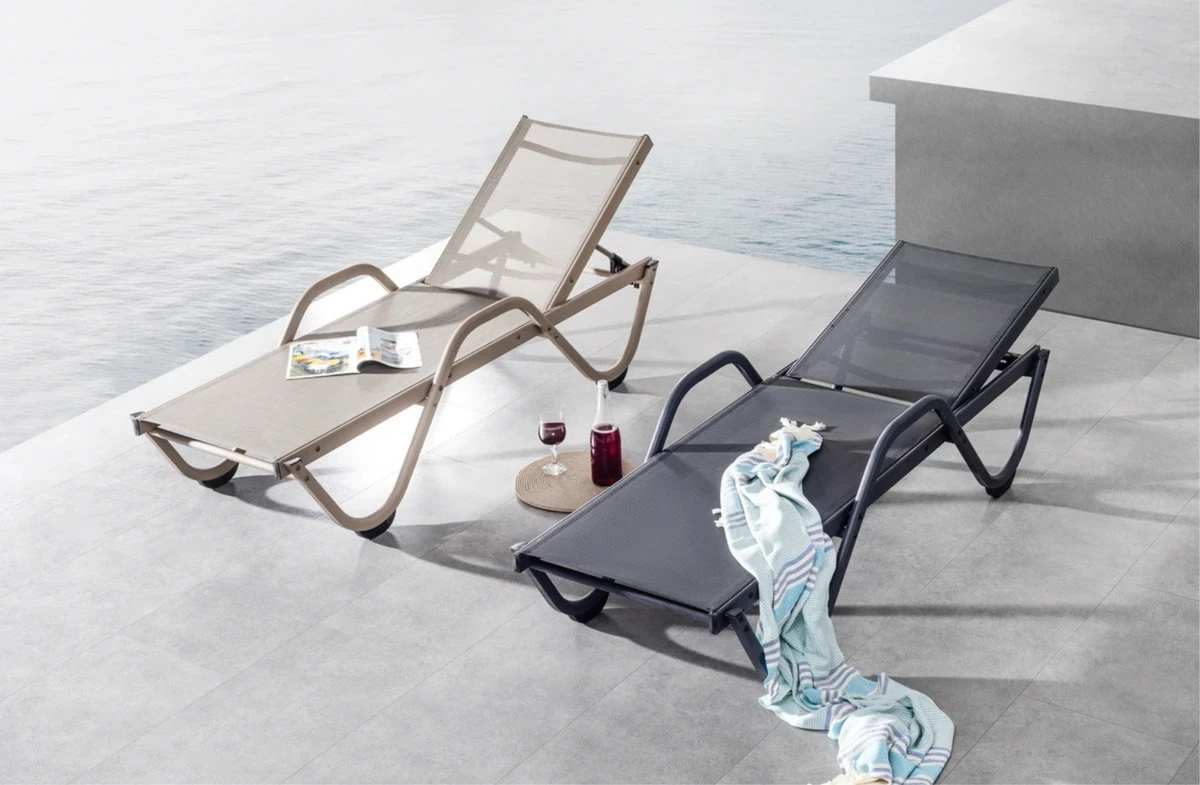
Around pools, chlorinated water, sunscreen, and wet towels make surface cleaning more demanding. Poolside sun loungers combining aluminum frames with mesh or open weaving generally dry faster than heavily cushioned models.
On small balconies, lightweight aluminum furniture can be repositioned easily when necessary. On upper floors, chairs, side tables, and accessories should also be secured appropriately so they cannot be moved by strong winds.
Note: If water remains continuously under the furniture legs, the problem may be caused by the floor slope rather than the furniture material. Check where rainwater collects before finalizing the layout.
What Information Should Be Checked Before Buying?
Product images alone do not provide enough information about dimensions, materials, and maintenance. Technical descriptions should clearly explain the frame, weave, tabletop, cushions, and connection details.
Is the frame made of aluminum, steel, or wood?
Does the metal surface have electrostatic powder coating?
Is UV resistance specified for rope or synthetic rattan?
Is the wood species and surface treatment clearly stated?
Is the cushion fabric water-repellent or waterproof?
Are the covers removable and washable?
Does rainwater remain on the seating or tabletop surfaces?
Are screws and connections suitable for outdoor use?
Can foot pads, cushion covers, or woven sections be replaced?
Does the manufacturer provide maintenance instructions?
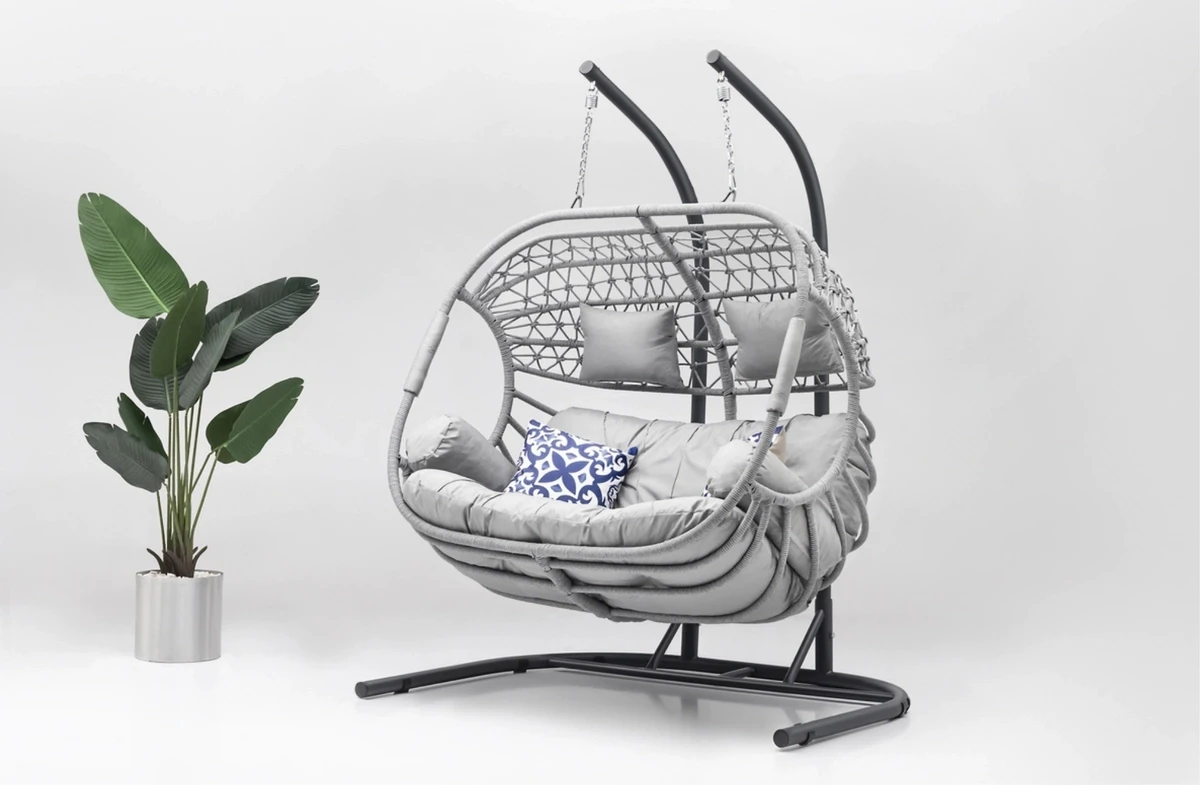
If an outdoor swing is added to the relaxation area, suspension points and pins should be checked as carefully as the main frame. At the beginning of each season, inspect outdoor swing options for looseness at hanging points, rust on pins, and tears in canopy fabrics.
Can Cushions Stay Outside All Year?
Water-repellent fabric slows down immediate absorption during light rain. However, during prolonged rainfall, water may eventually enter the foam through seams and zipper areas.
Even if the outer fabric feels dry, moisture can remain inside the filling. If wet cushions are used or placed into storage before drying completely, odors, stains, and foam deformation may occur.
Move cushions indoors before prolonged rain. Do not stack wet cushions, and make sure both sides are fully dry before storing them. Keeping cushions in a dry, covered, and well-ventilated area during winter helps preserve their shape.
On balconies or terraces without dedicated storage space, seating made from mesh, synthetic weaving, or outdoor rope generally dries faster than thick cushioned alternatives.
Maintenance, Part Replacement, and Long-Term Use
The first step in maintenance is to prevent water, salt, soil, and leaves from remaining on the furniture surfaces. When weaving gaps, screw areas, and the underside of the feet are kept clean, these sections dry more quickly after rain.
Aluminum, synthetic rattan, and rope surfaces can usually be cleaned with water, neutral soap, and a soft cloth. Wire brushes may scratch or damage the weave. Abrasive chemicals can also dull painted surfaces and cause permanent staining.
Iroko should only be oiled after the surface has dried completely. Applying oil to damp wood may trap moisture inside. Dirt, algae, or old product residue should be removed before applying a new layer of oil.
Instead of sealing a protective cover tightly down to the floor, leave enough space around the lower section for airflow. Condensation can form underneath completely airtight plastic covers, keeping the furniture damp even when it is protected from direct rain.
In snowy regions, do not allow thick layers of snow to remain on tables, umbrellas, or swing canopies. Large horizontal surfaces can place excessive pressure on joints and structural components when loaded with snow.
If cushion covers, foot pads, or connection parts can be replaced individually, small damage does not require replacing the entire furniture set. Replaceable components allow the product to remain in use through minor repairs, reducing both maintenance costs and unnecessary material consumption.
Which Outdoor Furniture Material Requires the Least Maintenance?
One of the lowest-maintenance combinations is generally a powder-coated aluminum frame with UV-resistant synthetic weaving or quick-drying mesh.
Iroko can also remain outdoors year-round when its feet do not stay in standing water and the surface is oiled when necessary.
When choosing furniture, do not evaluate only the main material. Coating quality, connection details, drainage, and cushion information should also be considered. With the right combination of materials and proper placement, the furniture frame does not need to be moved into storage every winter. In many cases, removing the cushions, keeping surfaces clean, and inspecting small connection points is sufficient.
Frequently Asked Questions About Year-Round Outdoor Furniture
Can aluminum outdoor furniture stay outside during winter?
Yes. Electrostatically powder-coated aluminum furniture can remain outdoors during winter. Cushions should be stored indoors, and the furniture should be checked for trapped water inside profiles and deep scratches in the coating.
Is synthetic rattan affected by rain?
UV-stabilized synthetic rattan can be used in gardens exposed to rain. Leaves, soil, and debris should be removed from the weave because they can trap moisture and slow down drying.
How should iroko furniture be protected during winter?
Iroko furniture can remain outdoors during winter as long as water does not collect on the tabletop and the legs are not continuously exposed to standing moisture. If the wood surface becomes dry or faded, suitable outdoor wood oil should be reapplied.
Can water-repellent cushions stay outside permanently?
Water-repellent fabric can keep light rain on the surface temporarily, but prolonged rain may eventually reach the foam. Cushions should be moved indoors and should never be stored before they are completely dry.
Should outdoor furniture covers be used?
Furniture covers can reduce direct exposure to rain and help keep surfaces cleaner. Choose a breathable cover with an open lower section or ventilation openings, and avoid wrapping furniture tightly in completely airtight plastic.


-
 Turn Your Balcony into a Winter Garden with Garden Furniture: Step by Step Guide
06 August 2026 -
 Features of Iroko Groups in Wooden Garden and Balcony Furniture
06 August 2026 -
 What is Aluminum Garden and Balcony Furniture?
06 August 2026 -
 What is Rope Knitted Garden Furniture?
06 August 2026 -
 Outdoor Lighting and Furniture: How to Create the Right Balance
06 August 2026 -
 Outdoor Furniture Cleaning Guide: How to Keep It Looking Like New
06 August 2026 -
 Outdoor Seating Layout Guide for Large Terraces
06 August 2026 -
 Why Is Aluminum Preferred for Outdoor Furniture?
06 August 2026 -
 Villa Garden Decoration Ideas and 2026 Design Trends
06 August 2026 -
 Choosing Outdoor Furniture for Hotels and Restaurants
06 August 2026 -
 Decorating Ideas for Small Balconies: A Guide to Measurements, Materials, and Placementi
06 August 2026 -
 Differences Between Iroko and Teak Wood: Which is More Sensible for Garden Furniture?
06 August 2026 -
 What is the difference between rattan and bamboo furniture?
06 August 2026 -
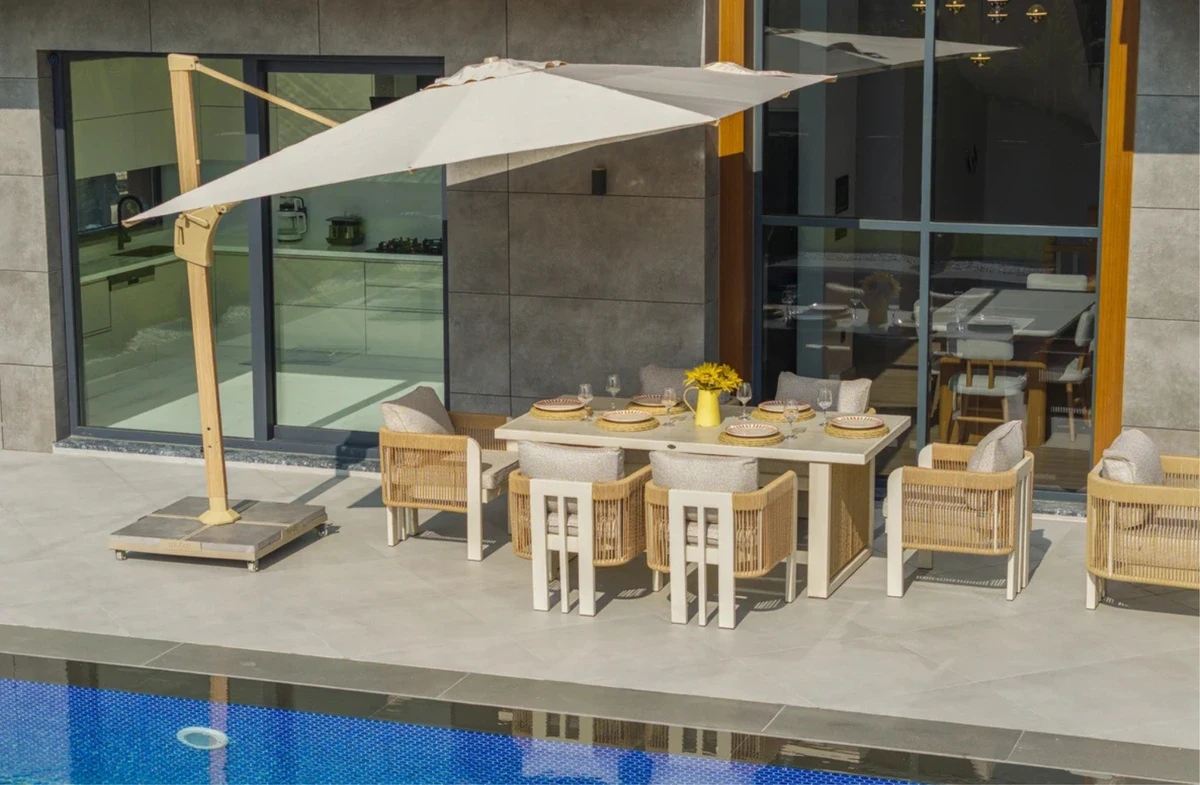 What should you pay attention to when choosing a garden or balcony umbrella?
06 August 2026 -
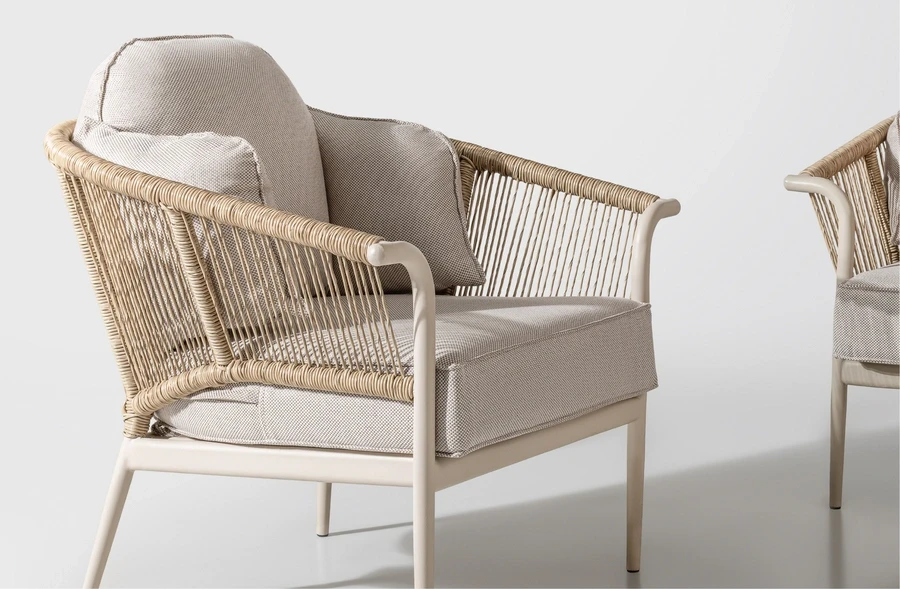 Cushion and Fabric Choices for Outdoor Furniture: Waterproof, Durable, and Comfortable Options!
06 August 2026 -
 Sun Loungers and Sunbeds: A Comfortable Guide for Poolside Use
06 August 2026 -
 Outdoor Dining Table Dimensions: How Much Space Do You Need?
06 August 2026 -
 2026's Popular Garden Furniture Collections
06 August 2026 -
 Garden Furniture Color Selection: How to Create an Outdoor Palette?
06 August 2026 -
 Terazzi Garden Furniture in the TV Series “Muhtemel Aşk”
06 August 2026 -
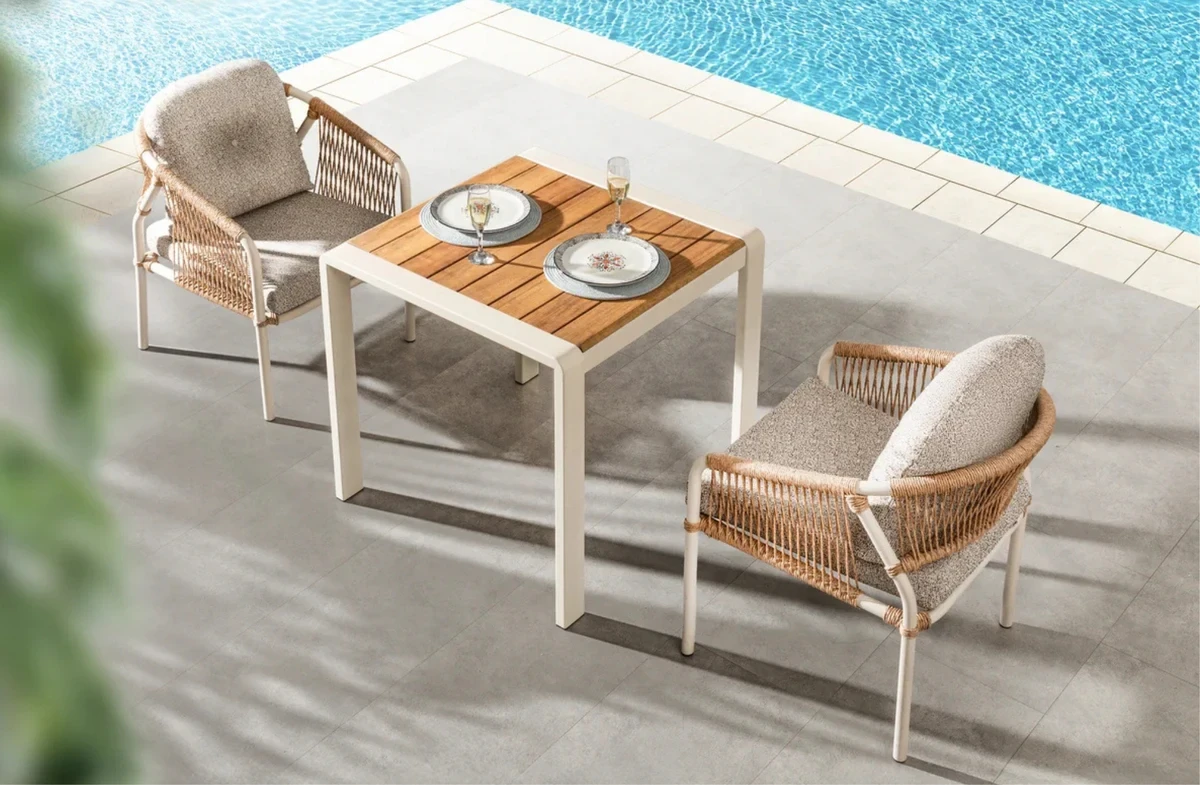 Garden Furniture Trends: Sustainable Materials and Recyclable Designs
06 August 2026