












Decorating Ideas for Small Balconies: A Guide to Measurements, Materials, and Placementi
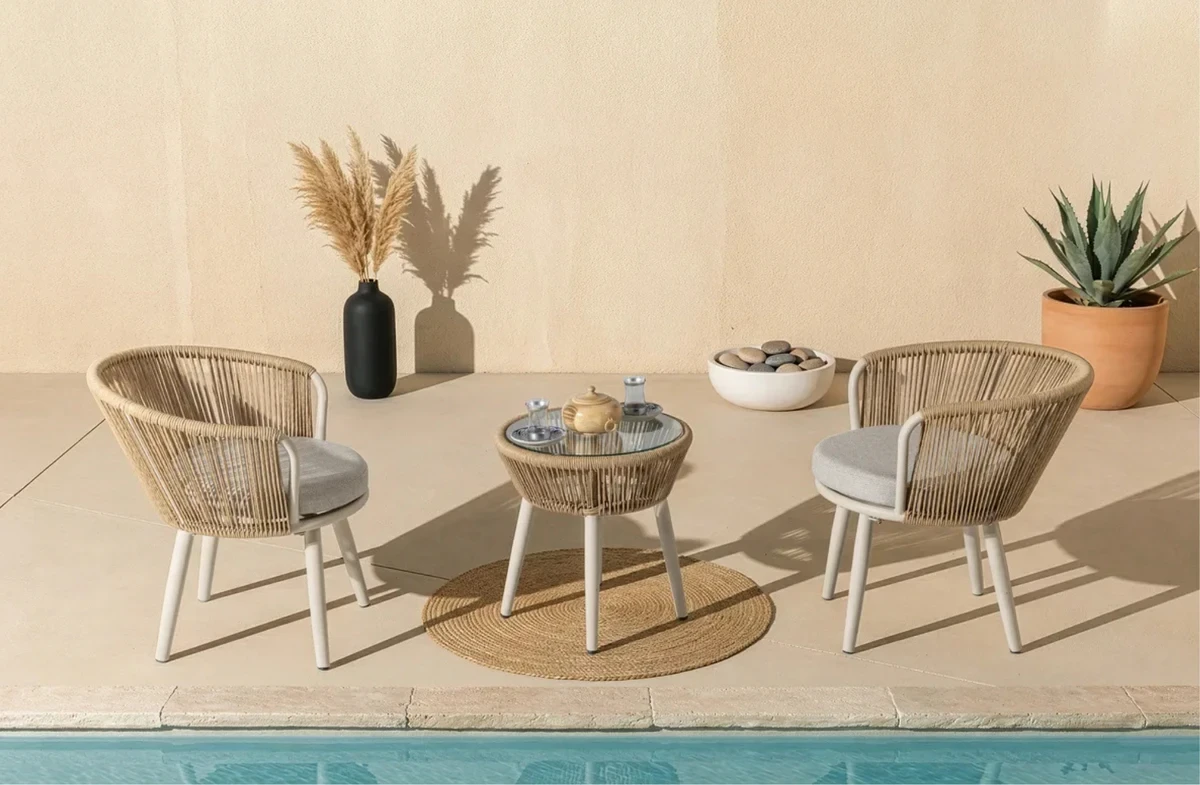
On balconies between 3–6 m², even a 10 cm difference in table size can affect door clearance, chair pull-out space, and walking paths. For this reason, the first decision in small balcony decoration should not be based on the color palette or accessories. Balcony width, door direction, sun exposure, and seating depth should all be evaluated together. An incorrectly sized table, a bulky armchair, or a group of floor-standing planters can quickly reduce the usable area of the balcony.
Outdoor furniture used on narrow balconies should be manufactured to outdoor standards and resistant to UV exposure, moisture, temperature changes, and surface wear. On open balconies, rain and wind are important factors, while enclosed glass balconies may experience heat buildup and trapped humidity. Therefore, in limited spaces, measurements, material selection, and maintenance requirements should be considered at the same stage.
Layout Mistakes That Cause Space Loss on Small Balconies
One of the most common problems on limited-size balconies is covering almost the entire floor with furniture. A table placed in front of the door or overly deep seating can make the balcony less practical for daily use.
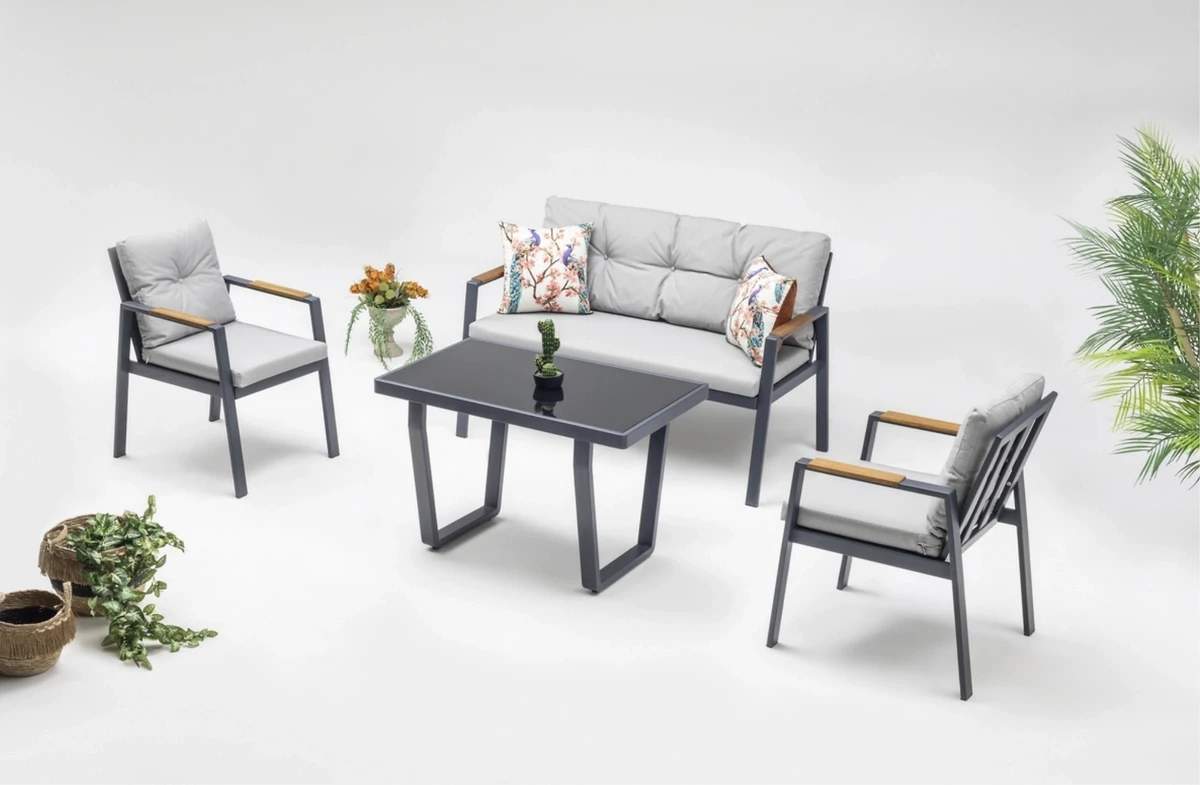
On long and narrow balconies, positioning the seating area along a single wall helps keep the walkway clear. On square balconies, a garden corner sets arrangement often provides a better result. This keeps the central area open and allows chairs to move more easily.
Instead of spreading planters across the floor, moving them onto walls can also make the balcony appear more open. Hanging planters, slim shelving systems, and railing-mounted solutions are especially useful in compact spaces.
Although thick cushions may initially appear more comfortable, they can unnecessarily increase the footprint of seating on narrow balconies. A seating depth of around 40–45 cm can help preserve movement space in smaller areas.
Material Selection and Outdoor Durability for Balcony Furniture
In compact balconies, furniture is positioned closer to the user, so the behavior of different surfaces becomes more noticeable. Dark fabrics can retain more heat on sun-exposed balconies, while in areas exposed to rain, the drying performance of metal, wood, and woven surfaces becomes more important.
Lightweight Construction and Corrosion Resistance in Aluminum Frames
Aluminum is a strong option for narrow balconies thanks to its lightweight structure and corrosion resistance. Since it can be manufactured with slim profiles, chair and table legs occupy less visual and physical floor space. This helps the balcony floor appear more open.
On aluminum surfaces finished with electrostatic powder coating, the coating adheres more evenly to the metal. This type of finish can help reduce the risk of scratching and oxidation in outdoor environments. Especially on balconies exposed to rain, painted aluminum frames are also easier to move and clean than heavy cast products.
Air Circulation and Drying Performance of Rope-Woven Surfaces
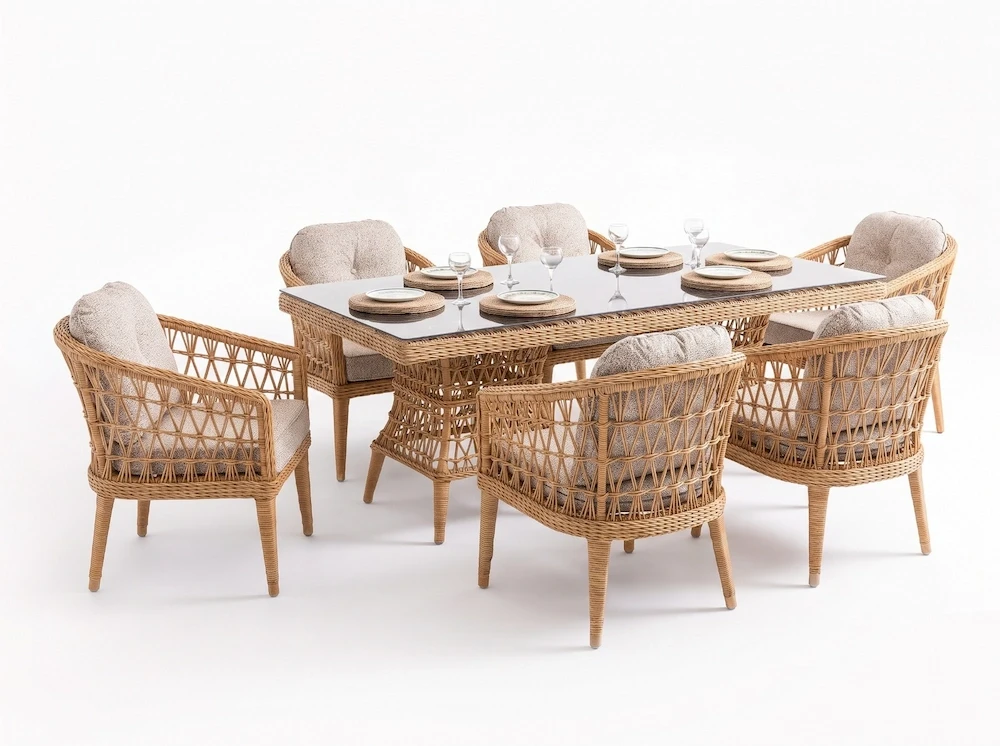
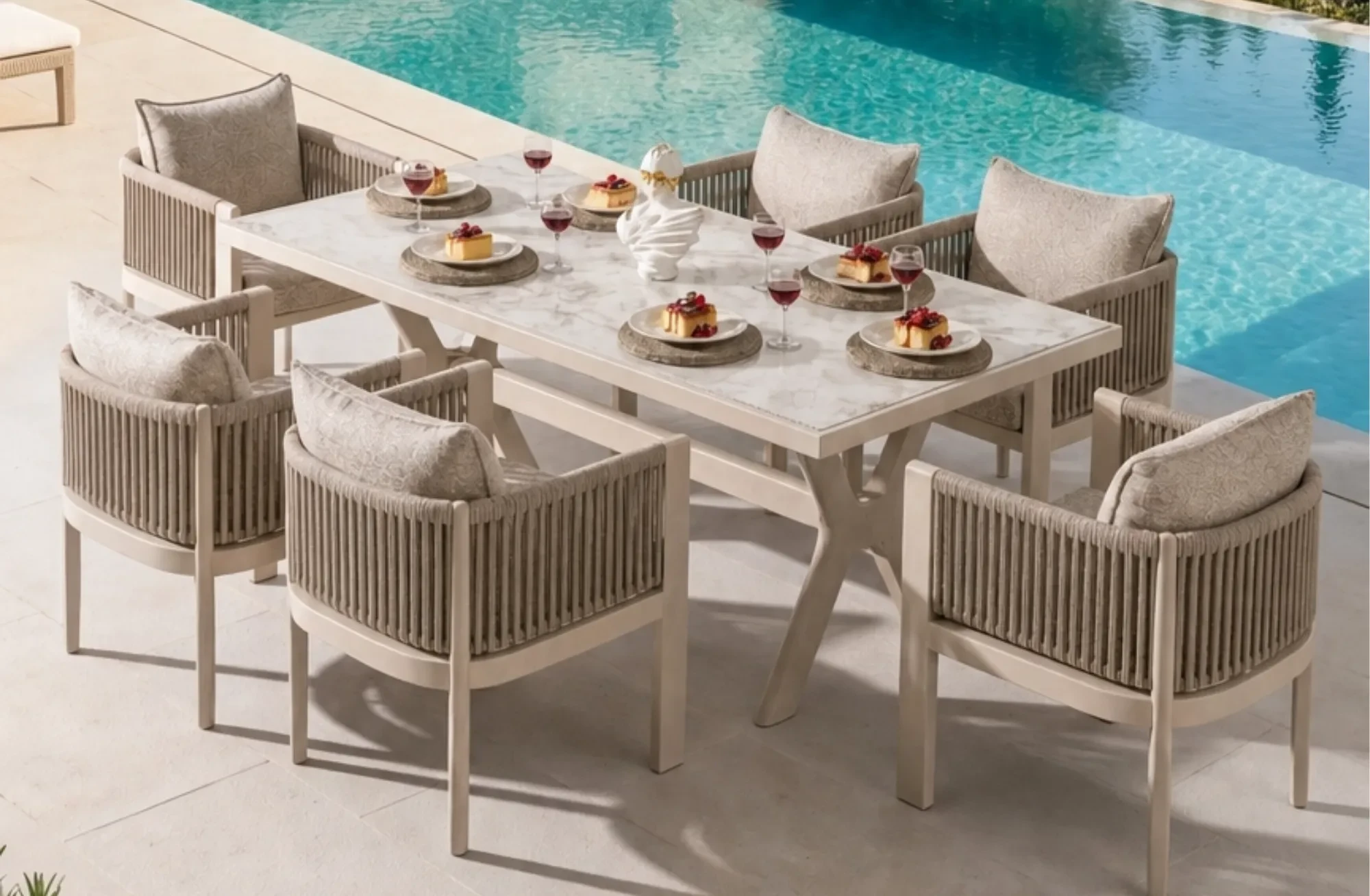
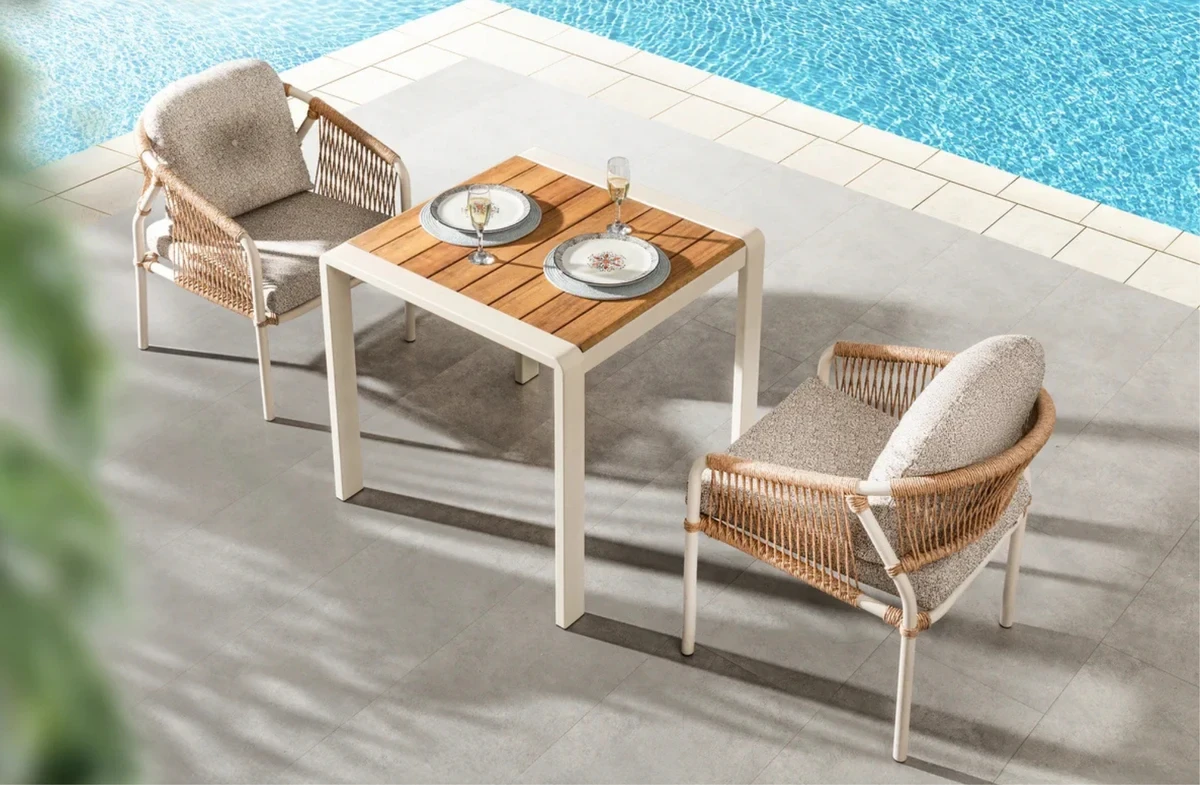
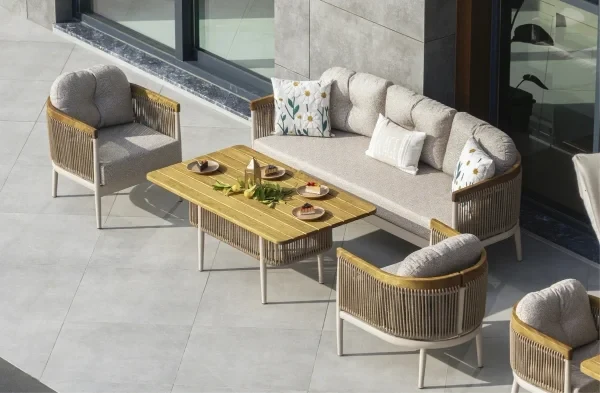
Rope-woven surfaces help reduce the feeling of visual heaviness on compact balconies. Fully closed backrests can look bulky in narrow spaces, whereas woven surfaces allow the background to remain visible. This visual transparency helps prevent the balcony from feeling overcrowded.
Rope surfaces made from olefin or other outdoor-compatible synthetic fibers tend to dry more quickly after exposure to moisture. This is particularly important on semi-open balconies, as textile surfaces that remain damp for long periods may develop odors or surface deformation.
Surface Durability of Iroko Wood Balcony Furniture
Wooden balcony furniture creates a natural and warm appearance. However, the type of wood and the maintenance routine should be considered together. Thanks to its naturally high oil content, iroko can offer stable outdoor performance. Even so, continuous exposure to sunlight and rain may eventually cause dullness, fading, or drying of the wood fibers.
Seasonal protective oil treatments can help slow down moisture loss. If wooden furniture is used on a small balcony, the maintenance intervals of frequently touched surfaces such as tabletops and armrests should be monitored carefully.
Why Is UV Resistance Important for Cushions and Fabrics?
In compact outdoor spaces, cushions are often placed in areas with direct sun exposure. Fabrics with low UV stability may experience fading, fiber weakening, and surface hardening over time. Quick-drying outdoor fabrics can shorten the waiting time after rainfall and reduce moisture-related odors.
Light-colored cushions generally absorb less surface heat than darker tones during the summer. This can improve day-to-day comfort, especially on south- and west-facing balconies.
How Can Ergonomics and Movement Space Be Preserved on Small Balconies?
Before selecting furniture for an apartment balcony, the main walking path should be defined. Products chosen without considering the direction of the door opening, chair pull-out distance, and cleaning access may create unnecessary congestion.
On long and narrow balconies, placing the seating area along one wall helps maintain circulation. On square balconies, corner arrangements often work better because the table does not extend as much into the central area, making chair movement easier. Keeping part of the floor visible also helps the balcony appear larger than it actually is.
A seating depth of 40–45 cm can leave sufficient room for movement on many small balconies. Deeper seating increases legroom but reduces circulation space. Round tables with a diameter of 60–70 cm can also reduce corner impact and chair congestion for two-person use.
For this reason, when choosing balcony furniture, it is also important to measure how much space remains when the product is folded, moved, or positioned closer to the wall.
Choosing a Garden Seating Set and Table According to Balcony Size
On 3–4 m² balconies, a wall-mounted folding table, two slim-profile chairs, and hanging planters generally provide a more practical setup. At this scale, a bulky armchair or a wide tabletop may block the door path.
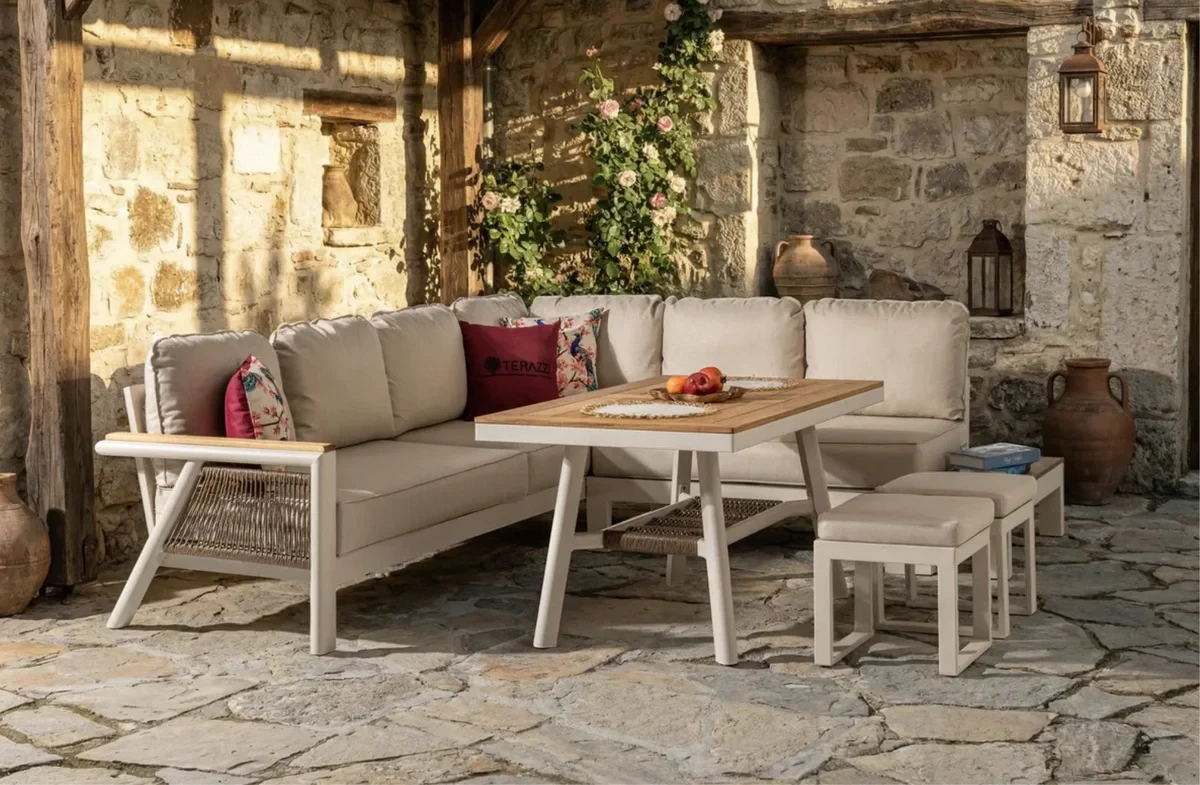
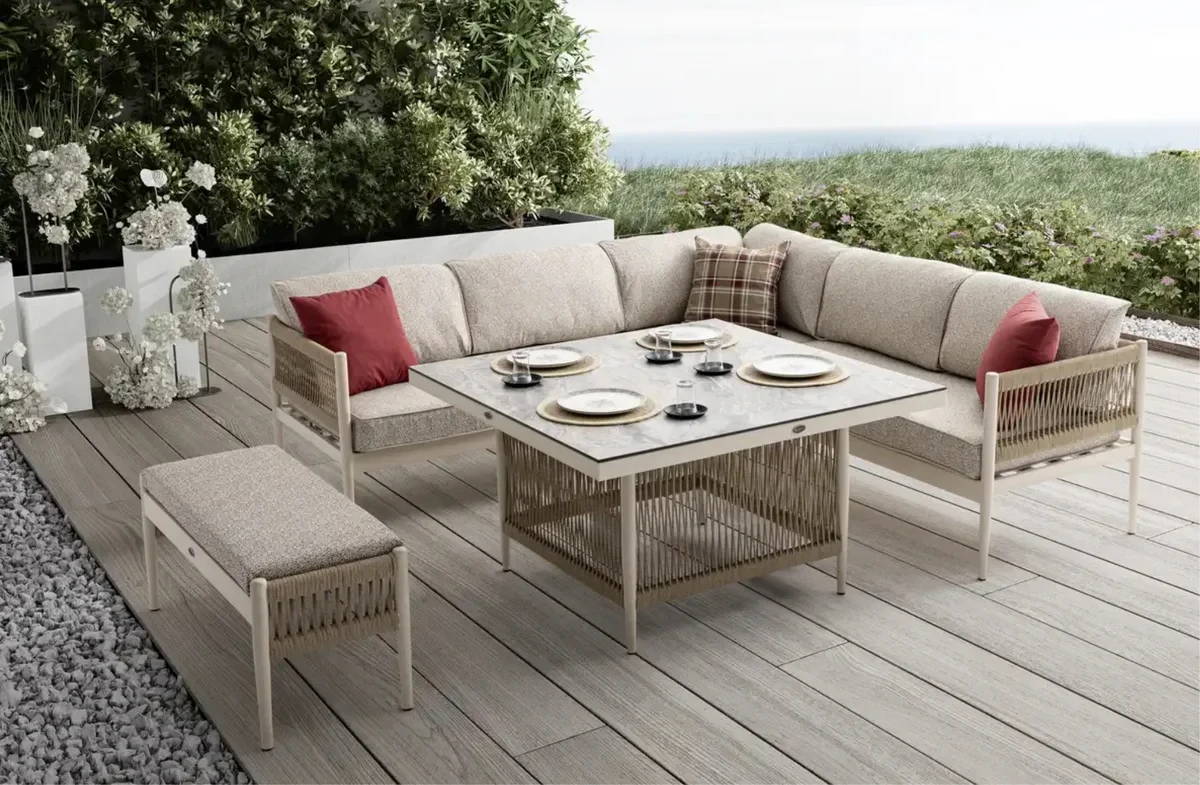
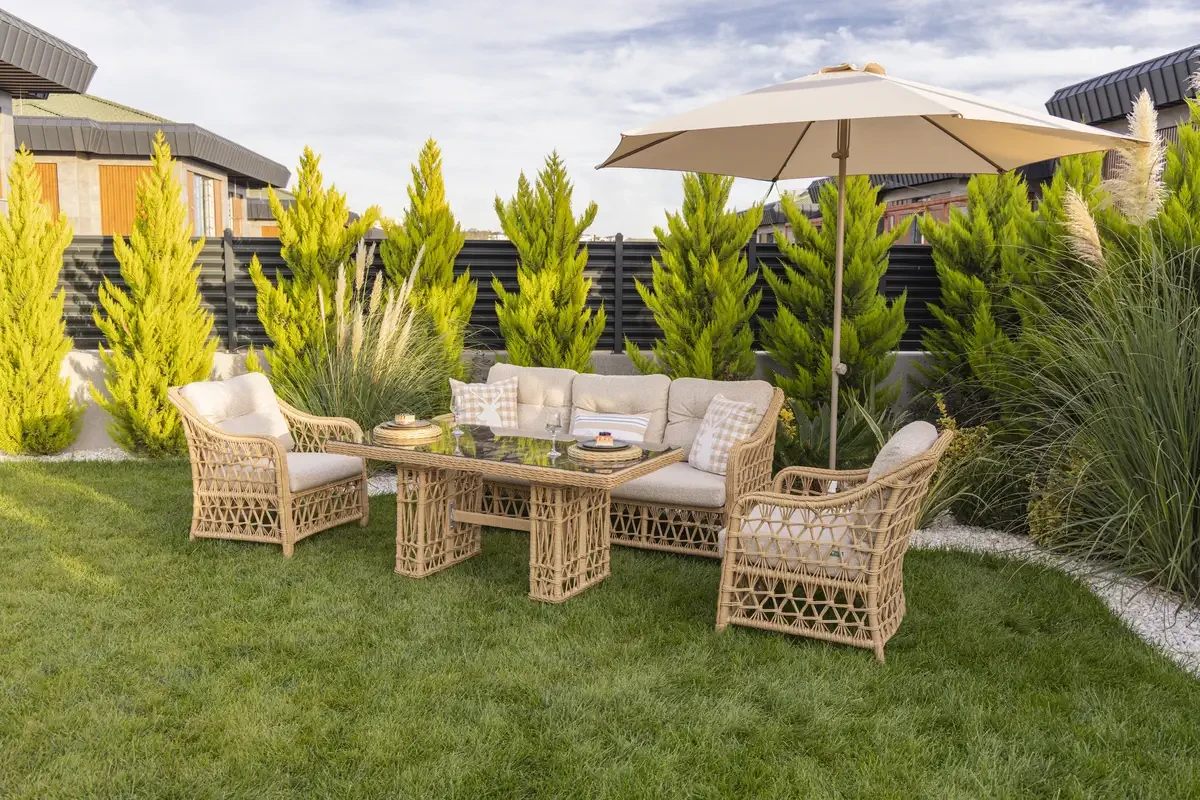
On 5–6 m² balconies, a small modular seating arrangement can be created. Balcony seating group consisting of separate modules offer more flexible layouts than fixed corner sofas. A module can be removed when needed, the table can be moved aside, or the balcony can temporarily be transformed into a small dining area.
On long balconies, instead of lining up furniture like a corridor, it is often better to create a seating zone at one end and use the other end for plants or a serving surface. This helps maintain a clear path along the length of the balcony.
When selecting products for your balcony at Terazzi, slim-profile aluminum frames, UV-resistant cushion fabrics, and modular components can be considered together. This makes it easier to create a practical seating layout without overcrowding small spaces.
How Should Sun Loungers and Swing Models Be Positioned on Small Balconies?
On small balconies, compact two-person dining arrangements are generally more suitable than large dining sets. Round or half-moon tabletops interfere less with circulation when chairs are pulled out. Folding tables also allow the balcony to be used for different purposes throughout the day.
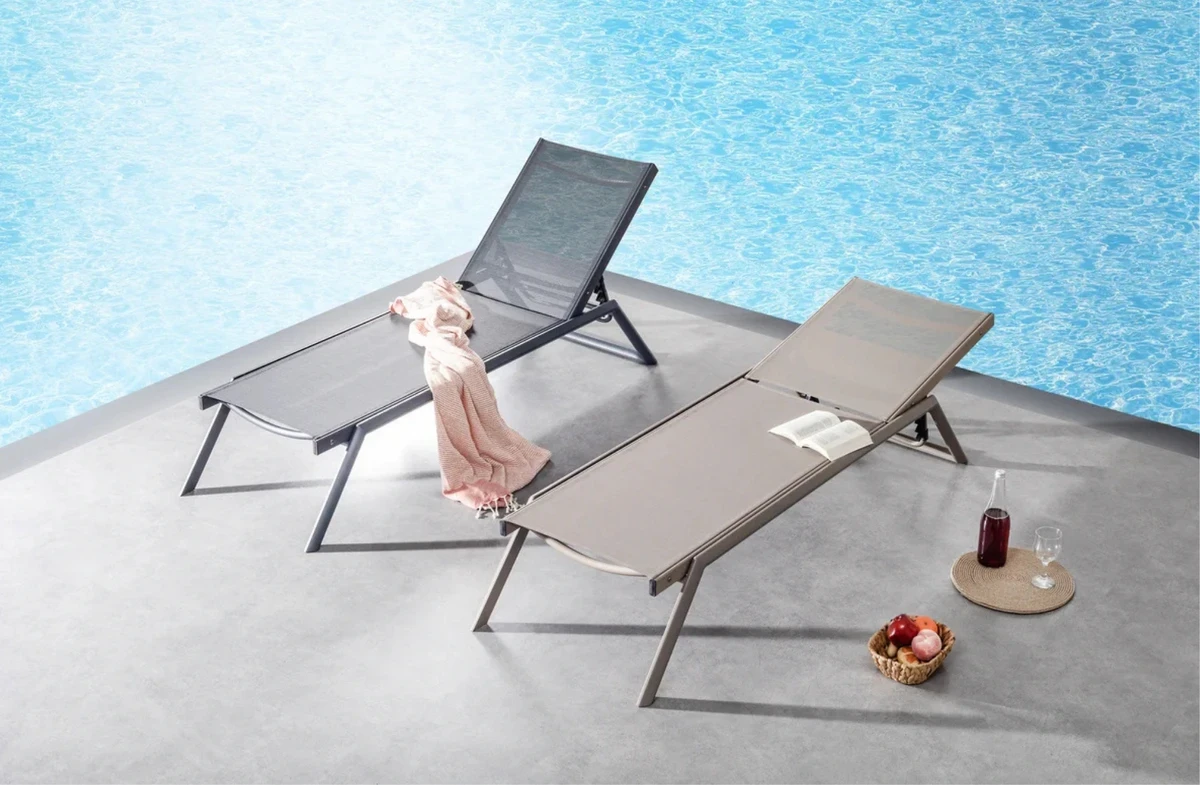
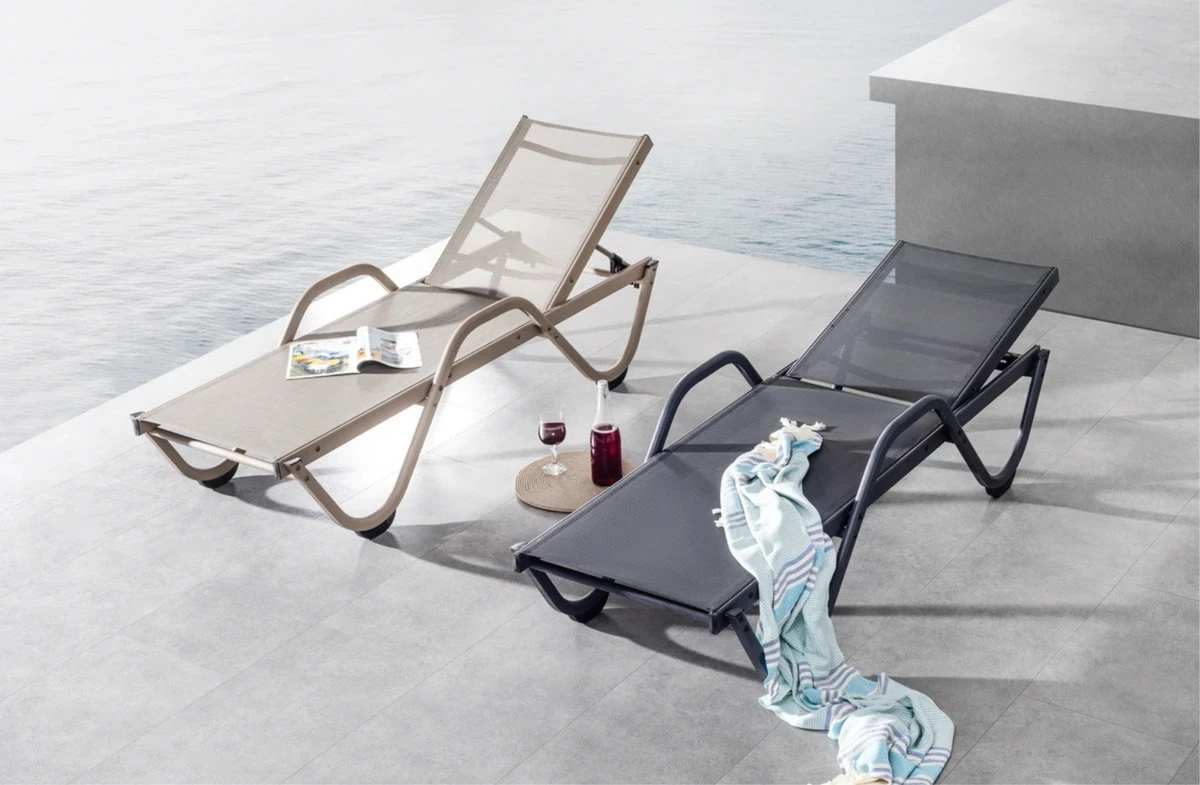
For sun lounger models, both the balcony width and the direction of the door opening, as well as the required leg extension space, should be considered. A full-length lounger may block circulation on balconies smaller than 4 m². Folding or shorter models may offer a more practical solution for occasional sunbathing.
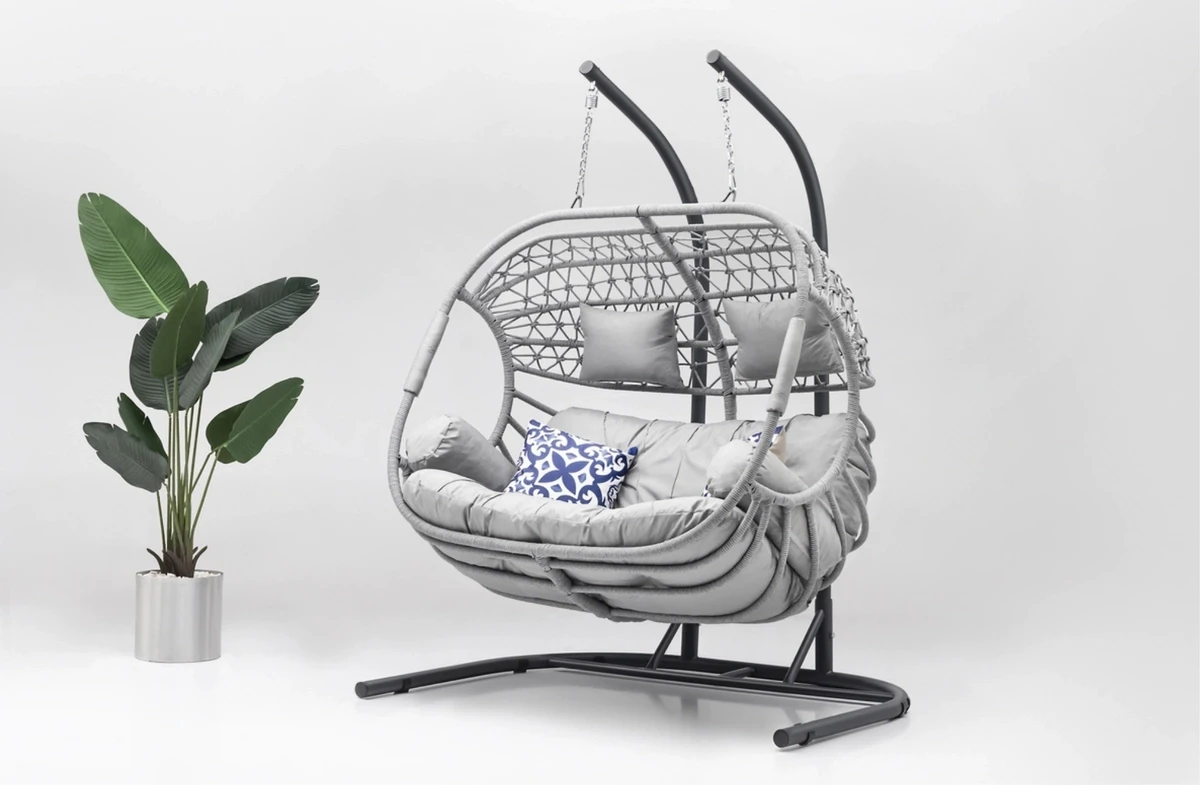
When choosing swing models, the width of the seat should not be the only measurement considered. The base width and the swinging clearance should also be calculated. Freestanding swings often occupy more floor area at the base than at the seat itself. For ceiling-mounted swings, the load-bearing safety of the mounting surface should be checked.
How Should Balcony Lighting and Shading Solutions Be Planned?
On compact balconies, a single strong white light source can create a harsh appearance. Warm lighting between 2700K and 3000K creates a softer atmosphere in the evening. On balconies exposed to rain, lighting fixtures with an IP65 protection rating are recommended.
Wall sconces, slim LED strips, and portable tabletop lamps provide illumination without occupying floor space. Instead of strong overhead lighting directly above the seating area, indirect light coming from the side can create a calmer atmosphere.
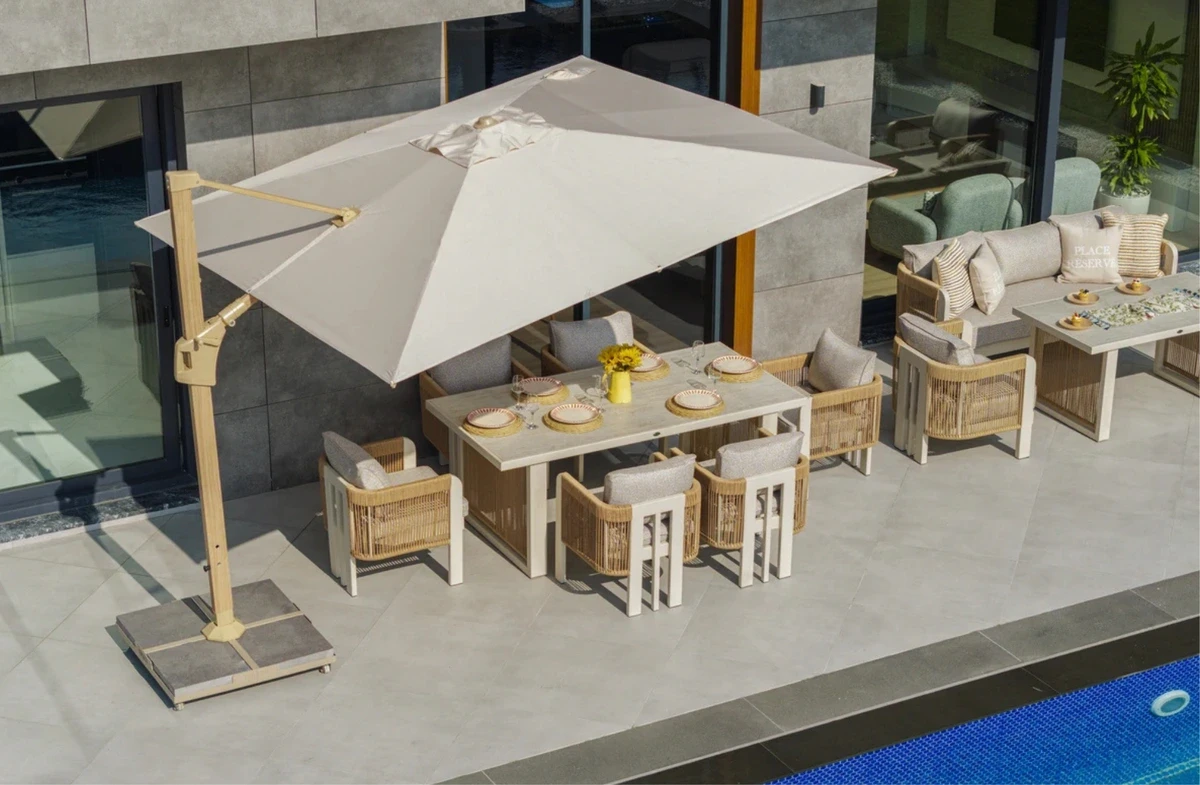
For shading, large umbrellas can take up too much floor space on apartment balconies. Depending on the orientation of the façade, a half umbrella, articulated awning, or lightweight curtain system may be more practical. On balconies exposed to wind, the weight and positioning of the umbrella base should also be carefully considered.
For planting, wall shelves, hanging planters, and railing-mounted solutions can be used instead of large pots that occupy floor space. If plants cover too much of the balcony, air circulation may decrease. A more restrained arrangement makes maintenance easier and prevents the seating area from feeling crowded.
How Can Garden Decoration and Terrace Design Be Adapted to Small Balconies?
The principles used in large-scale garden decoration should not be applied directly to small balconies. Plant density, seating orientation, and lighting should be adapted to a more limited scale. Multi-piece layouts suitable for large gardens should be simplified for apartment balconies.
A seating area in one corner, wall-mounted greenery, portable lighting on the table, and a clear walking path on the floor can be sufficient to create a practical outdoor environment. This approach brings the feeling of a garden into an apartment balcony in a more balanced way.
The zoning concept used in terrace design can be simplified into a seating corner, a planting surface, and a serving area on a small balcony. Outdoor furniture, garden seating sets, and garden dining sets designed for larger areas should not be used at the same scale in compact balconies. The same design language can instead be achieved with slimmer profiles and more compact dimensions.
Outdoor Furniture Buying Guide for Small Balconies
Before purchasing any product, note the balcony width, length, door opening direction, drainage point, electrical outlets, and duration of sun exposure. Even if a product physically fits on the balcony, daily use may become difficult if these measurements are ignored.
Before purchasing, check the following:
- Does the walkway become blocked when the chair is pulled out?
- Is the table positioned too close to the balcony door?
- Can the product be folded when not in use?
- Does the cushion fabric offer UV resistance?
- Does the metal surface have an outdoor-compatible finish?
- Does the wooden surface require seasonal maintenance?
- Will the drainage point remain accessible?
- Does the shading solution occupy too much floor space?
For small areas, outdoor furniture should be selected not only according to its dimensions but also according to frame material, fabric durability, and portability. Even if a product looks good on its own, the choice should be reconsidered if it blocks circulation once placed on the balcony.
Maintenance and Long-Term Use of Balcony Furniture
In compact balconies, furniture is often more directly exposed to sun, rain, and wind. For this reason, a proper maintenance routine can significantly extend product life. Cushions should not be left under direct sunlight for long periods, should be aired after rain, and should be stored in a dry place outside the main season.
Aluminum surfaces should be cleaned with a neutral cleaner and a soft cloth. Abrasive sponges may weaken the painted finish. Rope-woven surfaces should be cleaned with low-pressure water and a soft brush rather than high-pressure washing.
Seasonal oil maintenance on wooden surfaces helps slow down the drying of the wood fibers. During winter, protective covers can also help preserve the surface performance of balcony furniture.
Choosing fewer but more suitable outdoor products can provide better long-term performance in small balconies. Indoor furniture may deform quickly under exposure to sunlight and moisture, while materials designed specifically for outdoor use can reduce the need for frequent replacement.
Conclusion: How to Use Every Square Meter More Efficiently on a Small Balcony
On compact balconies, better results are achieved with tables that do not block the door path, chairs that leave the floor visually open, quick-drying cushions, and UV-resistant surfaces. Instead of increasing the number of products, the size, weight, and maintenance requirements of each piece should be evaluated carefully.
The modular furniture, slim-profile structures, and outdoor-compatible materials used in Terazzi’s outdoor collections can help create more comfortable layouts in small balconies. Even a compact balcony can become an active part of everyday life with accurate measurements, a simple layout, and long-lasting material choices.
Frequently Asked Questions About Small Balcony Decoration Ideas
Which furniture should be preferred for a small balcony?
Folding tables, slim-profile chairs, and modular seating solutions are generally more suitable for small balconies. Aluminum-framed products are lightweight and easy to move while also helping the balcony floor appear more open. Large, bulky seating units may restrict the door path and reduce chair pull-out space.
How can a small balcony be made to look larger?
Keeping part of the floor visible helps a small balcony feel more open. Slim-legged furniture, light-colored cushions, wall-mounted planters, and indirect lighting can strengthen this effect. Bulky, low-profile furniture can create greater visual density in narrow spaces.
What is the most durable outdoor material for a balcony?
Electrostatic powder-coated aluminum is a strong option for small balconies because of its corrosion resistance and lightweight structure. High-oil-content woods such as iroko can also provide long-term performance when maintained regularly. For rope weaving, UV-resistant synthetic fibers and quick-drying performance should be prioritized.
Can a garden seating set be used on a small balcony?
Yes, a garden seating set can be used on a small balcony when compact and modular dimensions are selected. Instead of a large one-piece corner sofa, separate modules provide greater flexibility for arranging the table, seating, and circulation space. The door opening direction and chair pull-out clearance should be measured before selecting the product.
Can balcony furniture be damaged by sunlight?
Fabrics with low UV resistance may fade, weaken, or become harder over time. Metal surfaces without a suitable protective coating may also be more vulnerable to paint deterioration and oxidation. Outdoor-compatible fabrics, electrostatic powder-coated aluminum, and regular maintenance can help reduce these risks.


-
 Turn Your Balcony into a Winter Garden with Garden Furniture: Step by Step Guide
08 May 2026 -
 Features of Iroko Groups in Wooden Garden and Balcony Furniture
08 May 2026 -
 What is Aluminum Garden and Balcony Furniture?
08 May 2026 -
 What is Rope Knitted Garden Furniture?
08 May 2026 -
 Outdoor Lighting and Furniture: How to Create the Right Balance
08 May 2026 -
 Outdoor Furniture Cleaning Guide: How to Keep It Looking Like New
08 May 2026 -
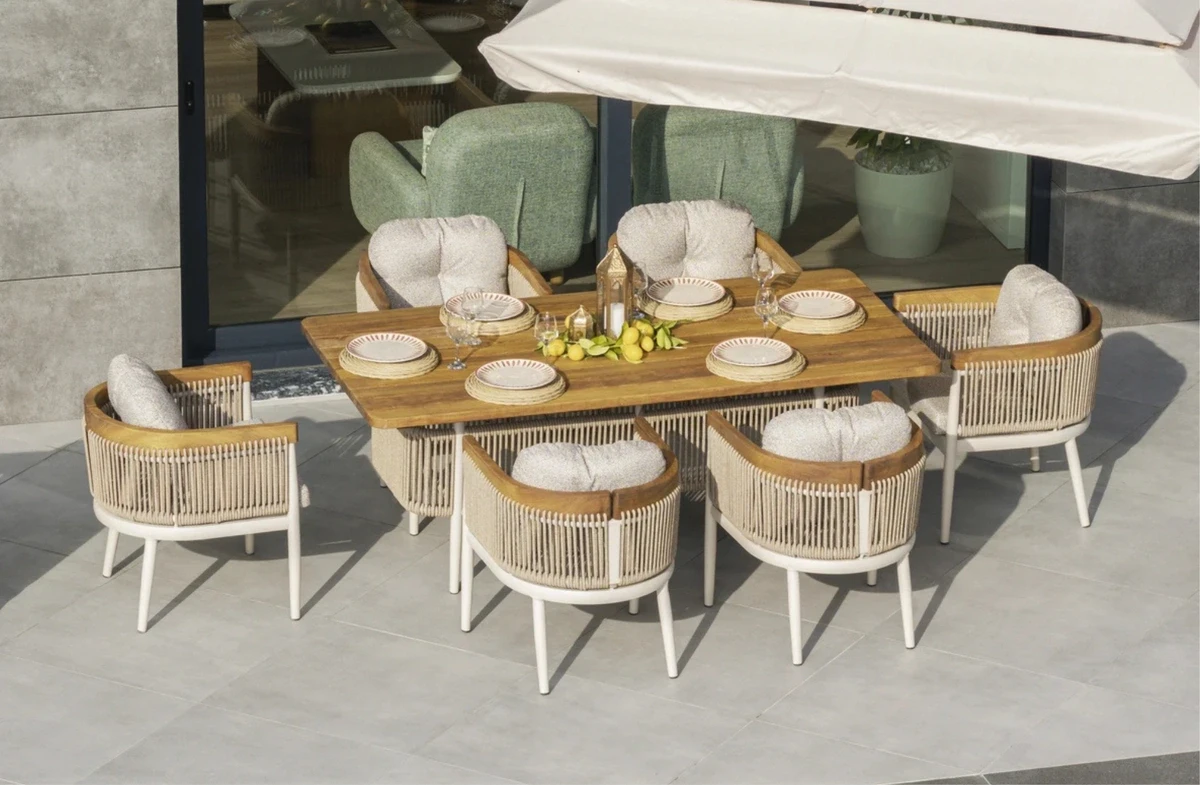 Outdoor Seating Layout Guide for Large Terraces
08 May 2026 -
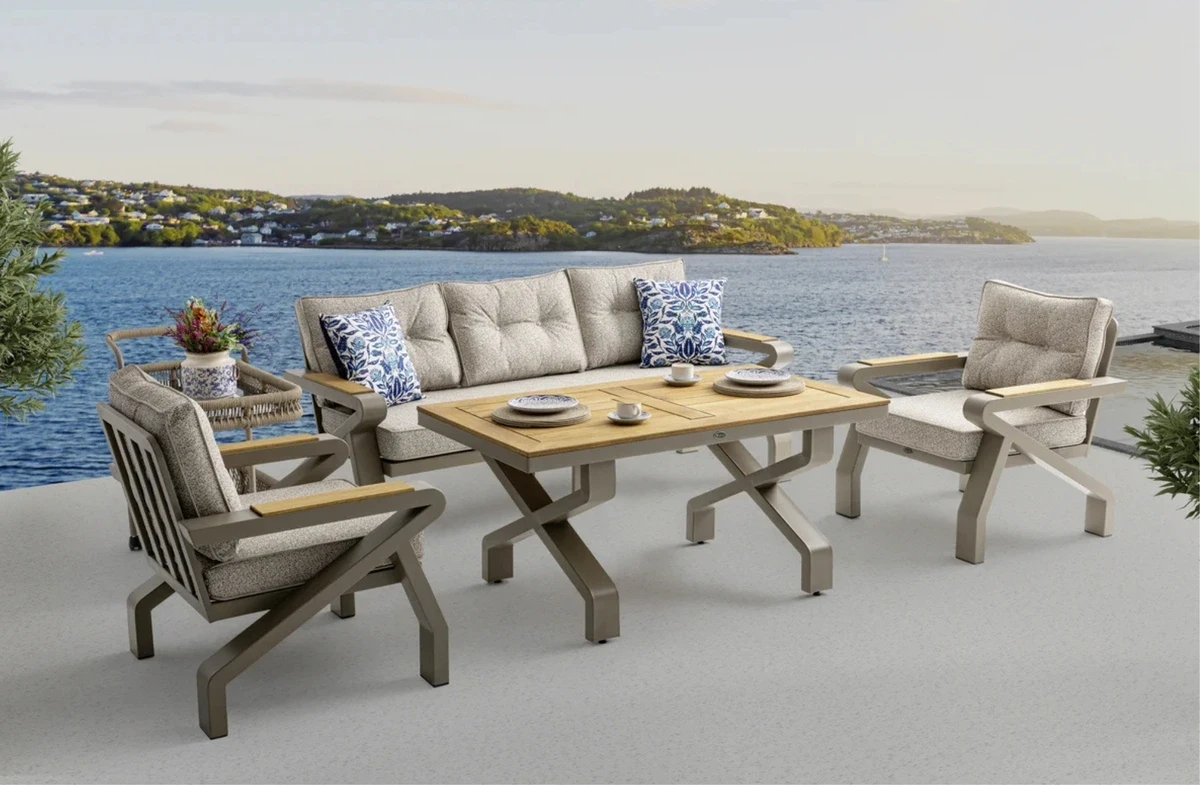 Why Is Aluminum Preferred for Outdoor Furniture?
08 May 2026 -
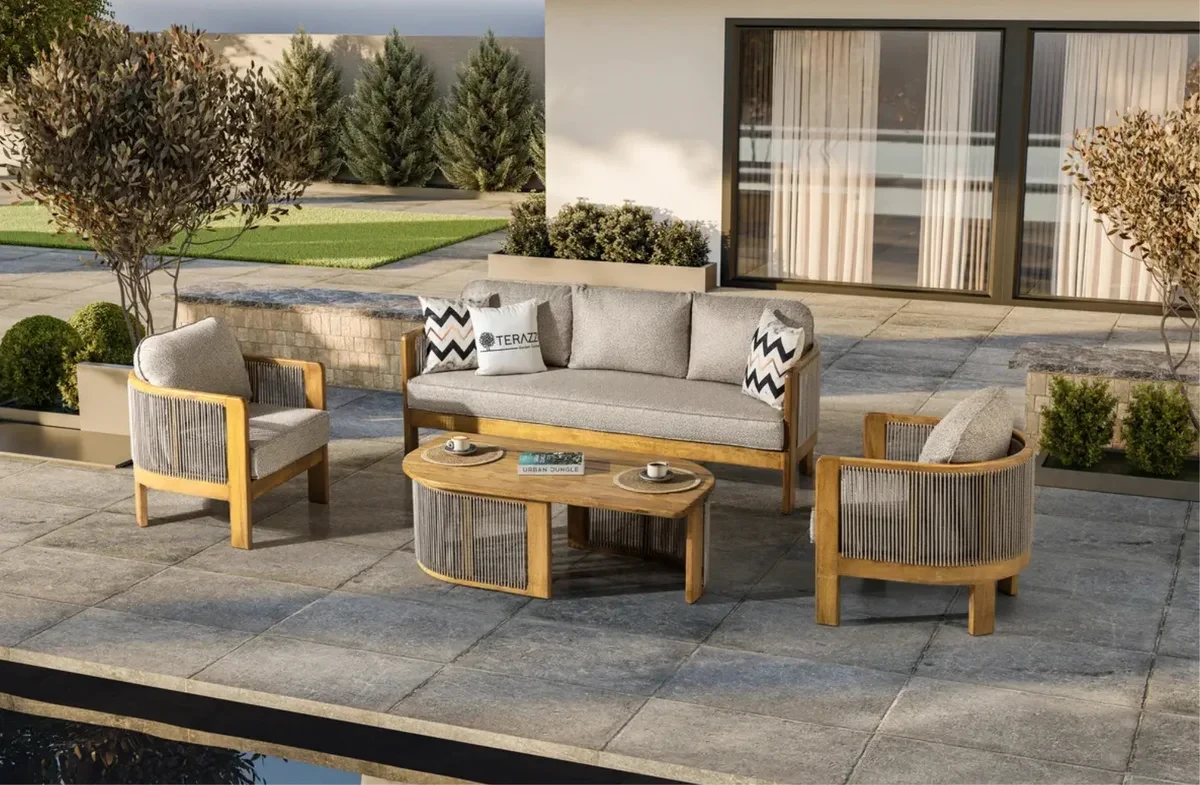 Villa Garden Decoration Ideas and 2026 Design Trends
08 May 2026 -
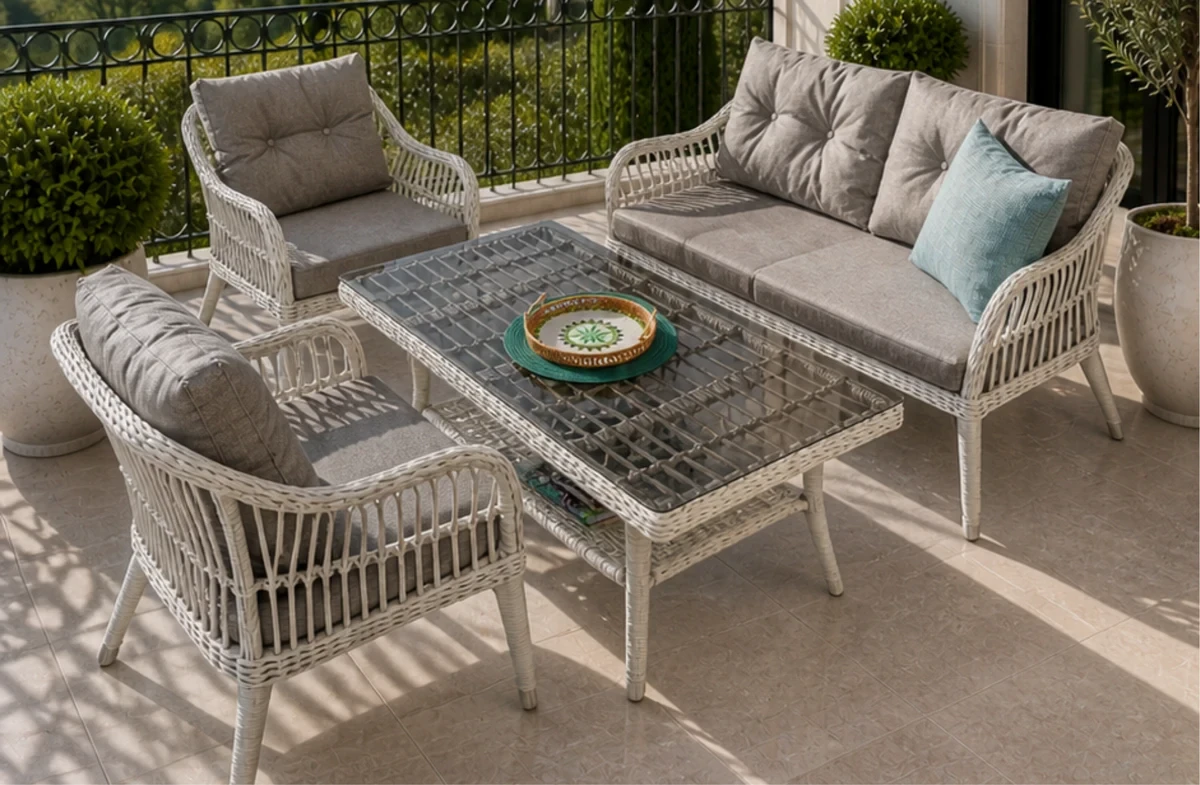 Choosing Outdoor Furniture for Hotels and Restaurants
08 May 2026 -
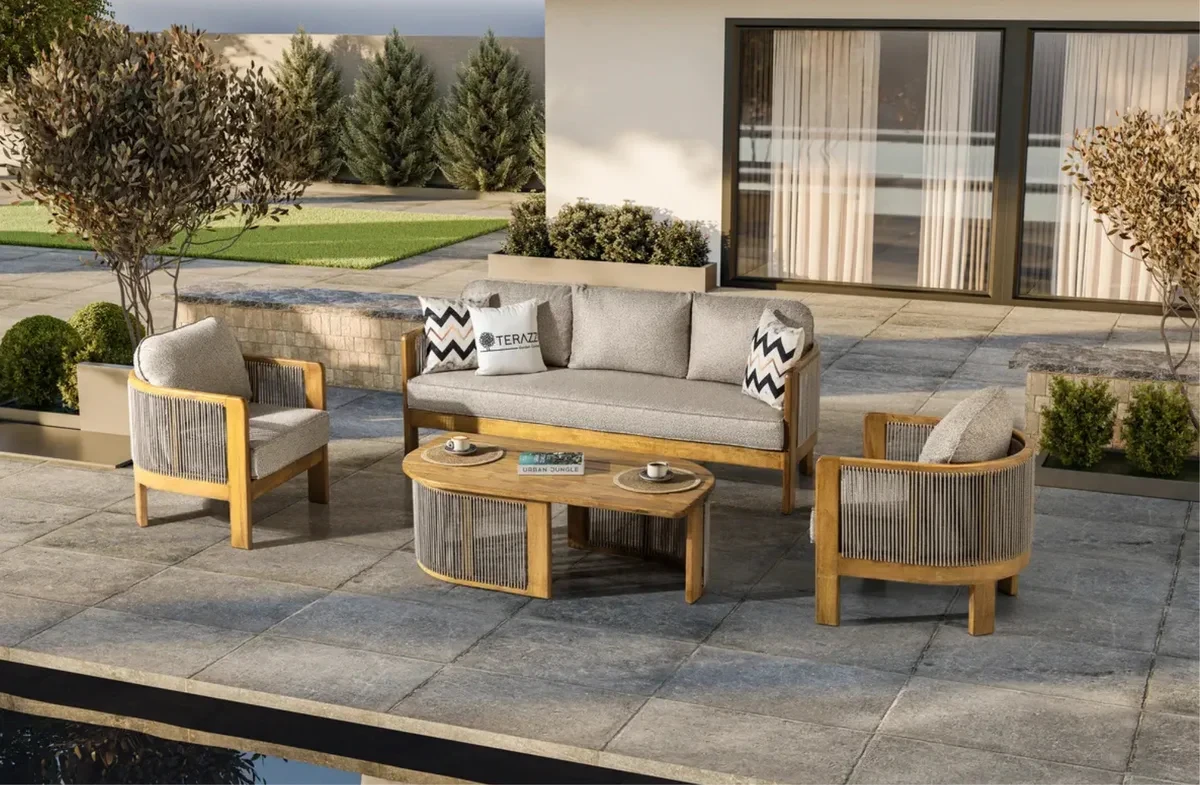 Differences Between Iroko and Teak Wood: Which is More Sensible for Garden Furniture?
08 May 2026 -
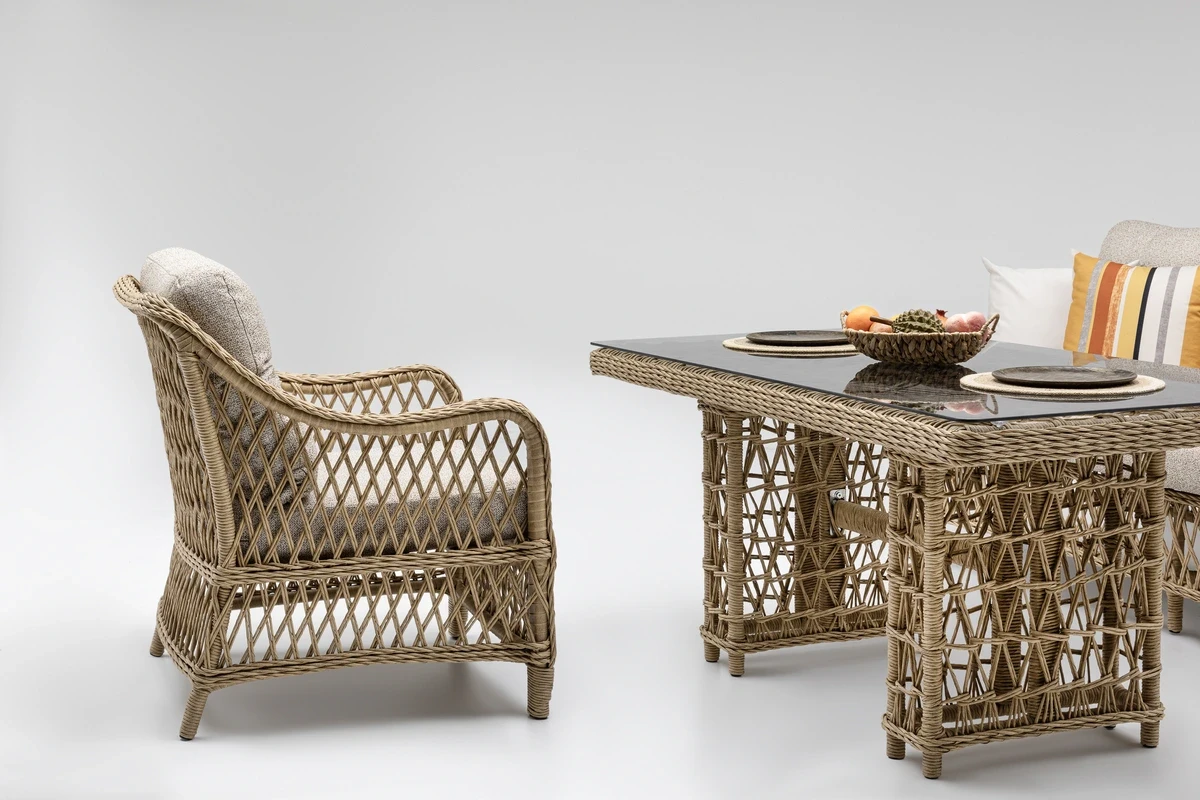 What is the difference between rattan and bamboo furniture?
08 May 2026 -
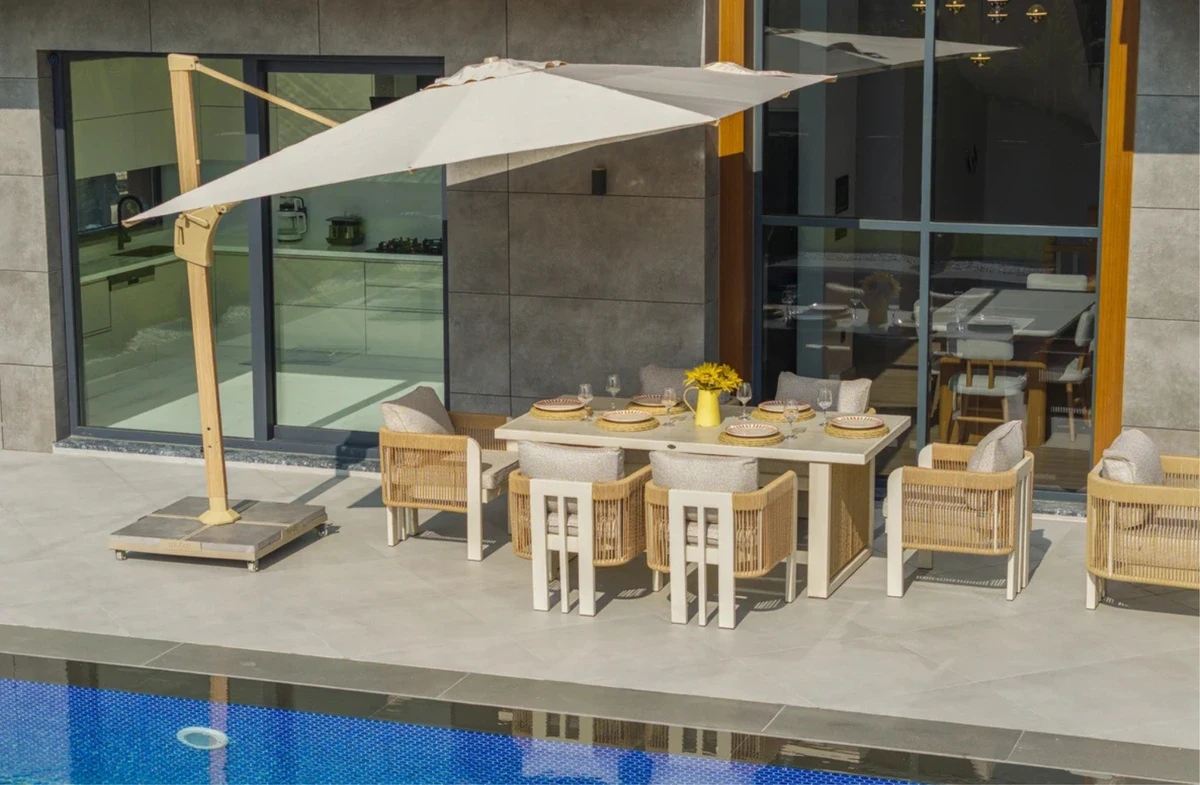 What should you pay attention to when choosing a garden or balcony umbrella?
08 May 2026 -
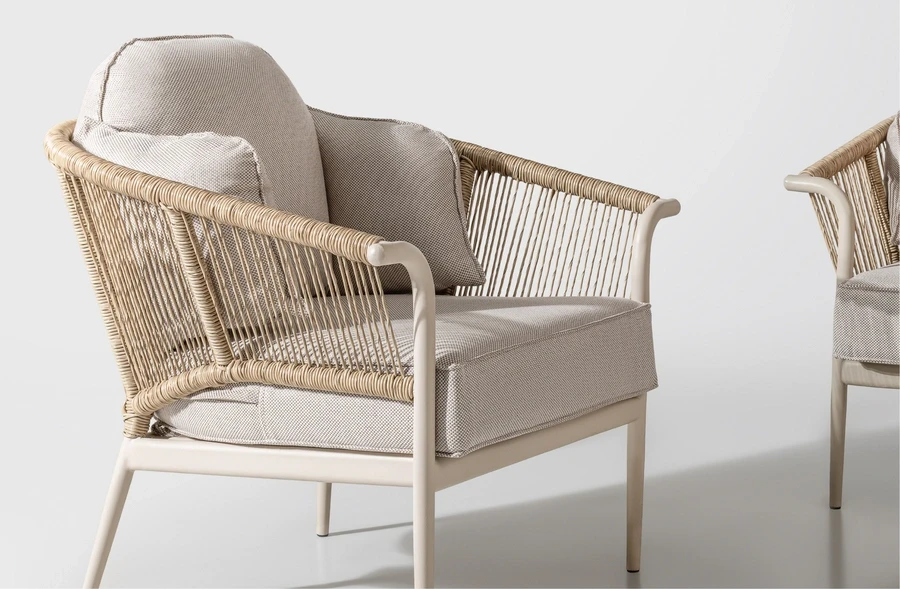 Cushion and Fabric Choices for Outdoor Furniture: Waterproof, Durable, and Comfortable Options!
08 May 2026 -
 Sun Loungers and Sunbeds: A Comfortable Guide for Poolside Use
08 May 2026 -
 Outdoor Dining Table Dimensions: How Much Space Do You Need?
08 May 2026 -
 2026's Popular Garden Furniture Collections
08 May 2026 -
 Which Garden Furniture Can Stay Outside All Year Round?
08 May 2026 -
 Garden Furniture Color Selection: How to Create an Outdoor Palette?
08 May 2026 -
 Terazzi Garden Furniture in the TV Series “Muhtemel Aşk”
08 May 2026 -
 Garden Furniture Trends: Sustainable Materials and Recyclable Designs
08 May 2026 -
 Ways to Use Your Garden and Terrace for Longer in Autumn
08 May 2026