












Choosing Outdoor Furniture for Residential Complexes and Shared Residence Areas
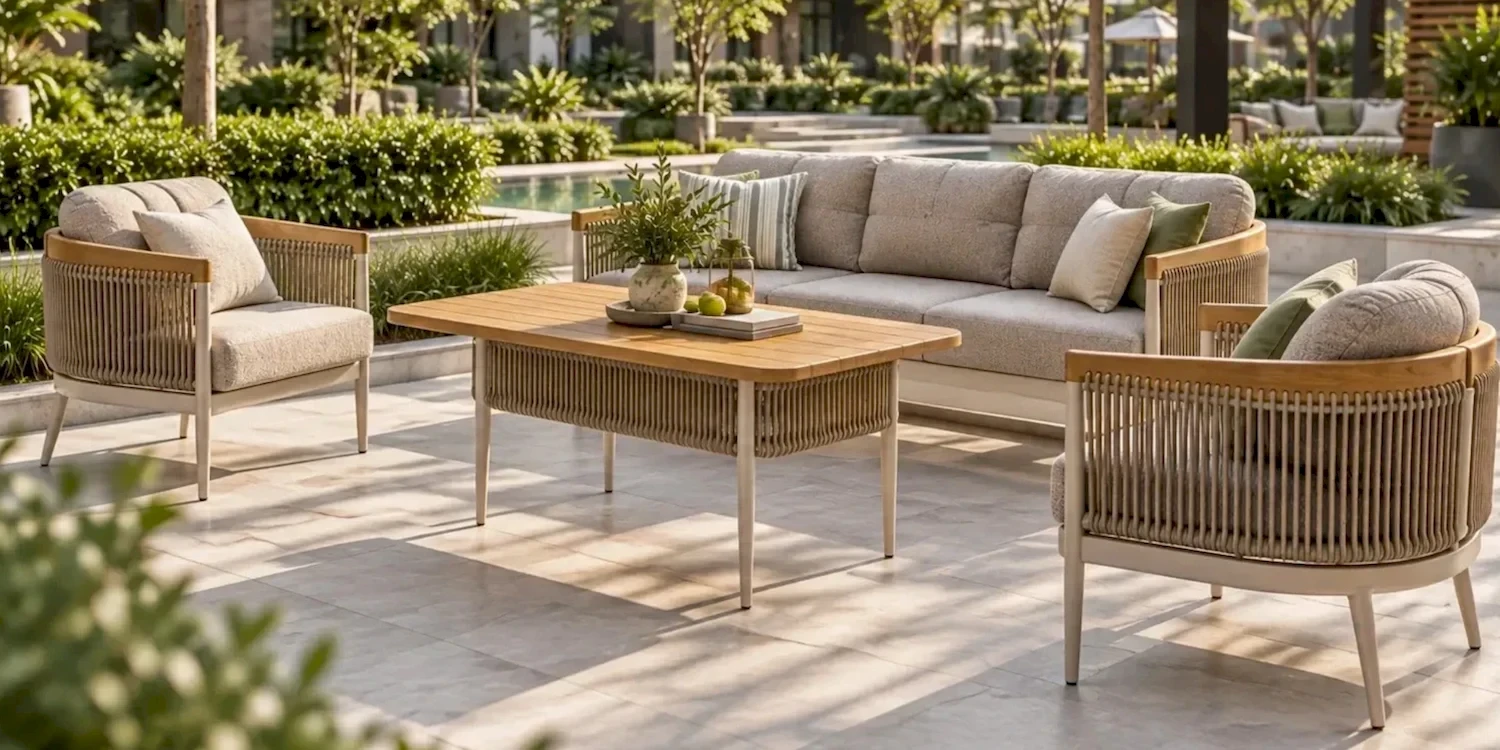
Seating sets in the garden of a residential complex may be used by dozens of people throughout the day. Compared to private residential gardens, these heavily used communal spaces require greater attention to furniture durability, seating capacity, and maintenance costs. When selecting outdoor furniture for shared areas in residential complexes and residences, the needs of residents, the size of the space, and daily foot traffic should all be considered. From poolside areas to communal terraces, each space serves a different purpose and requires suitable furniture.
What Should You Consider When Choosing Furniture for Residential Complexes?
A communal garden can serve as a gathering place where neighbors socialize or a relaxation area where families spend time while supervising their children. Dining tables, lounge areas, and poolside spaces in residential facilities may be used by different people throughout the same day.
When determining the amount of furniture needed, it is important to estimate how many people will use the space simultaneously. The number of apartments in a residential complex can provide some guidance, but it is not sufficient on its own. For example, in a development with 200 apartments, not all residents are expected to use the garden at the same time. Residents' habits, social activities, and the available space also influence seating capacity.
Three key factors should be prioritized when selecting furniture for communal areas:
Users: Provide different seating options that accommodate families with children, older residents, and larger groups.
Daily usage intensity: Frame strength and connection durability become especially important in frequently used seating areas.
Facility management: Cleaning, moving, storage, and repairs should be practical for the maintenance staff responsible for the property.
Instead of placing identical furniture sets throughout the entire garden, different products can be selected for dining, socializing, and relaxation areas. This allows multiple groups to enjoy different parts of the communal garden simultaneously.
Which Materials Are Suitable for High-Traffic Areas?
Chairs used in communal spaces may develop loose connections over time, while seating furniture may experience deformation in woven sections or wear on protective foot caps. When choosing garden furniture for residential complexes, it is essential to evaluate the strength of the supporting frame and connection points as well as the material itself.
Differences Between Aluminum, Rattan, and Wooden Furniture
For chairs and sofas with aluminum frames, the quality of welds, profile connections, and leg stability should be examined. On terraces where chairs are frequently moved, protecting the surface coating against scratches is also important.
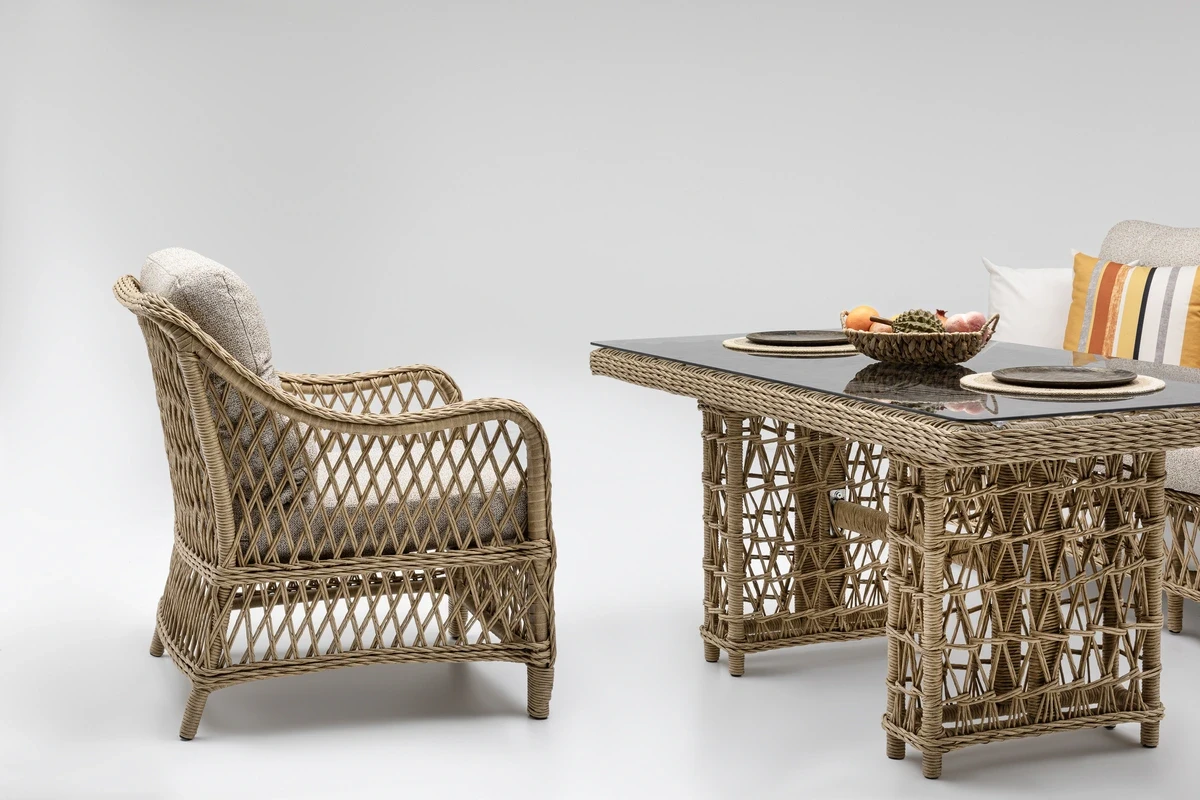
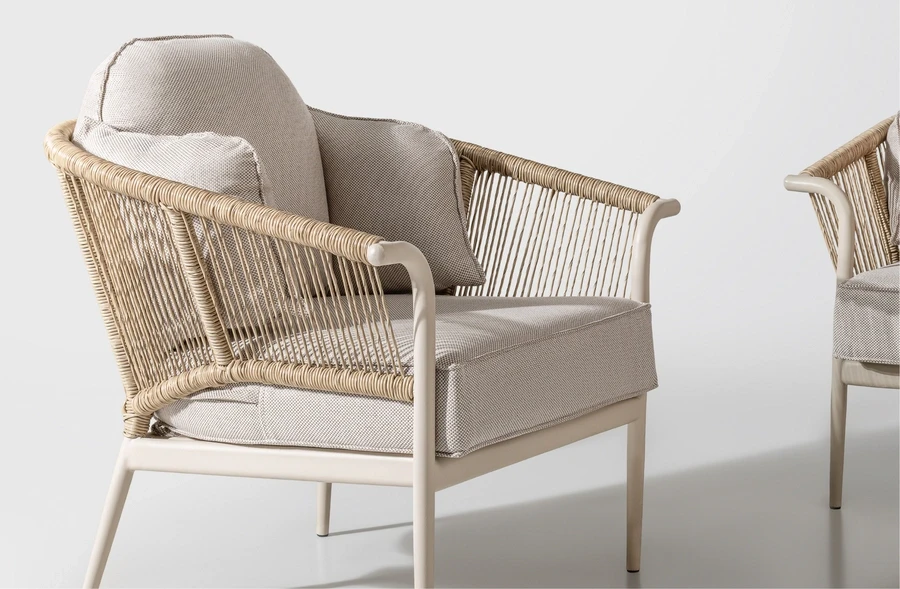
For furniture featuring synthetic rattan, the tension of the weaving and its attachment points should be inspected. Loosening around armrests and seat edges may eventually affect both the furniture's appearance and seating comfort. Aluminum frames and synthetic rattan weaving can also be combined within the same furniture piece.
Wood species such as iroko have different maintenance requirements. The treatments needed to preserve the surface appearance depend on environmental exposure and the manufacturer's recommendations.
Material | Advantage | What to Check |
|---|---|---|
Aluminum | Easy to move and rearrange | Welds and surface coating |
Synthetic rattan | Allows different weaving patterns and seating surfaces | Weaving tension and connections |
Iroko wood | Surface appearance can be restored through maintenance | Periodic surface treatment |
A product being suitable for outdoor use does not automatically mean it is appropriate for intensive communal use. Before purchasing, buyers should ask manufacturers about the conditions under which the products have been tested and review the warranty coverage accordingly. Relevant sections of the EN 581 standard can be used as references when evaluating the mechanical safety and durability of outdoor seating and tables.
Designer’s Note: Place a sample chair directly on the surface where it will be used. Checking whether the legs remain stable on stone paving with joints or wooden decking helps identify potential wobbling issues before installation.
Furniture Layouts for Communal Gardens, Terraces, and Poolside Areas
Placing too many chairs or sofas in a garden can narrow walkways and cause furniture to extend into circulation areas. This can make it difficult for residents to move between seating arrangements, particularly during busy periods.
Furniture dimensions, table positions, and circulation routes should be planned together according to the garden's layout.
Seating Sets for Communal Gardens
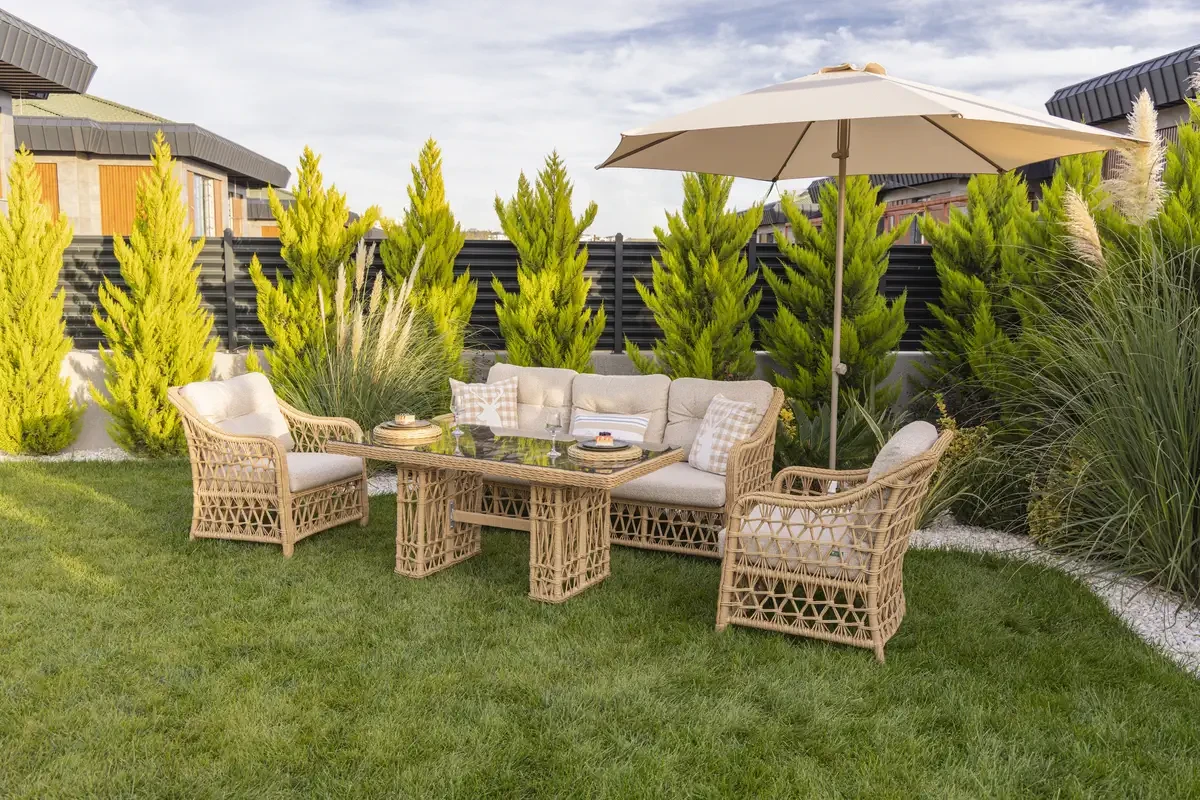
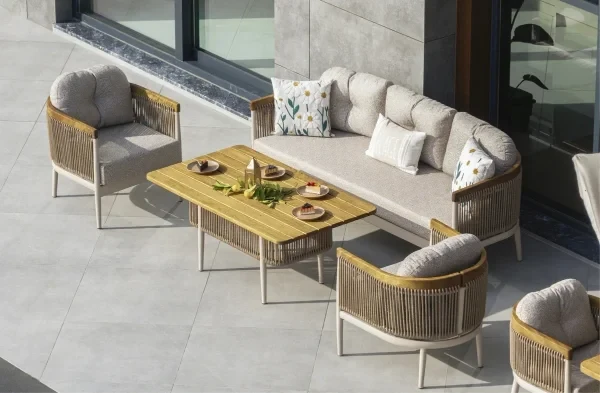
In gardens where residents gather in small groups, several seating areas can be distributed across different locations. Rather than using one large furniture set, creating multiple independent seating zones allows different groups to enjoy the space at the same time.
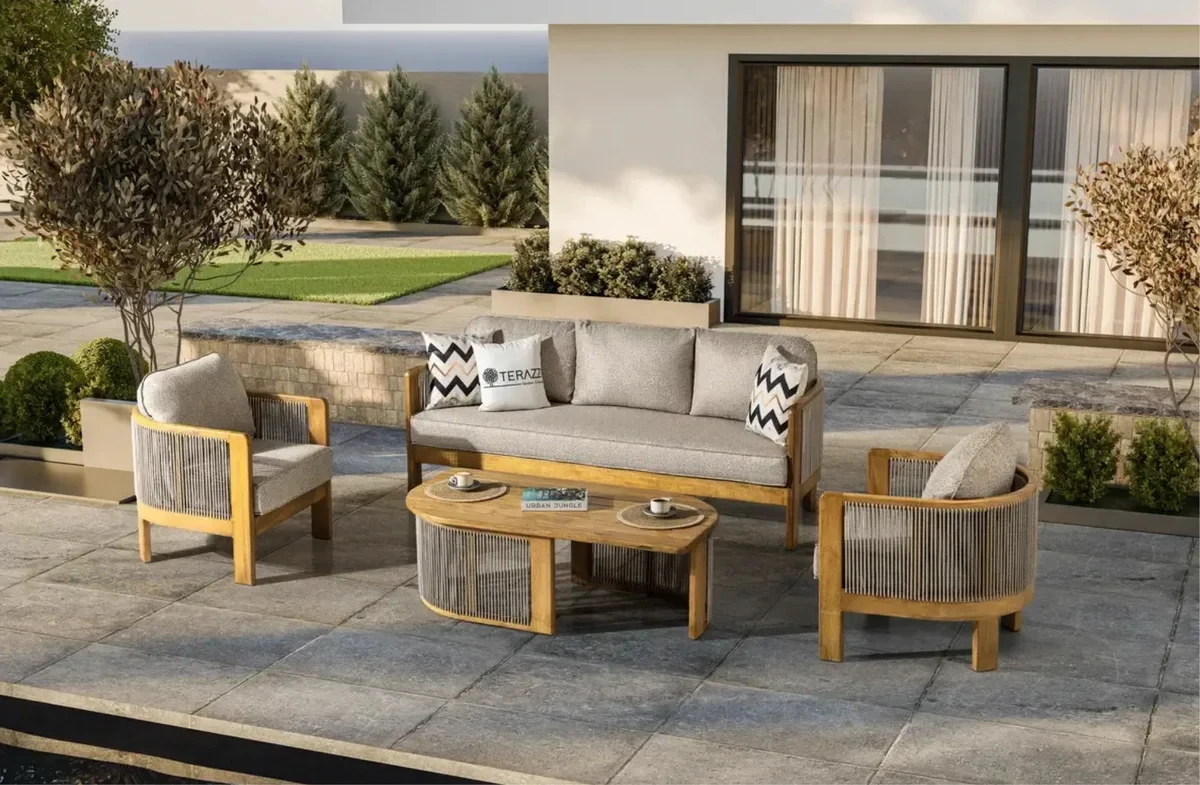
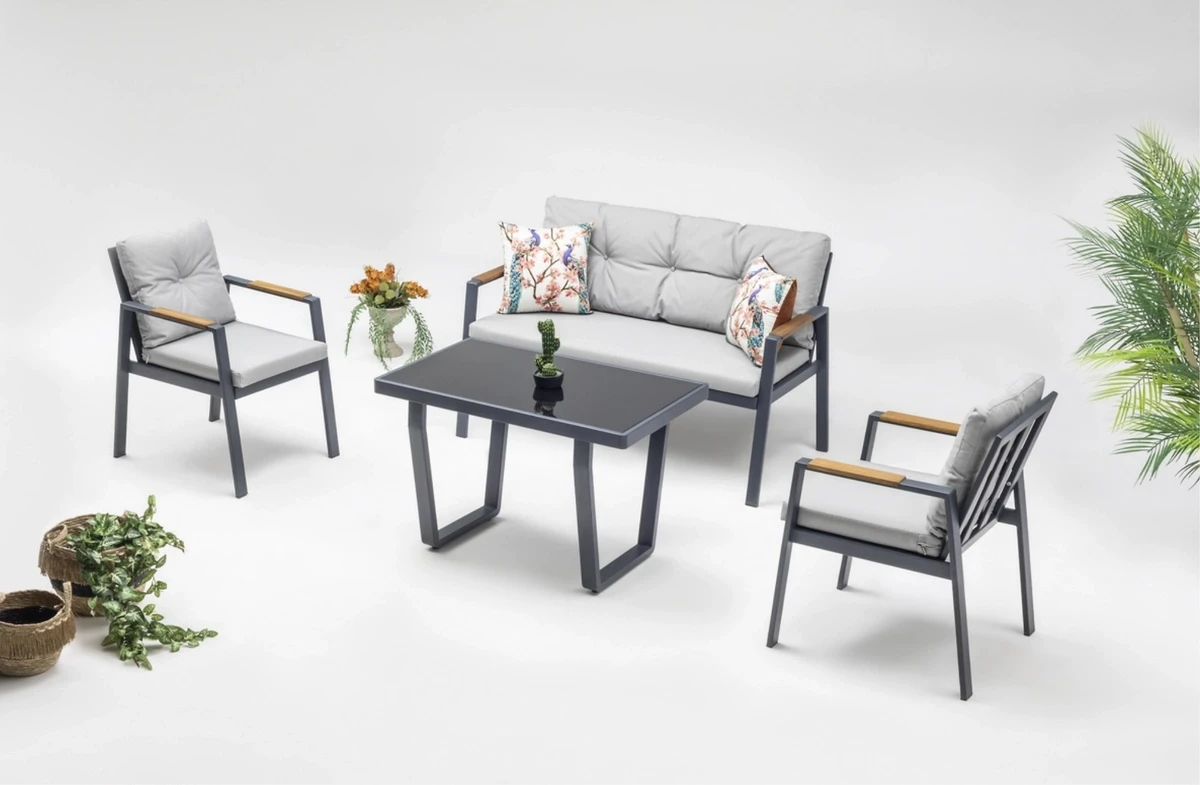
When selecting sofas, the surrounding clearance is just as important as the product's length. Placing two armchairs opposite a three-seater sofa increases the total space required, especially when a coffee table is included.
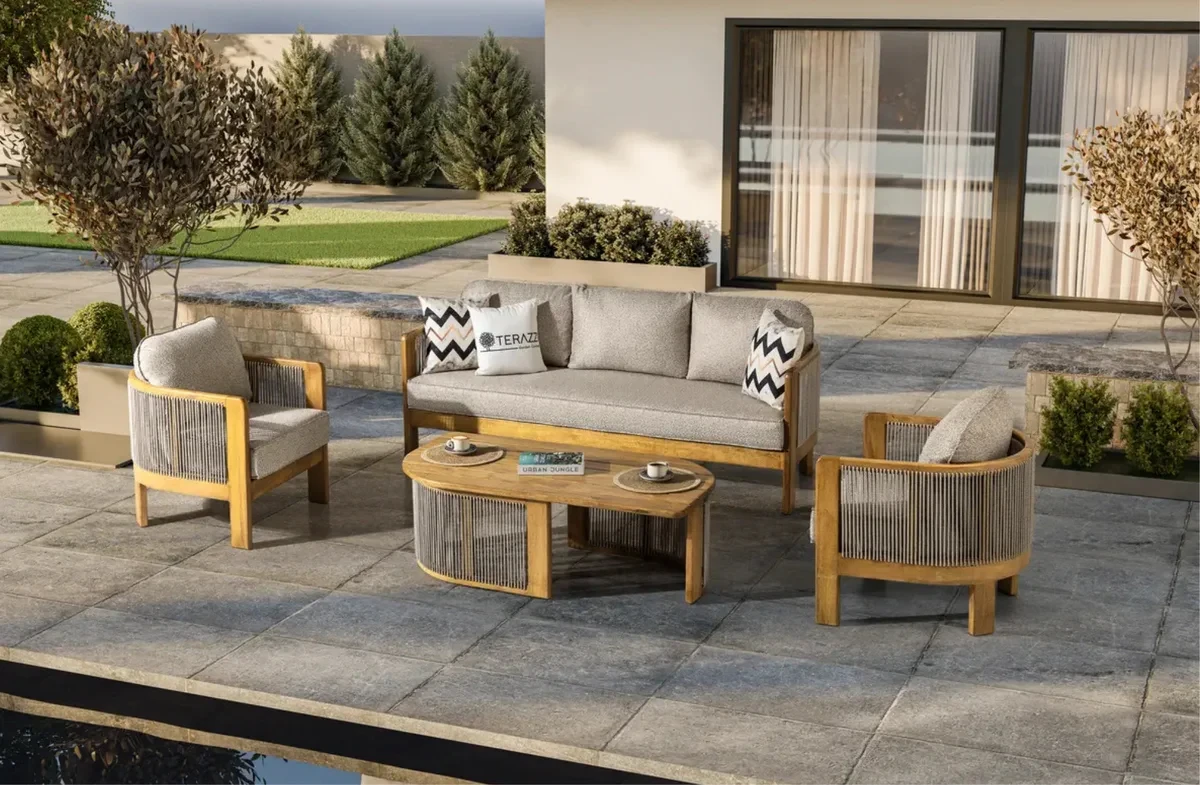
Terazzi's Lyon Midi Garden Seating Set, featuring a 168 cm three-seater sofa and armchairs measuring 61 × 61 cm, can be used in smaller seating areas. These dimensions make it easier to calculate the total space required, particularly in gardens where multiple garden seating sets will be installed.
Seating can be arranged face-to-face or at an angle, depending on the garden's shape. Coffee tables should be easily accessible from the seats, and sufficient circulation space should be maintained between furniture groups.
Dining Arrangements for Communal Terraces
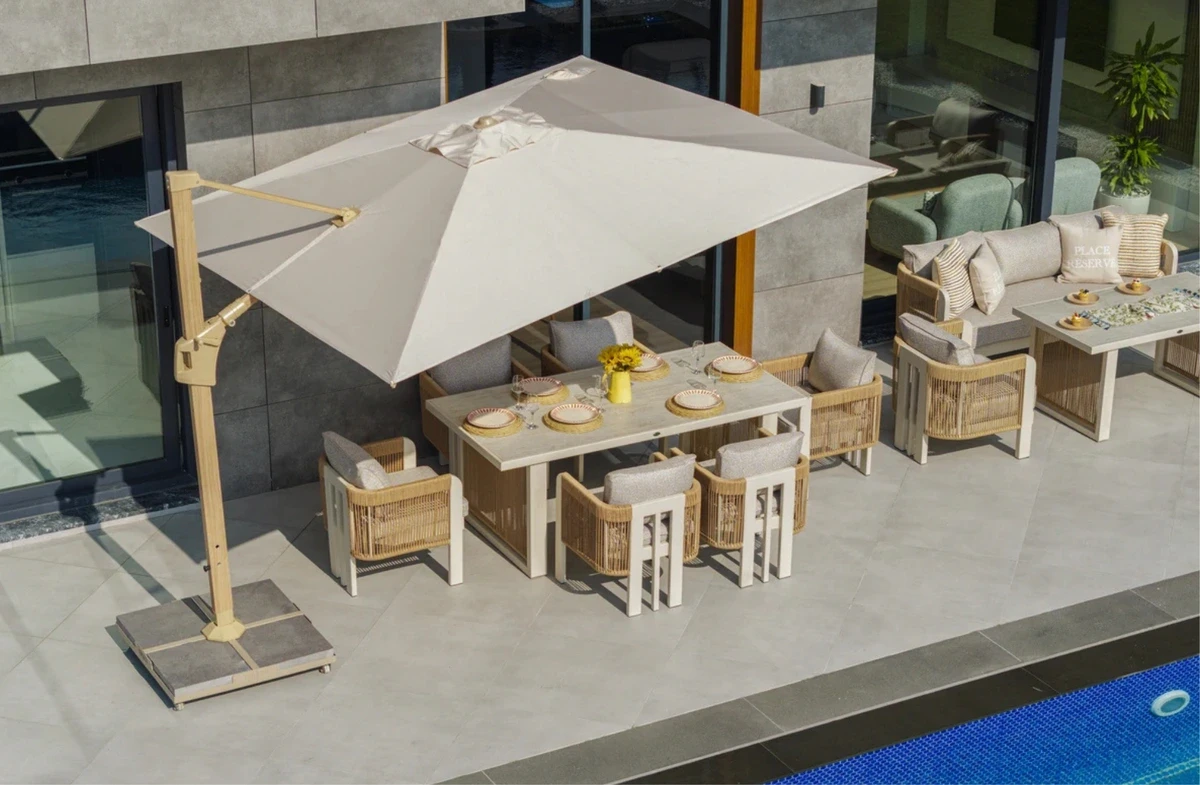
Shared terraces in residential buildings can accommodate various activities, from morning breakfasts to evening gatherings. One of the most common layout mistakes is calculating space requirements based on table dimensions without considering the area occupied by chairs.
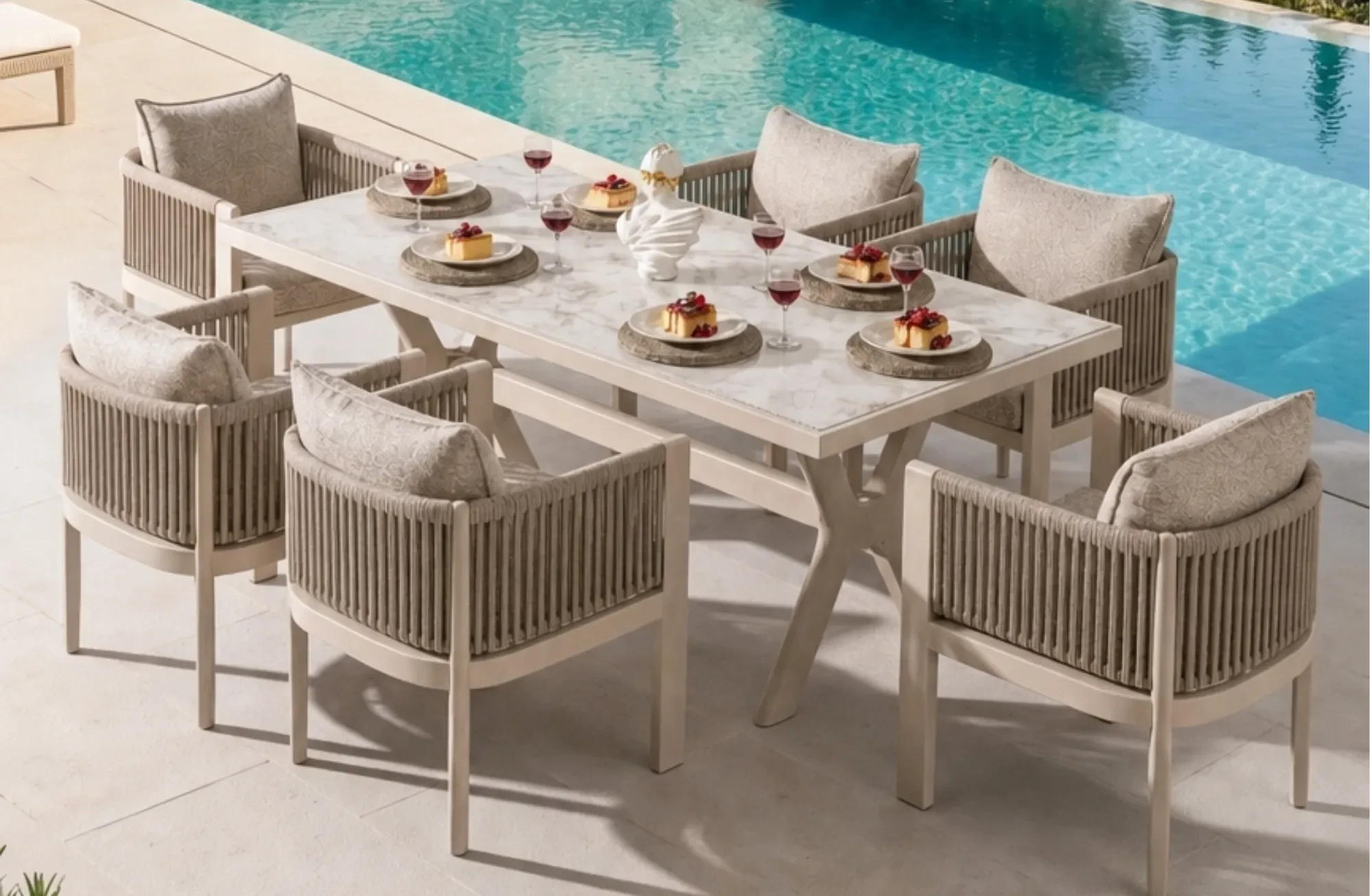
For example, when chairs are placed around a 200 cm long table, additional space is needed to pull them back. If a walkway runs behind the table, seated residents should be able to move without obstructing others.
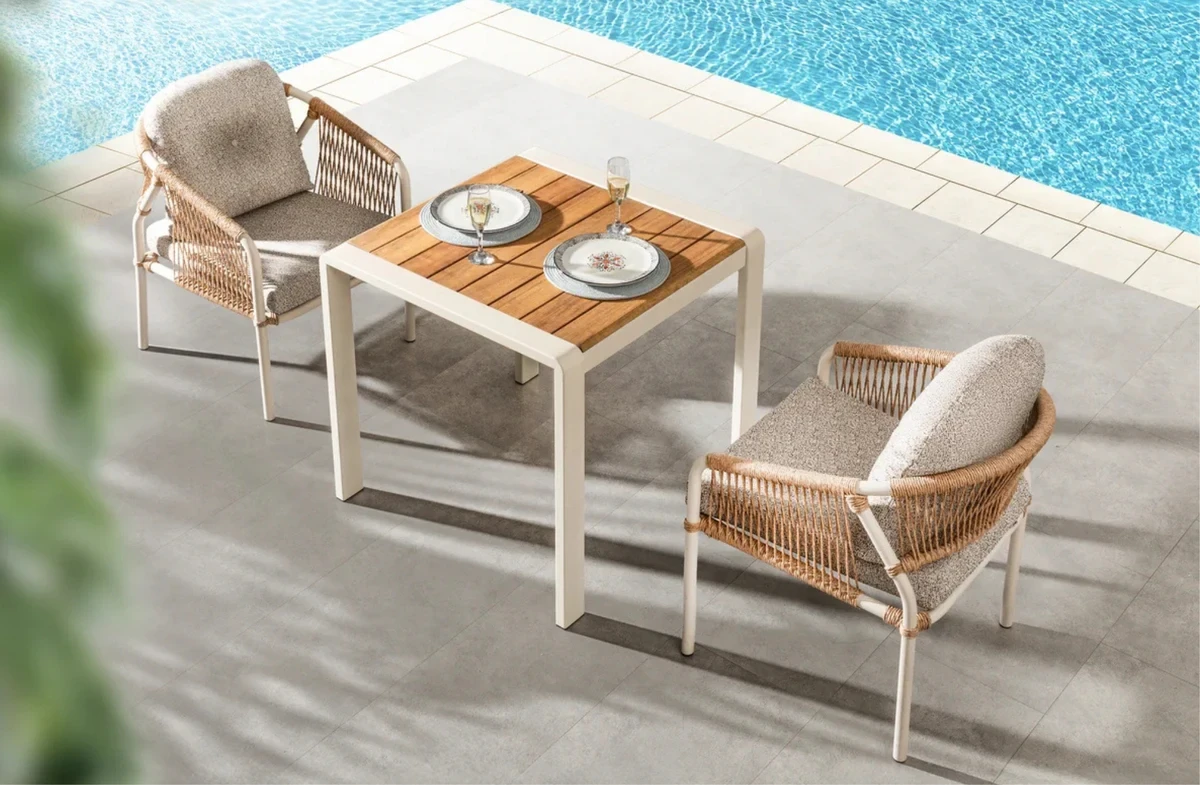
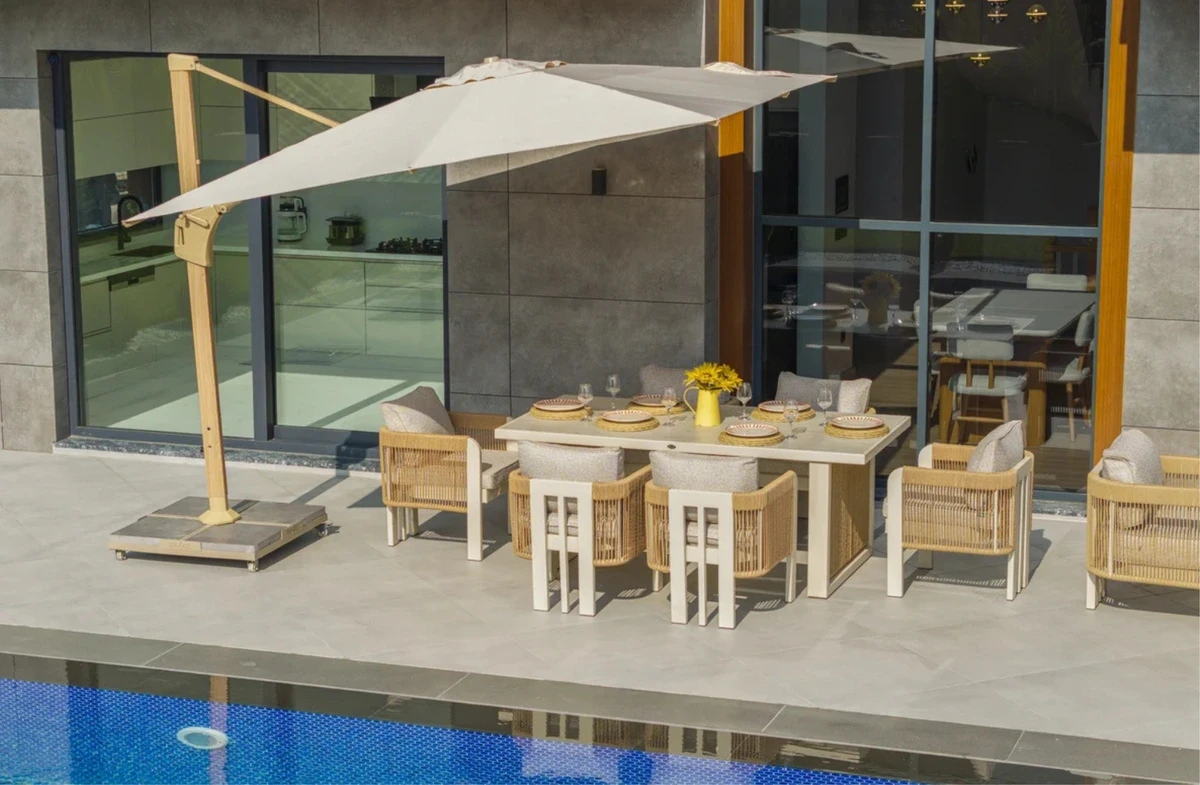
Terazzi's Astoria Garden Dining Set, featuring a 200 × 100 cm table, is designed for spacious dining areas. Its chairs measure 56 cm in width and 63 cm in depth, helping determine the total floor space required for the set.
When planning a shared terrace design, positioning dining tables separately from lounge furniture creates distinct spaces for eating and relaxation. On terraces used regularly for events, several independent tables also provide flexibility to adjust seating arrangements according to the number of participants.
Choosing Sun Loungers for Poolside Areas
Around swimming pools, keeping entrances and exits unobstructed is just as important as calculating the space occupied by furniture. During the summer, repositioning sun loungers can reduce or completely block the clearance originally planned between them.
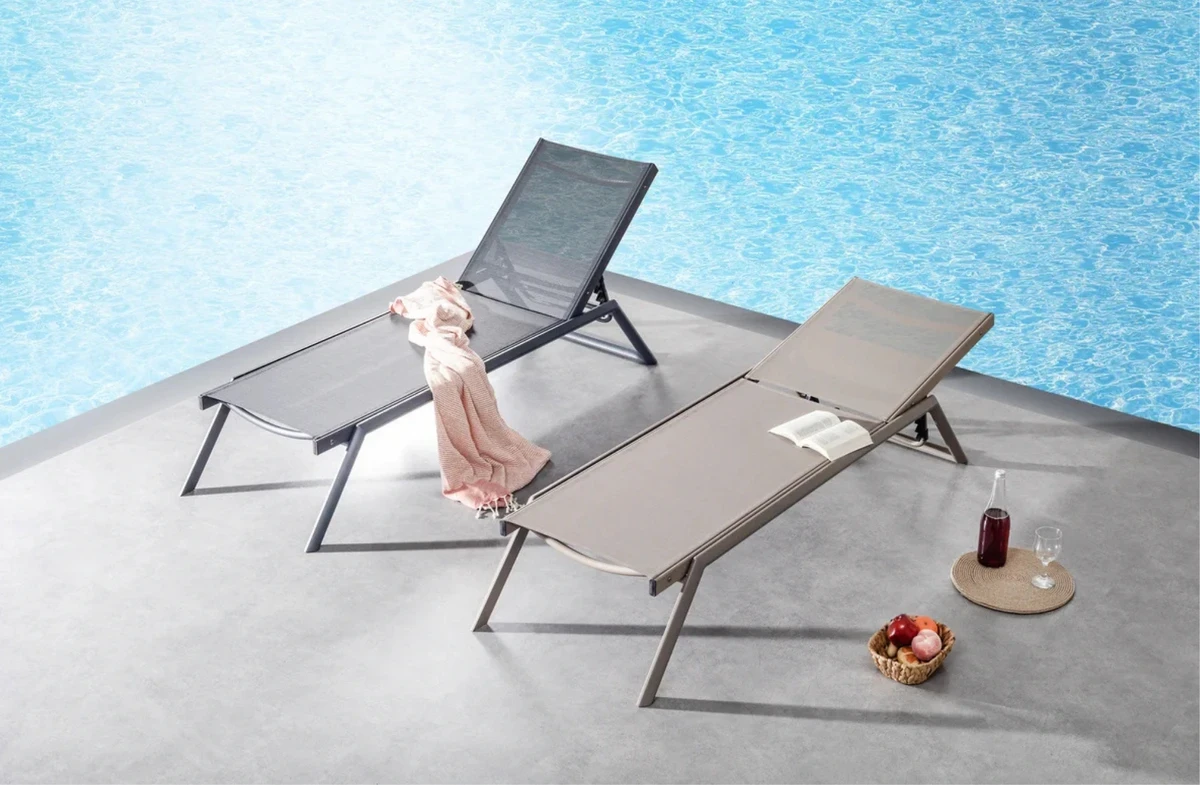
When comparing sun lounger models suitable for poolside use, backrest adjustment mechanisms, cleaning requirements, and storage features should be considered. Cushioned models may increase the daily workload of maintenance staff due to cleaning and drying requirements.
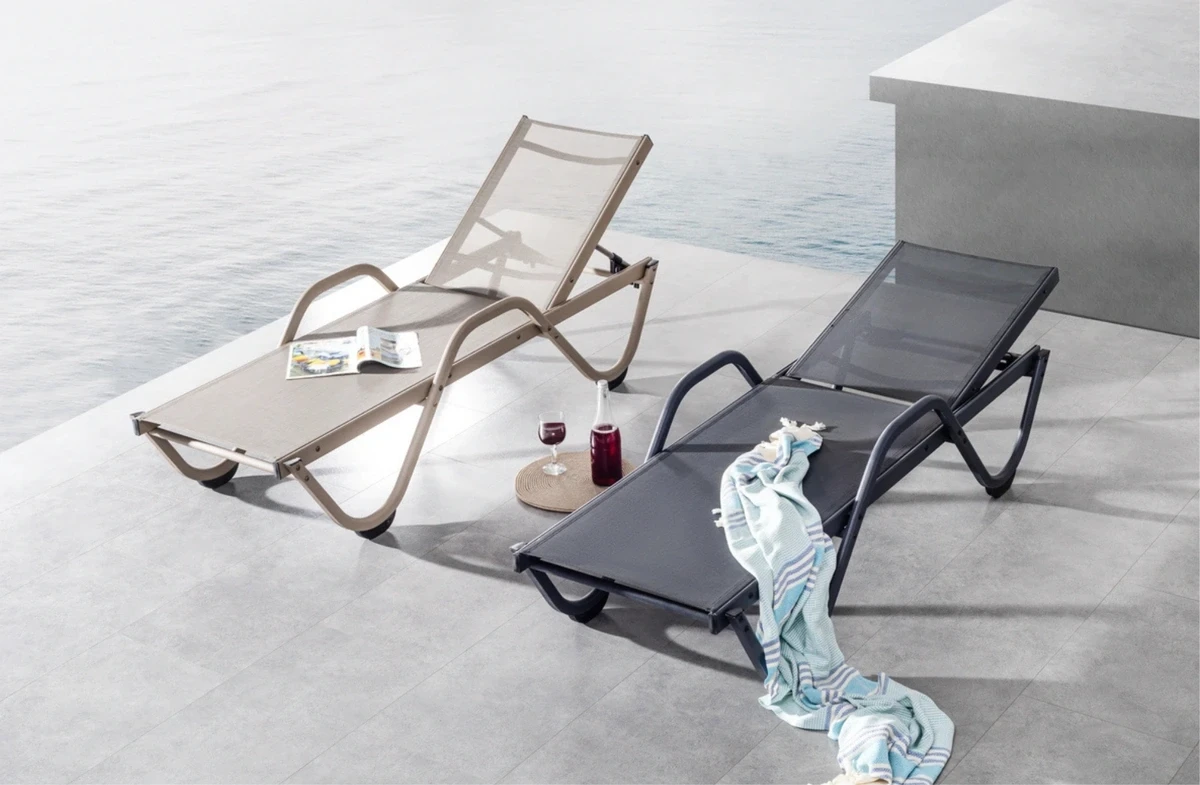
Terazzi's Gala Armless Sun Lounger measures 61 × 190 cm. Its stackable design allows multiple loungers to be stored in a smaller space during the off-season. The mesh fabric surface also enables use without additional cushions, reducing the need to clean and store separate padding.
Enough space should be left between loungers for users to get up comfortably from the sides and accommodate side tables when necessary. Mandatory circulation routes and accessible pathways around the pool must remain clear.
Seating Comfort for Different Age Groups in Communal Areas
Deep seating may appeal to residents who want to relax for extended periods, while more upright chairs with armrests can provide greater comfort for people who need additional support when sitting down or standing up. Offering different seating options in communal gardens allows residents to choose furniture that suits their needs.
Seat height and armrest positioning are particularly important for older residents. Very low seats may make standing up difficult, while excessively deep seating can prevent users from reaching the backrest comfortably.
The following details should be considered when planning seating arrangements:
Seats should provide appropriate support when sitting down or standing up.
Furniture legs should rest securely and evenly on the ground.
Sufficient space should be available behind dining chairs for movement.
Pathways leading to seating areas should be accessible.
Residents using wheelchairs should be able to participate in the same seating arrangements as other users.
Designer’s Note: Do not position wheelchair-accessible spaces away from the main seating area. Arrange chairs, sofas, and coffee tables so that everyone can participate in the same conversation group.
What Matters When Purchasing Outdoor Furniture in Bulk?
Purchasing 20 chairs for a residential complex is significantly different from furnishing a social facility with 200 chairs. As order quantities increase, transportation, installation, and potential replacement parts can account for a larger proportion of the overall budget.
Property management teams should compare quotations from different suppliers using the same technical criteria. One supplier may offer a lower product price but charge separately for transportation or installation. Warranty coverage and the availability of replacement parts can also affect long-term costs.
Before purchasing, the following questions should be answered:
Are the products suitable for the dimensions of the communal area?
Does the seating capacity meet residents' needs?
Are durability test reports available for the intended use?
Are delivery and installation services included in the quotation?
Which components and usage conditions are covered by the warranty?
Can cushions and other replaceable components be obtained later?
Is sufficient storage space available for furniture that is not in use?
Whenever possible, sample products should be tested in their intended locations before purchasing. This makes it easier to evaluate seating comfort and verify the actual dimensions of tables and chairs.
Using the same furniture model in several sections of a large communal facility may also offer operational advantages. Spare parts and repairs can be managed more efficiently without dealing with numerous different product designs.
Maintenance and Operating Costs of Communal Outdoor Furniture
Addressing a loose connection on a chair or sofa early can help prevent more extensive repairs. Replacing damaged foot caps or worn moving parts promptly may also extend the furniture's usable life.
In residential complex management, maintenance responsibilities should be clearly defined. Cleaning staff can handle routine surface cleaning, while technical personnel can inspect connections and mechanical components.
Maintenance can be organized into three stages:
Daily cleaning: Table, chair, and sun lounger surfaces are cleaned as needed using methods recommended by the manufacturer.
Periodic inspections: Connections, foot caps, and moving components are checked. Unsafe furniture is removed from use until repairs are completed.
End-of-season maintenance: Cushions are stored, components requiring repair are identified, and a maintenance budget is prepared for the following season.
For residential complexes with large quantities of furniture, a simple maintenance log can be useful. It allows managers to track when a product was repaired, which components were replaced, and whether the same problems have occurred repeatedly.
When calculating long-term costs, cleaning, repair, and component replacement expenses should be considered alongside the initial purchase price. Two products with similar upfront prices may have significantly different total costs over several years.
Frequently Asked Questions About Choosing Furniture for Communal Areas
What types of garden furniture should be used in communal areas of residential complexes?
Seating sets, dining tables, and sun loungers designed for intensive use, with durable connections and easy-to-clean surfaces, can be suitable choices. Product dimensions and maintenance requirements should match the characteristics of the areas where they will be installed.
Is aluminum or rattan more practical for communal areas?
Aluminum is commonly used for supporting frames, while synthetic rattan is generally used for woven surfaces. Since both materials can be combined in the same product, decisions should be based on connection strength, weaving quality, and cleaning requirements.
How should sun loungers be arranged around residential swimming pools?
Sun loungers should be positioned without blocking pool entrances, shower areas, or walkways. Sufficient clearance should be maintained for users to get up comfortably from the sides, while accessible circulation routes must remain unobstructed.
Which documents should be requested when buying outdoor furniture in bulk?
Mechanical durability and safety test reports appropriate to the intended usage conditions, along with warranty documents, may be requested. Relevant sections of the EN 581 standard can serve as references when technically evaluating outdoor seating and tables.
What should residential property managers consider when purchasing garden furniture?
In addition to the purchase price, delivery, installation, warranty, and spare parts availability should be compared. Testing sample furniture in the intended location before placing a large order can help reduce the risk of selecting products with unsuitable dimensions or insufficient comfort.


-
 Turn Your Balcony into a Winter Garden with Garden Furniture: Step by Step Guide
26 October 2026 -
 Features of Iroko Groups in Wooden Garden and Balcony Furniture
26 October 2026 -
 What is Aluminum Garden and Balcony Furniture?
26 October 2026 -
 What is Rope Knitted Garden Furniture?
26 October 2026 -
 Outdoor Lighting and Furniture: How to Create the Right Balance
26 October 2026 -
 Outdoor Furniture Cleaning Guide: How to Keep It Looking Like New
26 October 2026 -
 Outdoor Seating Layout Guide for Large Terraces
26 October 2026 -
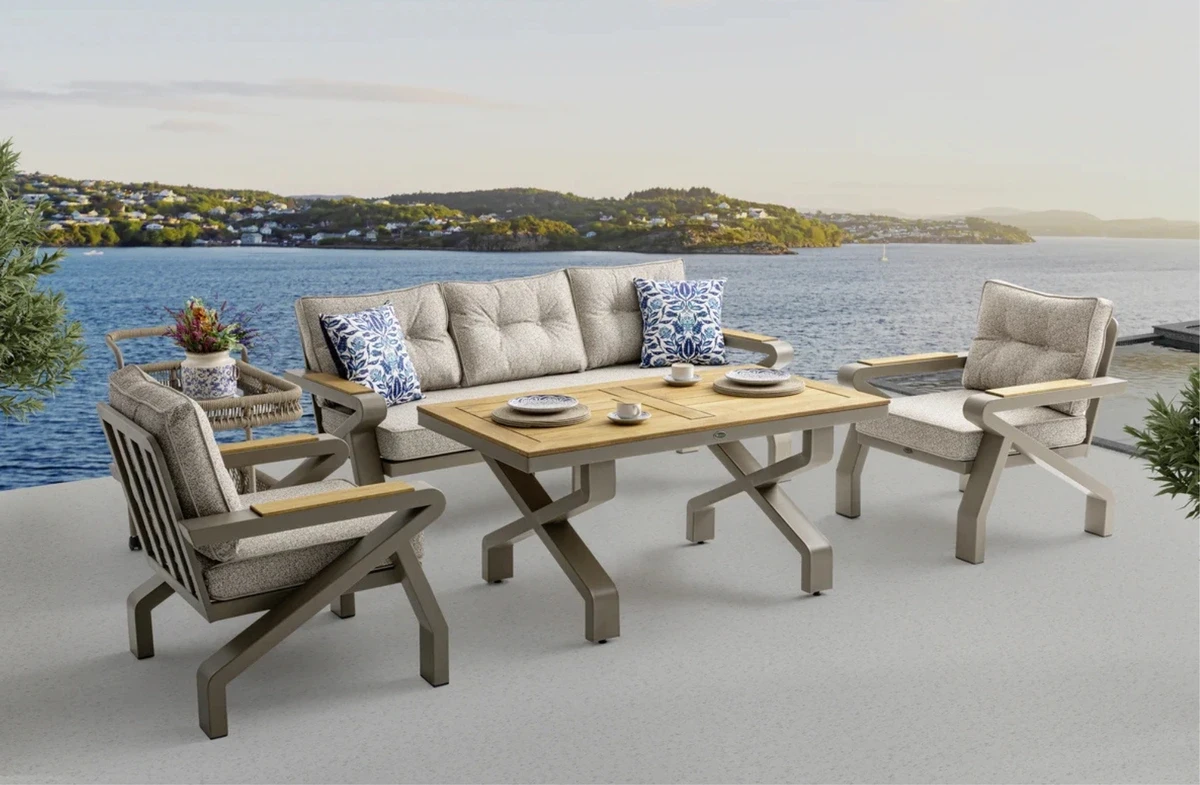 Why Is Aluminum Preferred for Outdoor Furniture?
26 October 2026 -
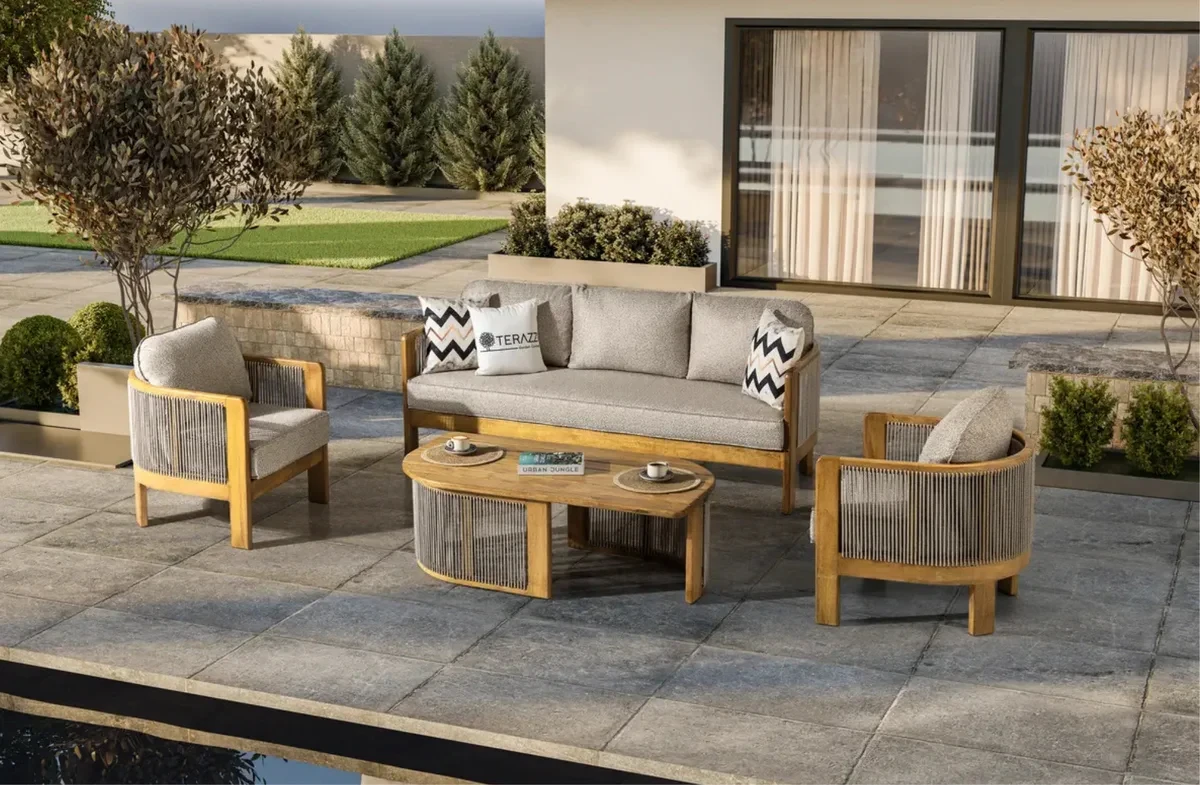 Villa Garden Decoration Ideas and 2026 Design Trends
26 October 2026 -
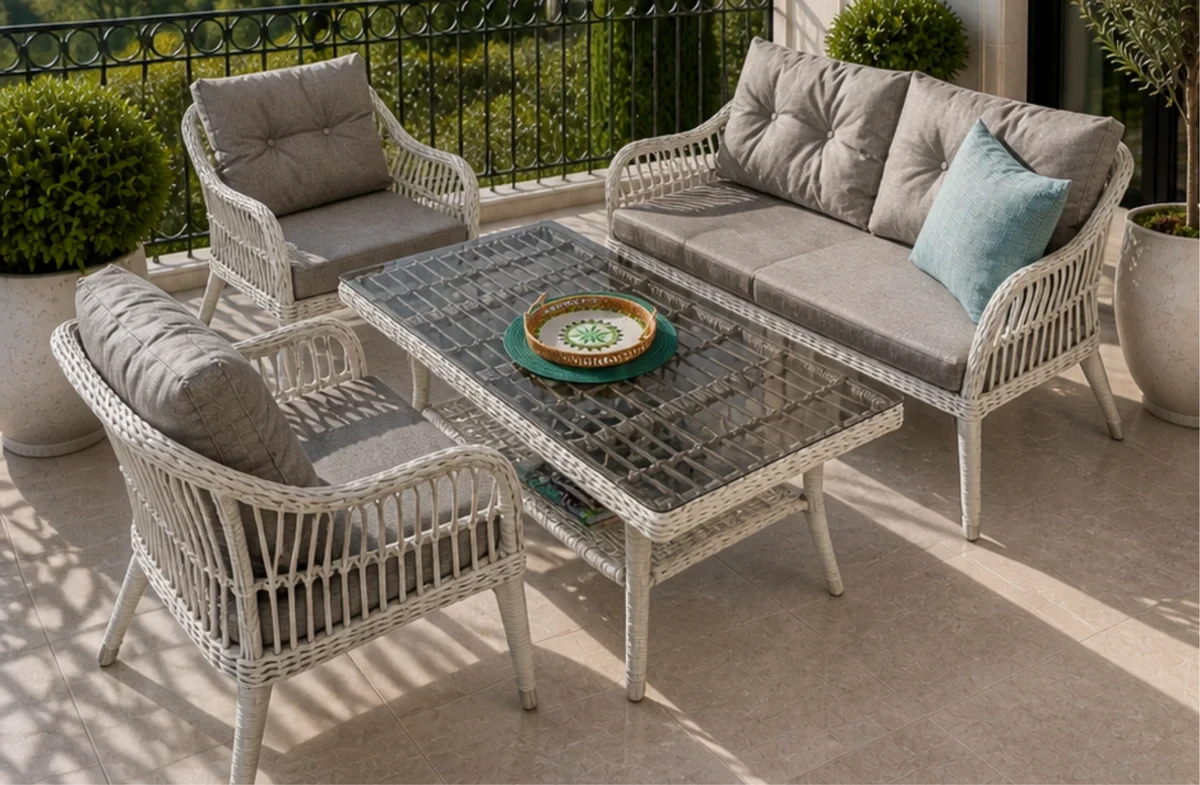 Choosing Outdoor Furniture for Hotels and Restaurants
26 October 2026 -
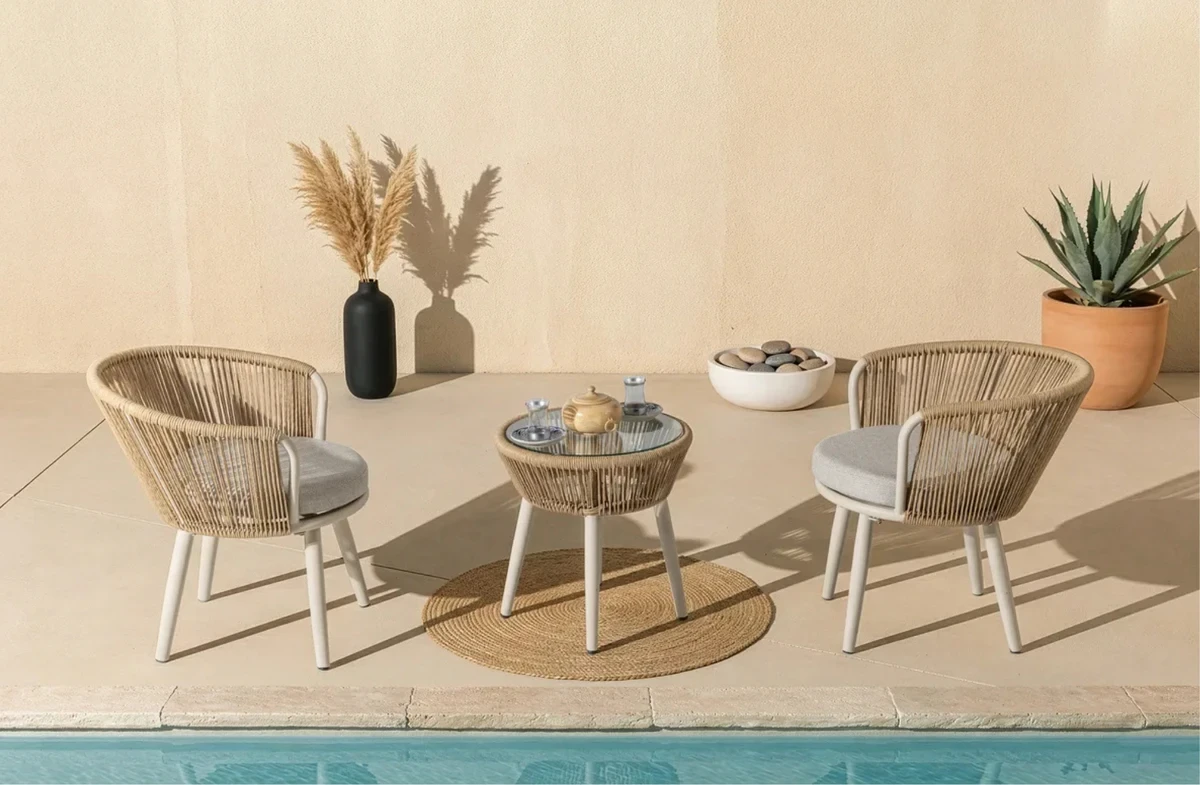 Decorating Ideas for Small Balconies: A Guide to Measurements, Materials, and Placementi
26 October 2026 -
 Differences Between Iroko and Teak Wood: Which is More Sensible for Garden Furniture?
26 October 2026 -
 What is the difference between rattan and bamboo furniture?
26 October 2026 -
 What should you pay attention to when choosing a garden or balcony umbrella?
26 October 2026 -
 Cushion and Fabric Choices for Outdoor Furniture: Waterproof, Durable, and Comfortable Options!
26 October 2026 -
 Sun Loungers and Sunbeds: A Comfortable Guide for Poolside Use
26 October 2026 -
 Outdoor Dining Table Dimensions: How Much Space Do You Need?
26 October 2026 -
 2026's Popular Garden Furniture Collections
26 October 2026 -
 Which Garden Furniture Can Stay Outside All Year Round?
26 October 2026 -
 Garden Furniture Color Selection: How to Create an Outdoor Palette?
26 October 2026 -
 Terazzi Garden Furniture in the TV Series “Muhtemel Aşk”
26 October 2026 -
 Garden Furniture Trends: Sustainable Materials and Recyclable Designs
26 October 2026 -
 Ways to Use Your Garden and Terrace for Longer in Autumn
26 October 2026 -
 Balcony Furniture Recommendations for Enclosed and Glass-Enclosed Balconies
26 October 2026 -
 Terazzi Garden Furniture Steals the Spotlight in the TV Series Teşkilat!
26 October 2026