












Sun Loungers and Sunbeds: A Comfortable Guide for Poolside Use

A sun lounger used around a swimming pool is exposed throughout the day to chlorinated water, wet towels, and sunscreen. At the beach, salt, sand, and wind are added to these conditions. These factors change the importance of many details, from the frame to the upholstery.
Choosing the right product requires more than looking at its dimensions and appearance. How often the lounger will be moved, the type of surface it will stand on, how much direct sunlight it receives during the day, and where it will be stored at the end of the season should also be considered.
Why Does Sun Lounger Selection Differ Between Poolside and Beach Areas?
Quick-drying upholstery makes daily use easier around swimming pools. Open-weave technical mesh helps water drain away from the surface more quickly. Easy-to-clean frames also make it easier to remove sunscreen and chlorine residue.
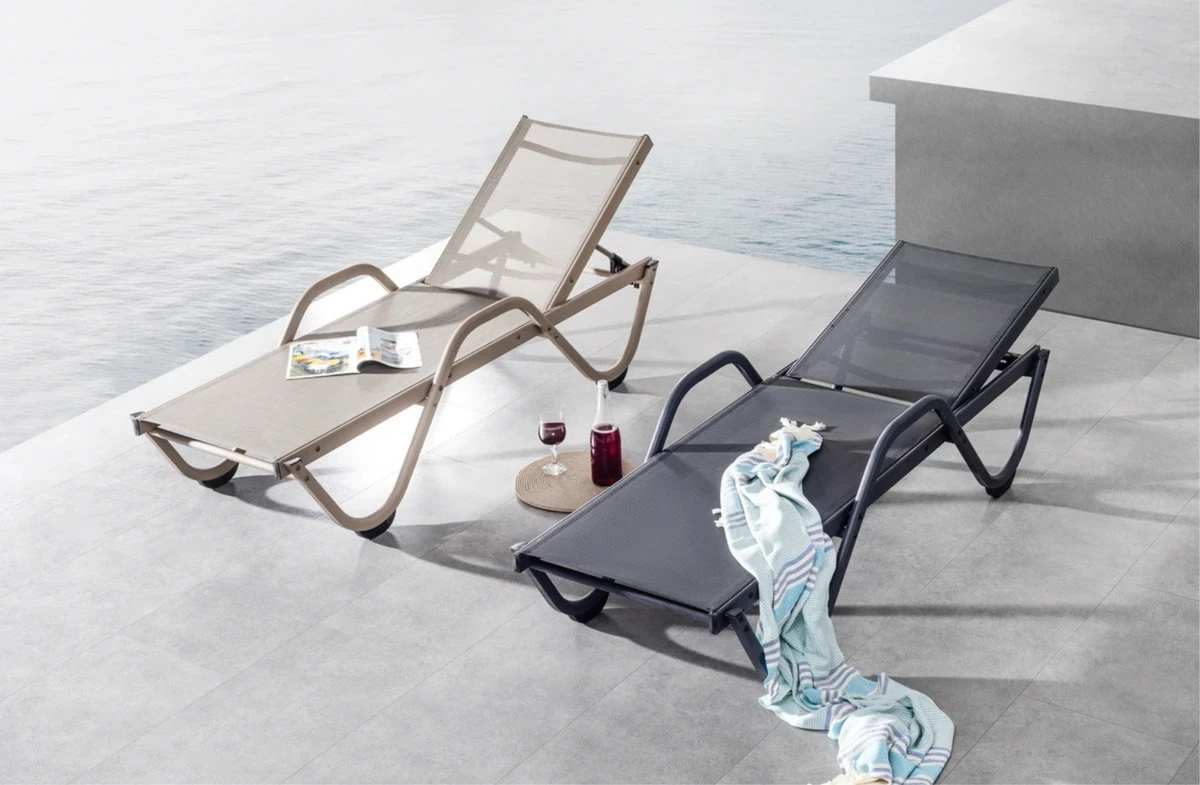
Sun loungers may need to be moved into the shade during the day or repositioned during cleaning. Lightweight aluminum frames and wheels make this process easier. Stackable models also require less storage space in shared-use environments.
Different challenges arise at the beach. Salty air can accelerate corrosion around metal connections and areas where protective coatings have been damaged. Sand can enter backrest mechanisms and wheel housings, making movement more difficult. In exposed and windy locations, very lightweight products may shift position or tip over.
Around pools, low weight and quick drying are generally more important. At the beach, frame weight, connection materials, and easy-to-clean mechanisms become higher priorities.
The dry weight of a sun lounger alone is not enough to evaluate its practicality. A cushion may become significantly heavier after absorbing water. Wide sunbeds can also be affected more strongly by wind.
How Should You Choose the Material of a Sun Lounger?
Key Characteristics of Aluminum Sun Loungers
Aluminum offers an advantage for outdoor furniture that needs to be moved frequently because of its low weight. It reduces handling effort around hotel pools, large terraces, and areas where furniture layouts change seasonally.
Electrostatic powder coating helps limit direct contact between the metal and water or moisture. The coating should remain continuous around welded areas, profile ends, and corners. Scratched coating or exposed metal may become more vulnerable to corrosion, particularly in coastal environments.
When evaluating aluminum sun loungers, consider the following:
No gaps or defects around welded joints
Closed and protected profile ends
Feet that sit evenly on the ground
Wheels suitable for the weight of the frame
A backrest mechanism without excessive play
Once transportation frequency, backrest adjustment, and upholstery type are determined, different outdoor sun lounger options can be compared according to their dimensions and intended use.
Key Characteristics of Iroko Wood Sun Loungers
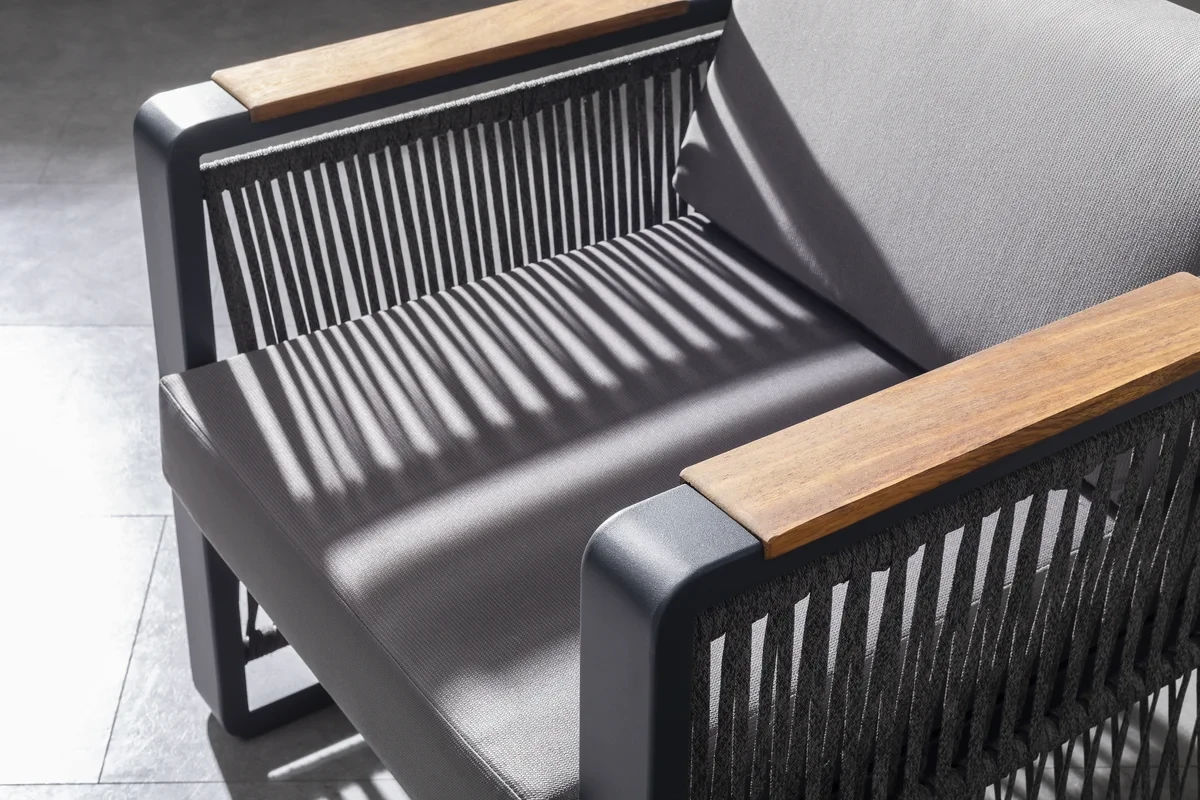
Iroko is commonly used outdoors because of its natural oil content and dense fiber structure. On terraces exposed to direct sunlight, it may also feel more comfortable against the skin because it does not heat up as quickly as exposed metal.
Wood gradually turning gray does not always indicate damage. UV exposure can lighten the surface and create a natural patina. Raised fibers, splinters, cracks, or excessive dryness, however, may indicate that maintenance is required.
Water should not remain trapped around the joints of wooden sun loungers. Protective feet beneath ground-contact points can help reduce continuous moisture absorption. Stainless or corrosion-resistant fasteners are also particularly important near coastal areas.
Iroko models are generally heavier than aluminum alternatives. For this reason, they may be better suited to gardens and terraces where the furniture is not moved frequently.
Choosing Mesh, Rope, and Cushions
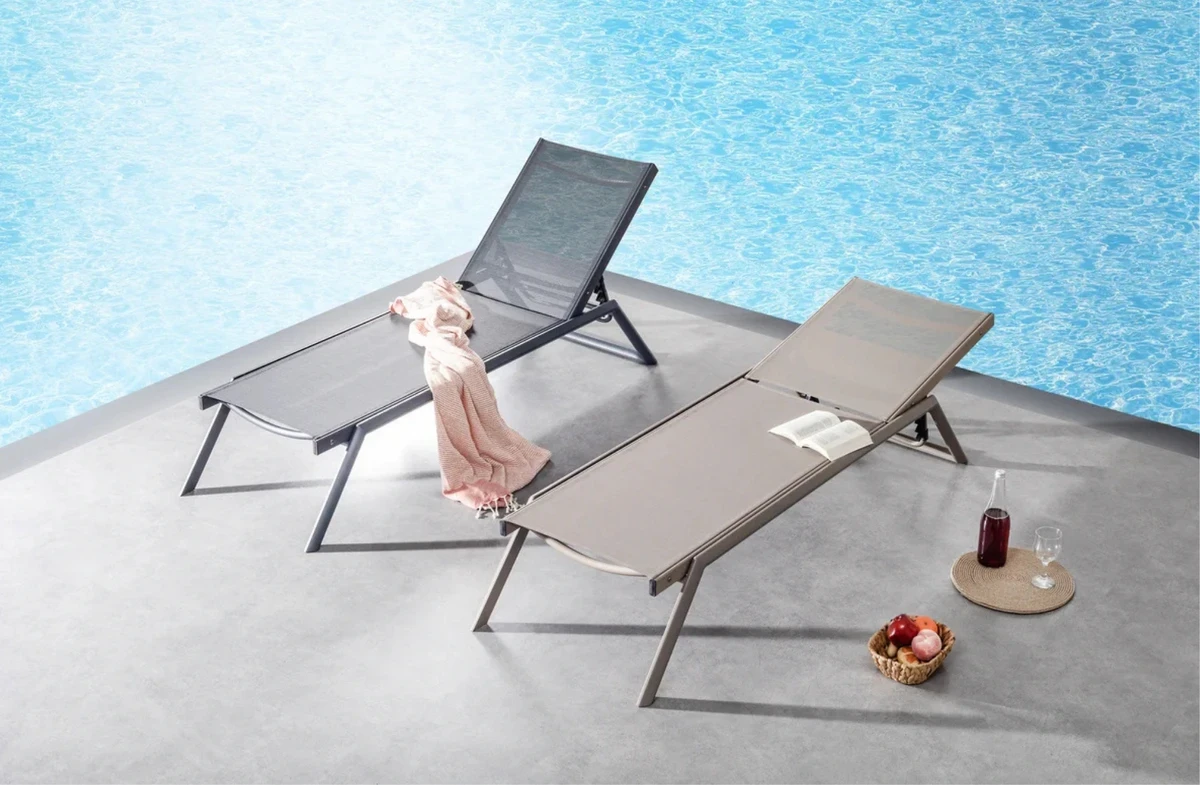
Technical mesh can help reduce the amount of time water remains on the surface because of its open structure. This makes cushion-free use practical around swimming pools. Since mesh tension may decrease over time, the seat and backrest should be checked for sagging.
UV resistance is important for rope upholstery, also known as synthetic rope weaving. Fibers without suitable UV protection may harden, fade, or loosen where they connect to the frame.
For cushioned sunbeds, the internal filling is just as important as the fabric. Water-repellent fabric can limit short-term exposure to droplets, but it does not completely prevent water from entering through seams. The filling should not retain water for long periods and should allow sufficient airflow.
Sun Lounger or Sunbed: Which Is More Suitable?
Sun loungers are generally designed for one person, have a narrower form, and often include an adjustable backrest. They can be used for sitting, reclining, and lying down. Wheeled or stackable models are particularly useful in areas where the layout changes frequently.
Sunbeds are wider and usually feature a cushioned surface. They provide more room for extended periods of relaxation. However, they also occupy more space on terraces and around swimming pools.
A sun lounger is generally more suitable when the product is frequently moved, the backrest angle is adjusted during the day, or the furniture needs to be stored at the end of the season. A sunbed may be preferred when a wider lying area, thicker cushions, and longer relaxation periods are the priority.
If the same product will be used for both reading and sunbathing, a multi-position backrest is more practical. Simpler mechanisms may be sufficient in areas where the backrest angle rarely changes.
Comfortable Sun Lounger Dimensions and Placement
Sun lounger comfort is determined by the backrest angle, seat height, and upholstery tension together. Very low models may be difficult to get up from. Backrest positions should also lock securely to prevent sudden movement during use.
The fully open dimensions of the product should be checked before planning the layout. On residential terraces, approximately 45–60 cm of lateral clearance can be left between sun loungers. Around 90 cm of space for the main circulation route generally makes everyday movement easier. Accessibility and facility-specific requirements should be considered separately in commercial projects.
Wide foot pads can reduce the risk of marks on decking and delicate stone surfaces. For wheeled loungers, the type of flooring is also important. Small wheels may become stuck in wide joints, gravel, or uneven stone paving.
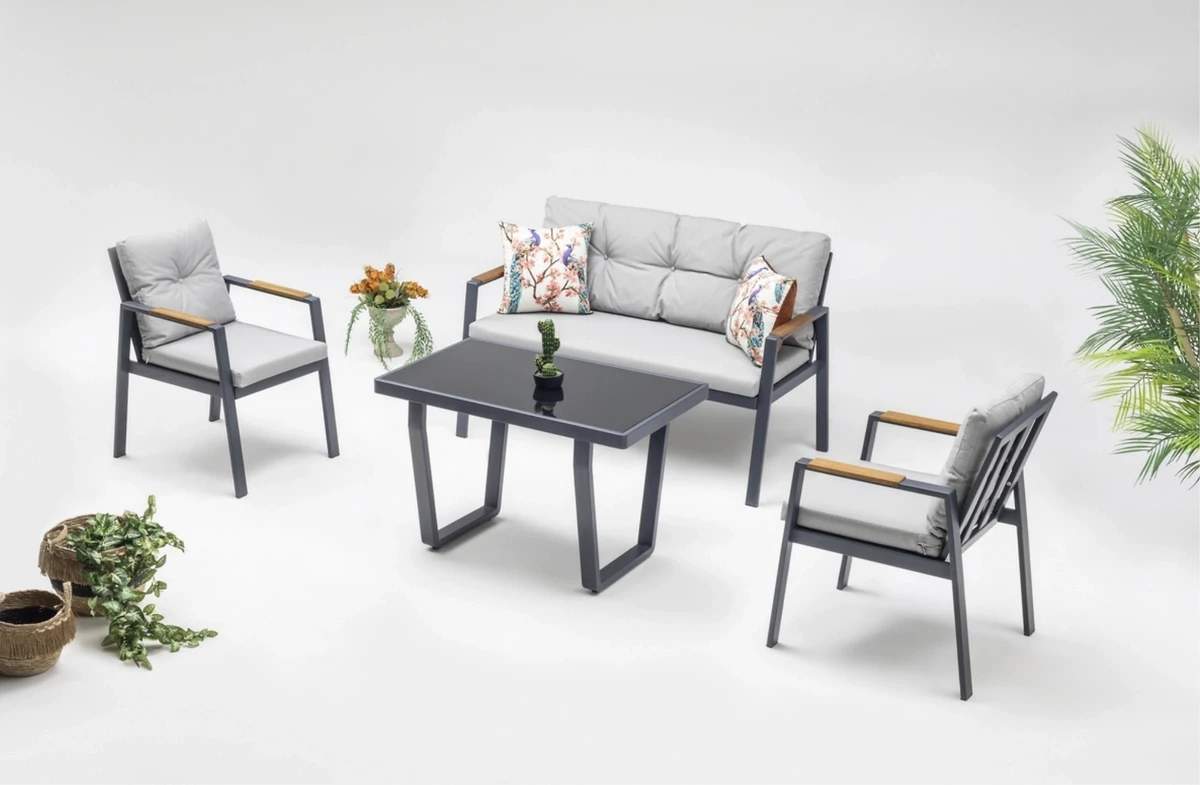
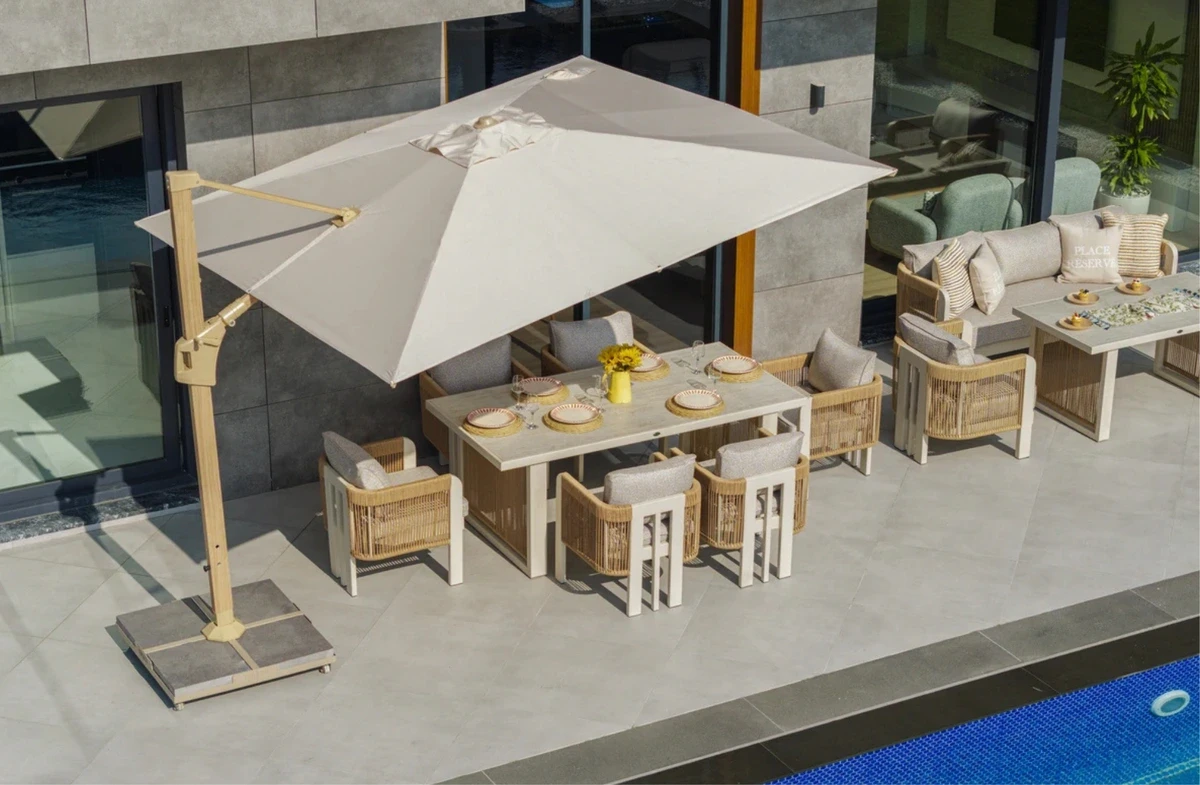
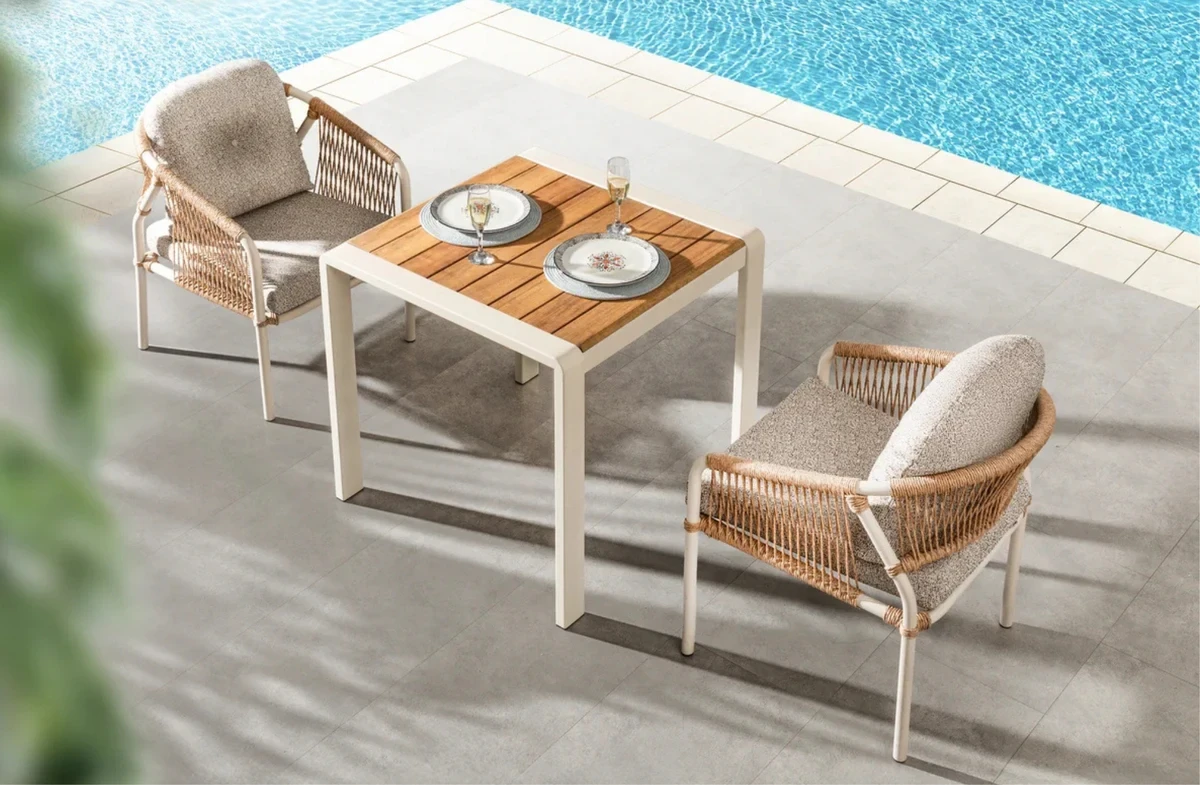
The sunbathing area can be planned separately from outdoor seating set options and the dining area. This prevents loungers from restricting circulation and keeps relaxation, socializing, and service zones from overlapping.
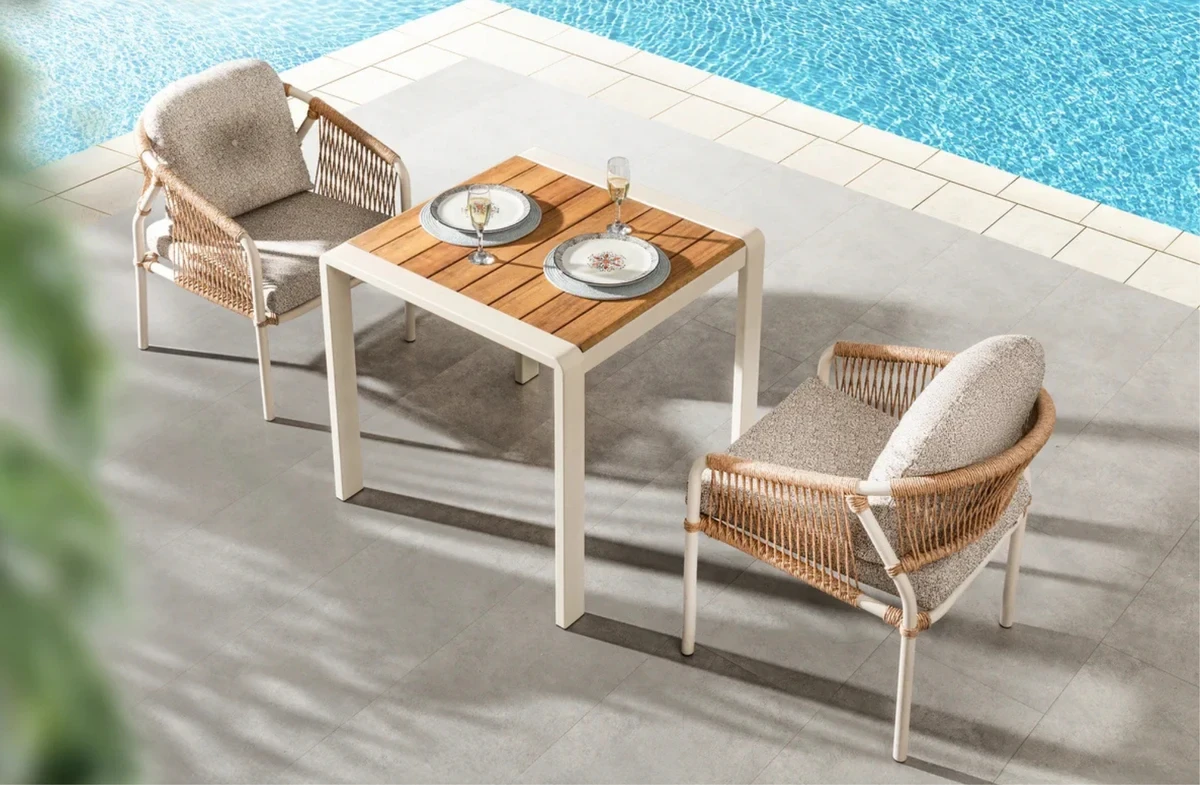
A clear service route should be maintained between outdoor dining tables and chairs and the sun loungers. On small balconies, foldable balcony furniture or individual chairs with footrests may be more practical than full-size loungers.
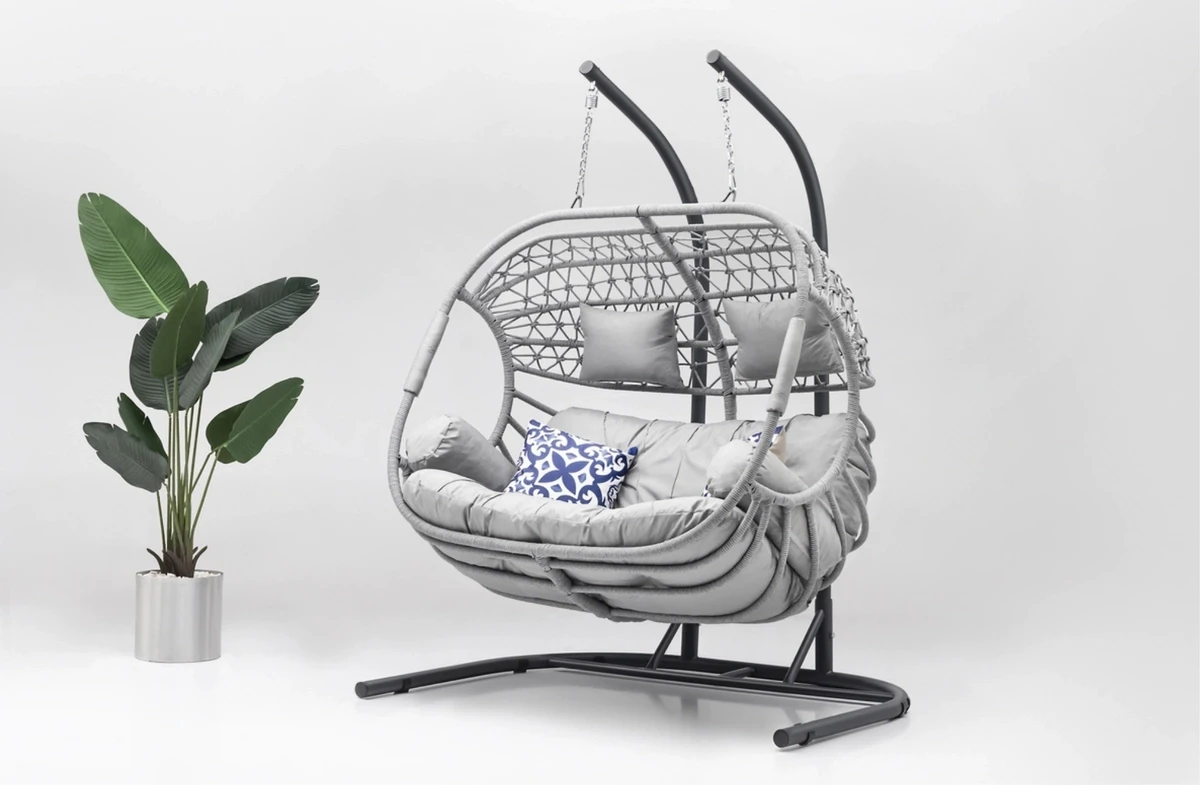
In larger gardens, outdoor swing models can be placed in a separate relaxation corner away from the sunbathing zone. Similar frame proportions, upholstery textures, and color transitions can also help create visual consistency across different outdoor furniture collections.
What Should You Check When Buying a Sun Lounger?
More than the product image should be evaluated before purchasing. The frame, mechanism, upholstery, and fully open dimensions should all be checked separately.
Frame and Connections
Do all feet sit evenly on the surface?
Are welds and profile ends clean and properly finished?
Are there any sharp edges?
Is the maximum load capacity specified?
Backrest Mechanism
Do the positions lock securely?
Is there a risk of pinching around folding points?
Can the backrest angle be changed easily?
Are the wheels suitable for the intended flooring?
Upholstery and Cushions
Is the fabric specified as suitable for outdoor use?
Is information provided about UV resistance?
Is the cushion cover removable?
Does the filling retain water for long periods?
Dimensions and Storage
Does the product fit the available space when fully open?
Does it restrict the circulation route?
Can it be folded or stacked?
Can wheels, foot pads, and cushions be replaced?
The ability to replace worn components can extend the product’s service life. If wheels, cushion covers, or backrest mechanisms can be replaced, the entire product may not need to be renewed.
How Should a Sun Lounger Be Maintained?
A soft cloth and neutral cleaner are generally sufficient for aluminum surfaces. Abrasive sponges can scratch the coating. Rinsing loungers used in coastal areas with fresh water can help reduce salt buildup around welds and connection points.
High-pressure water should be avoided on wooden surfaces because it may raise the fibers. Cleaning with a soft brush is generally safer. Once the surface is dry, light sanding and a suitable outdoor wood oil can be applied when necessary.
Wet cushions should not be placed directly into enclosed storage. They should be allowed to dry in a shaded, well-ventilated area. Damp filling can accelerate odor and mold development.
Avoid the following maintenance practices:
Using wire brushes
Applying bleach or abrasive cleaning products
Stacking wet cushions
Applying excessive lubricant to mechanisms
Leaving the product under a non-breathable cover
Excess lubricant can cause sand and dust to stick to the mechanism more easily. Ventilation around the lower part of a protective cover also helps reduce moisture buildup.
Frequently Asked Questions About Sun Loungers and Sunbeds
What type of sun lounger material is suitable for poolside use?
Electrostatically powder-coated aluminum can be a practical choice around swimming pools because of its low weight and ease of cleaning. Open-weave technical mesh can also help water drain from the surface more quickly.
Can a wooden sun lounger be left outdoors?
Outdoor-suitable woods such as iroko can be used outside. However, constant moisture, trapped water beneath non-breathable covers, and insufficient maintenance can accelerate cracking and raised fibers.
Is a foldable or fixed sun lounger more practical?
Foldable models take up less space during transportation and storage. Fixed models contain fewer moving components and may require less mechanical maintenance under intensive use.
What should you do if a sun lounger cushion is left in the rain?
The cushion should be dried in a shaded, well-ventilated location. Storing a wet cushion in an enclosed area can accelerate the development of odor and mold.
How much space should be left between sun loungers?
On residential terraces, approximately 45–60 cm of side clearance can be left between individual sun loungers. Around 90 cm of space for the main walkway can make everyday circulation easier.


-
 Turn Your Balcony into a Winter Garden with Garden Furniture: Step by Step Guide
07 July 2026 -
 Features of Iroko Groups in Wooden Garden and Balcony Furniture
07 July 2026 -
 What is Aluminum Garden and Balcony Furniture?
07 July 2026 -
 What is Rope Knitted Garden Furniture?
07 July 2026 -
 Outdoor Lighting and Furniture: How to Create the Right Balance
07 July 2026 -
 Outdoor Furniture Cleaning Guide: How to Keep It Looking Like New
07 July 2026 -
 Outdoor Seating Layout Guide for Large Terraces
07 July 2026 -
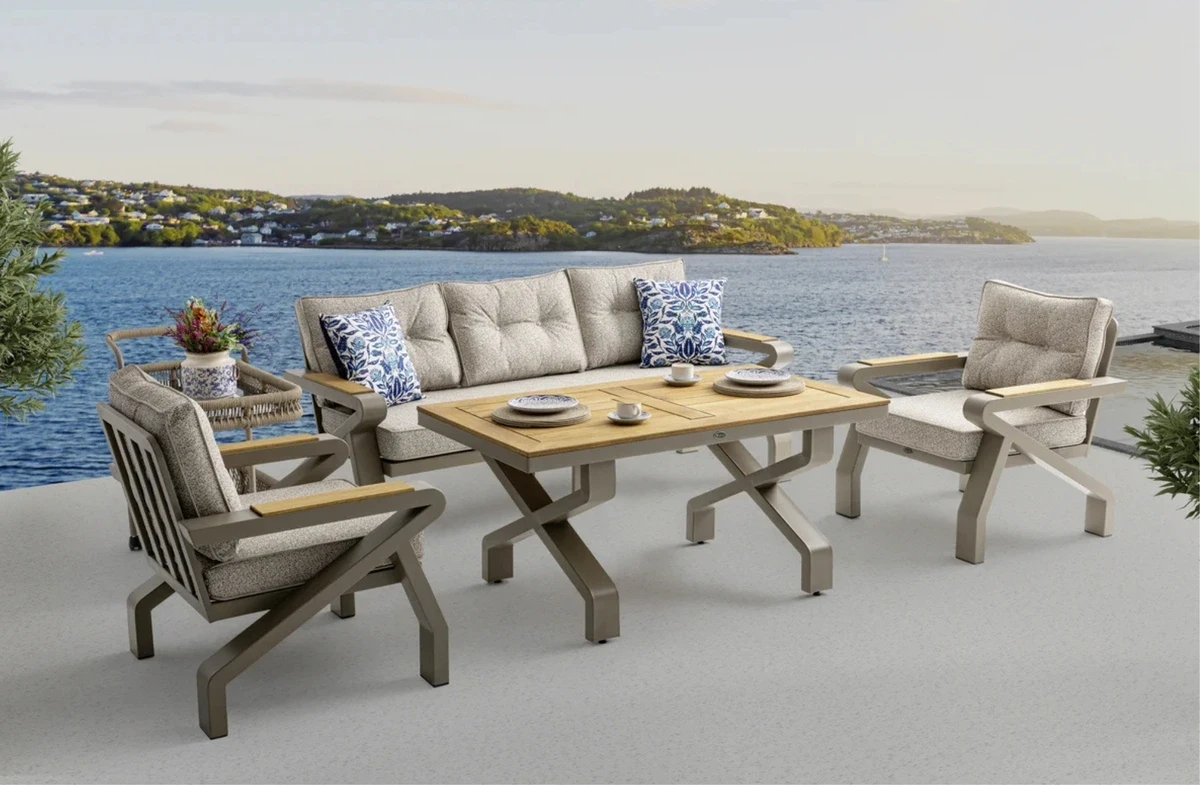 Why Is Aluminum Preferred for Outdoor Furniture?
07 July 2026 -
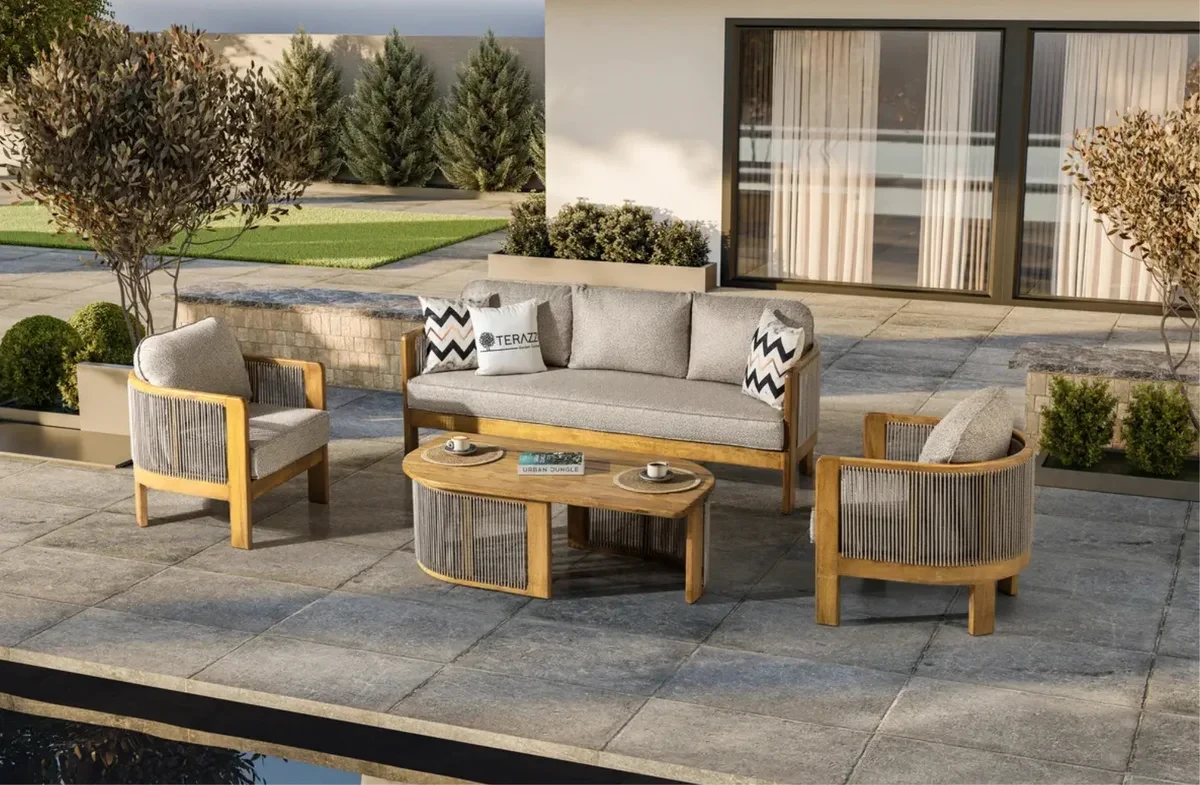 Villa Garden Decoration Ideas and 2026 Design Trends
07 July 2026 -
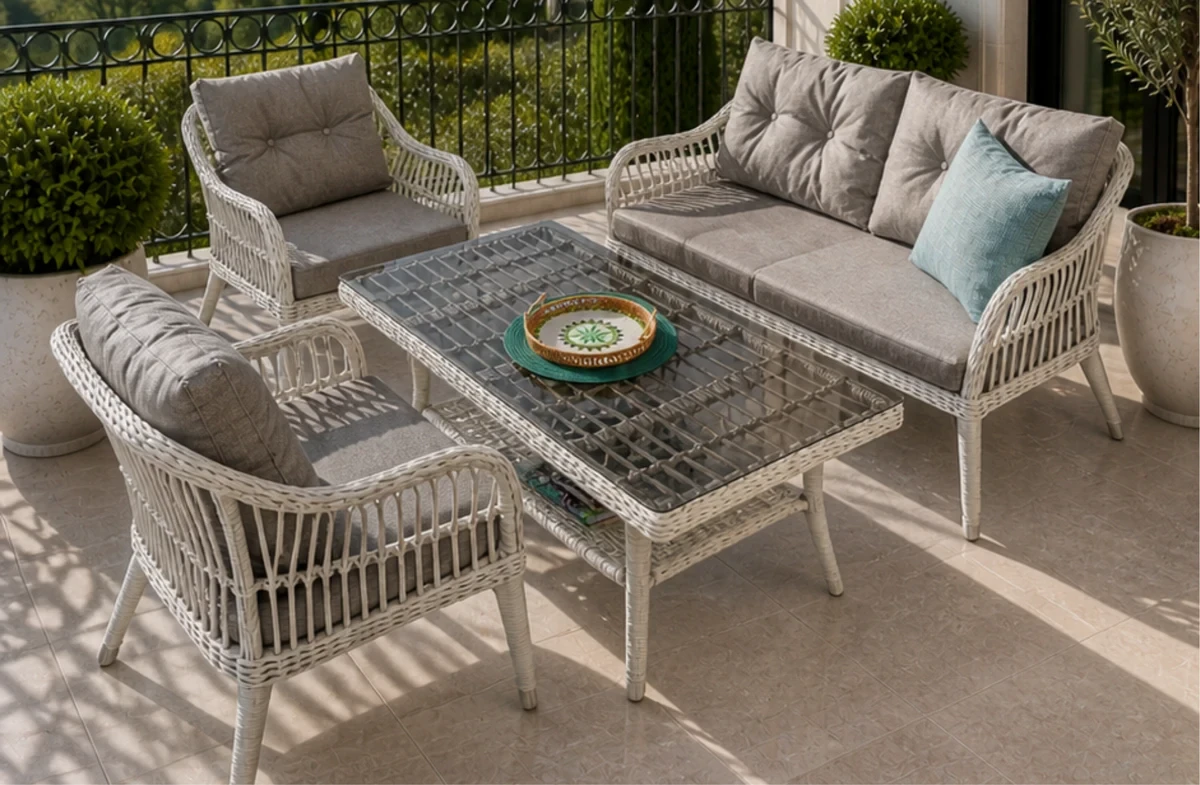 Choosing Outdoor Furniture for Hotels and Restaurants
07 July 2026 -
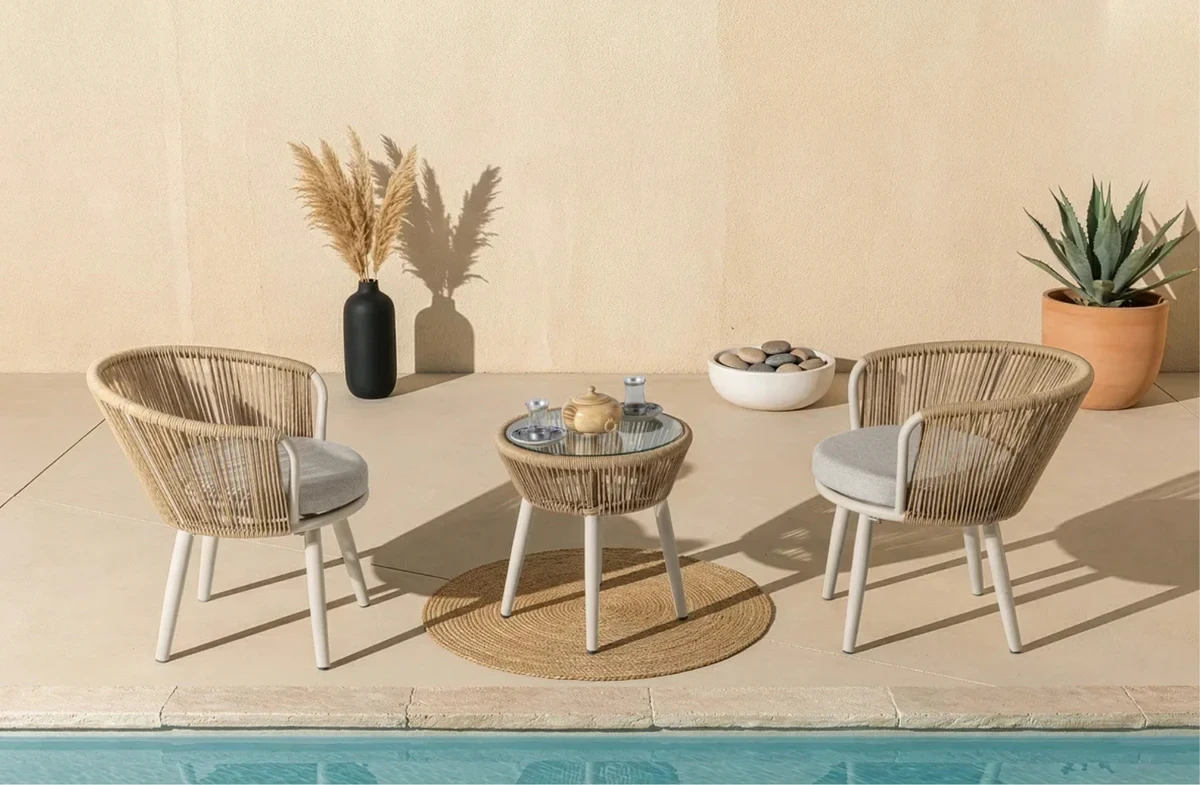 Decorating Ideas for Small Balconies: A Guide to Measurements, Materials, and Placementi
07 July 2026 -
 Differences Between Iroko and Teak Wood: Which is More Sensible for Garden Furniture?
07 July 2026 -
 What is the difference between rattan and bamboo furniture?
07 July 2026 -
 What should you pay attention to when choosing a garden or balcony umbrella?
07 July 2026 -
 Cushion and Fabric Choices for Outdoor Furniture: Waterproof, Durable, and Comfortable Options!
07 July 2026 -
 Outdoor Dining Table Dimensions: How Much Space Do You Need?
07 July 2026 -
 2026's Popular Garden Furniture Collections
07 July 2026 -
 Which Garden Furniture Can Stay Outside All Year Round?
07 July 2026 -
 Garden Furniture Color Selection: How to Create an Outdoor Palette?
07 July 2026 -
 Terazzi Garden Furniture in the TV Series “Muhtemel Aşk”
07 July 2026 -
 Garden Furniture Trends: Sustainable Materials and Recyclable Designs
07 July 2026 -
 Ways to Use Your Garden and Terrace for Longer in Autumn
07 July 2026